ISO 27701 Certification
🔒 ISO/IEC 27701 Certification in 30 Days*
🔐 Strengthen Data Privacy & Compliance with GDPR
- Extend ISO 27001 controls for data protection
- Safeguard personally identifiable information (PII)
- Comply with global privacy regulations
- Build customer and stakeholder trust
- 100 % guarantee — we don’t get paid until you’re certified
🎁 Limited Time: Get a Free 2-Hour Training & Awareness Session with Certificates — for a Group of 5!
🛡️ Benefits of ISO/IEC 27701 Certification
🔐 Data Protection
Extends ISO 27001 controls to cover personal and sensitive data.
⚖️ Legal Compliance
Supports compliance with GDPR and other privacy legislations.
🧠 Risk Awareness
Identifies, manages, and reduces data-privacy risks.
🤝 Stakeholder Trust
Strengthens reputation by showing accountability in data handling.
🧩 System Integration
Integrates smoothly with existing ISMS frameworks.
🏆 Global Credibility
Positions your brand as privacy-conscious and globally responsible.
What is ISO/IEC 27701:2019 Certification ?
ISO/IEC 27701:2019 Certification is a global standard that provides the framework for Privacy Information Management System (PIMS), sometimes referred to as Personal Information Management System as it lays out the structure for Personally Identifiable Information (PII) Controllers and (PII) Processors in order to manage information privacy in your IT organization. This standard specifies various requirements for establishing, controlling, maintaining, and continually improving the Privacy Information Management System (PIMS).
It lays out a structure for Data processors and Data controllers to manage information privacy in your IT organization. This standard specifies various requirements for establishing, controlling, maintaining, and continually improving the Privacy Information Management System (PIMS).
It provides tools and techniques to organizations to implement required controls for protecting personal information. It follows a risk-based approach to identify the potential risks and select suitable controls to improve the current and future operations of the organization.
Applicability of ISO 27701 – Industry-Wise Benefits
| Industry | Information / Assets Protected | Benefits of ISO 27701 Certification |
|---|---|---|
| Manufacturing | Supplier information, operational data, production-related personal data. | ISO 27701 establishes responsible data handling processes, ensuring suppliers’ and operational data is collected, processed, and stored ethically and securely. |
| Banking & Financial Services | Confidential customer information, personal data, financial details. | Helps financial institutions protect sensitive personal data from unauthorized access or manipulation while aligning with global privacy requirements. |
| Construction | Client information, project-related personal data, contractor records. | Enables construction companies to identify privacy weak points, reduce data leak risks, and promote trust among stakeholders. |
| Healthcare | Patient personal data, medical reports, health records. | Provides privacy controls aligned with HIPAA and GDPR, helping safeguard large volumes of patient data and reducing the risk of medical data theft. |
| IT & Software | User data, client digital assets, customer PII, cloud-stored data. | Guides IT companies in managing the confidentiality, integrity, and availability of data. Helps organizations collect and process customer information responsibly and securely. |
| Pharmaceuticals | Research findings, clinical data, patient & trial participant information. | Strengthens trust by aligning with GDPR, protecting sensitive research data, and securing valuable information belonging to patients, clients, and partners. |
| Telecommunications | User personal data, call records, communication logs, network usage data. | Builds consumer trust by ensuring safe network channels and preventing misuse of sensitive telecom data through strong privacy controls. |
| Logistics & Transportation | Customer personal data, shipment details, movement history. | Demonstrates compliance with privacy laws by helping logistics companies securely handle large data volumes and protect customer information. |
| Oil & Gas / Energy | Operational personal data, employee information, digital privacy assets. | Strengthens privacy controls, reduces data-related risks, and encourages transparency and integrity in the energy sector. |
| Automotive | Customer identity data, vehicle telematics, supplier personal data. | Helps automotive companies enforce strong data protection policies, stay compliant with privacy regulations, and secure sensitive digital information. |
| Public Sector / Government | Citizen data, personal demographic details, government service records. | Promotes accountability and ensures government bodies handle citizens’ personal data transparently and responsibly. |
| Finance & Insurance | Personally Identifiable Information (PII), financial records, policyholder data. | Helps finance and insurance companies improve their security posture, reduce risks of data breaches, and build long-term trust with clients and partners. |
📑 Table of Contents – ISO/IEC 27701 Certification
- Benefits of ISO/IEC 27701 Certification
- What is ISO/IEC 27701 Certification?
- Apply for ISO/IEC 27701 Certification
- Why is ISO/IEC 27701 Certification Important for Your Organization?
- Requirements of ISO/IEC 27701 Standard
- Differences Between ISO/IEC 27701 and ISO/IEC 27001
- Certification Process – ISO/IEC 27701
- ISO/IEC 27701 FAQs
Overview of ISO/IEC 27701
ISO/IEC 27701 is an international standard. It helps create, implement, maintain, and improve a Privacy Information Management System (PIMS). It facilitates adherence to laws like the CCPA and GDPR and concentrates on controlling privacy concerns associated with Personally Identifiable Information (PII).
When was ISO 27701 Certification published?
ISO 27701 Certification is an international standard that was published in the month of August 2019. This standard is the first global standard that deals with Privacy Information Management System (PIMS).
This ISO 27001 standard help an organization to implement, sustain, and continuously modify PIMS by developing the existing ISMS. This standard can be used by all types of industries regardless of their size, type, branches, or complexity.
What is the difference between ISO 27701 Certification and ISO 27001 Certification?
ISO/IEC 27701:2019 Certification is the enhancement of the ISO 27001 standard.
There are basic differences between the ISO/IEC 27701:2019 Certification standard and ISO/IEC 27001:2013 standard. ISO/IEC 27701:2019 sets the criteria to be a reliable standard for compliance with General Data Protection Regulation (GDPR), whereas ISO 27001 standard is considered to be the most required standard for Information Security Management System (ISMS).
The primary focus of ISO/IEC 27701:2019 standard is no data protection risks, information privacy risks, whereas, ISO 27001:2022 Certification services focuses on the management of risks and security controls.
What are the main differences between ISO/IEC 27701:2019 and ISO/IEC 27701:2025?
The primary difference between ISO/IEC 27701:2019 Privacy Information Management System (PIMS) and ISO/IEC 27701:2025 Information Security, Cybersecurity and Privacy Protection — Privacy Information Management Systems is that the 2019 version is an extension to ISO/IEC 27001 (Information Security Management System or ISMS), while the 2025 version is a standalone standard. This shift allows organizations to implement a PIMS independently without requiring prior ISO 27001 certification, broadening accessibility and adoption for privacy-focused programs.
Key Points –

- Accessibility of Certification: The 2019 version restricted its use to companies with an established ISMS by requiring certification for enterprises that were already ISO 27001 certified. This dependency is eliminated in the 2025 version, allowing for independent PIMS certification.
- Controls and Alignment: The 2025 version adds around 31 new controls for PII controllers and about 18 for PII processors, making it compliant with ISO/IEC 27001:2022 and ISO/IEC 27002:2022. Only 29 information security measures that directly affect privacy are kept, while 52 non-privacy-related controls from the 2019 edition are removed.
- Structural Improvements: The framework is now more comprehensive for contemporary issues like artificial intelligence (AI), cloud computing, and cybersecurity thanks to new clauses that emphasize independent evaluation (Clause 9), robust resource allocation and awareness (Clause 7), and constant improvement (Clause 10).
- Transition: On October 14, 2025, the 2019 edition was withdrawn. Plans for transitions should be made by organizations having 2019 certificates, with accreditation bodies anticipated to provide guidance.
Beyond simple compliance, this development establishes ISO/IEC 27701:2025 as a strategic instrument for privacy governance, boosting competitiveness and confidence. ISO/IEC 27701 is an international standard. It helps create, implement, maintain, and improve a Privacy Information Management System (PIMS).
Why is ISO 27701 important for Organization?
The ISO/IEC 27701 standard applies to any industry, small and large, regardless of size and location. It provides a framework for data privacy that aligns with an Information Security Management System and allows an organization to establish an efficient privacy management system.
An ISO/IEC 27701 standard helps an organization avoid regulatory fines as it demonstrates compliance with laws and regulations and helps the organization in the following ways:
- Strengthens user’s trust and confidence in your Strengthens user’s trust and confidence in your organization and helps in retaining existing customers and acquiring new ones.
- Leverages your organization and provides a competitive edge
- Builds a resilient privacy management infrastructure and demonstrates organizational agility to respond to changes.
- Incorporates various laws and regulations relating to privacy and data security and complies with GDPR and other related standards.
Benefits of ISO 27701 PIMS Certification
Information privacy and GDPR conformity – ISO 27701 Certification assures that your company is complying with the General Data Protection Regulation (GDPR) and also allows you to use the same ISO standard for other privacy requirements and legislations.

Integrity and righteousness – Having ISO 27701 Certification can be very beneficial for your organization as it helps to conduct business processes and activities with the confidence that you have security management and risk management in your organization.
Time-Management – Achieving ISO 27701 Certification, will help your organization in time management. This will enable you to reply to different security questionnaires, comply with security legislation, and ensure individuals that your organization has risk identification and management systems in place.
Preparedness for the Data Protection Act – Achieving ISO 27701 Certification will prepare your business organization for the further evolution of the Data Protection Act (DPA). The framework for Privacy Information Management System will already be in place.
What are the Certification Requirements of ISO 27701?
The High-level Structure (HLS) of ISO 27701 Certification revolves around the principle of the Plan-Do-Check-Act cycle. This Annex SL document consists of 10 sections, out of which the first three are introductory in nature while the rest seven are auditable and give the requirements for the implementation of ISO 27701 PIMS. The structure contains some compulsory requirements for effective implementation of the Privacy Information Management System (PIMS) in an organization.
Section 4: Context of the organization – This section includes the identification of all the processes, operations, and activities that fall under the field of ISO/IEC 27701 Certification and ensures a proper privacy management system in your organization.
Section 5: Leadership – This section emphasizes the importance of top management and auditors in the implementation process of PIMS in an organization. It clearly defines the roles and responsibilities of the management in order to prevent any potential conflicts.
Section 6: Planning – This section includes planning the objectives of the current management system and analyzing the risks in order to eliminate those risks from the organization.
Section 7: Support – In this section, the organization is made aware of the tools, technologies, and resources that are required for the implementation of PIMS. This section demonstrates the requirements as per the standard around competence, awareness, maintenance, and controlling documented data or information.
Section 8: Operation – This section deals with the details of your operational processes, it checks your progress toward your objectives. The key requirement of this section is to perform risk assessment regularly.
Section 9: Performance evaluation – This section includes reviewing the management system regularly ensuring its arrangements, processes, and controls. It is also required that the management should periodically monitor all the processes, business activities, and operations undertaken for a proper privacy management system.
Section 10: Improvement – This section ensures that your privacy management system is effectively working. It ensures continual improvement in your management system to mitigate all the risks involved.
PDCA Cycle
- Plan – to think that what do we need to achieve in our organization
- Do – to execute a planned action which will help us achieve the required objective
- Check – monitor against the standards) (policies, objectives, requirements)
- Action – finally implementing what has been rechecked.
Frequently Asked Questions (FAQs) about ISO 27701 Certification
Answer:
To achieve ISO 27701 certification:
Prepare all relevant company information in a structured way (optional: hire a consultant).
Document all privacy-related processes and procedures.
Implement the documented system across your organization.
Undergo internal audits during the implementation and periodically thereafter.
Invite an accredited certification body to conduct the audit.
If your Privacy Information Management System (PIMS) meets the requirements, you will be awarded the ISO 27701 certificate.
Answer:
The aim of ISO 27701 is to establish, implement, maintain, and continually improve a Privacy Information Management System (PIMS). It helps organizations protect Personally Identifiable Information (PII), enhance privacy controls, build customer trust, and comply with data protection regulations such as GDPR.
Answer:
The cost of ISO 27701 certification depends on:
Number of employees
Number of processes and operations
Complexity of data handling
Number of branches or locations
Readiness of documentation and systems
A certification body evaluates these factors before providing a quotation.
Answer:
An ISO 27701 certificate is valid for three years, with annual surveillance audits to ensure ongoing compliance.
Answer:
The latest version is ISO/IEC 27701:2019, published in August 2019.
It provides requirements and guidance for implementing a Privacy Information Management System (PIMS) as an extension to ISO 27001 (ISMS).
Answer:
ISO 27701 is an extension of ISO 27001.
ISO 27001 → Focuses on Information Security Management Systems (ISMS).
ISO 27701 → Adds privacy controls to protect Personally Identifiable Information (PII).
Organizations must have ISO 27001 implemented before adopting ISO 27701, as PIMS builds upon the ISMS framework.
Answer:
To maintain the certification:
Undergo annual surveillance audits for three years.
Continually improve privacy processes.
Update documentation and controls with changing regulations.
Prepare for recertification after three years.
Answer:
Select an internationally accredited certification body (e.g., SIS Certifications).
Submit an application outlining rights and obligations.
Auditors review documentation and identify gaps.
Prepare an action plan to close gaps.
Certification audits are conducted:
Stage I Audit: Review of documentation and readiness.
Stage II Audit: Final verification of implementation.
If approved, auditors prepare a report, and the registrar issues the ISO 27701 certificate.
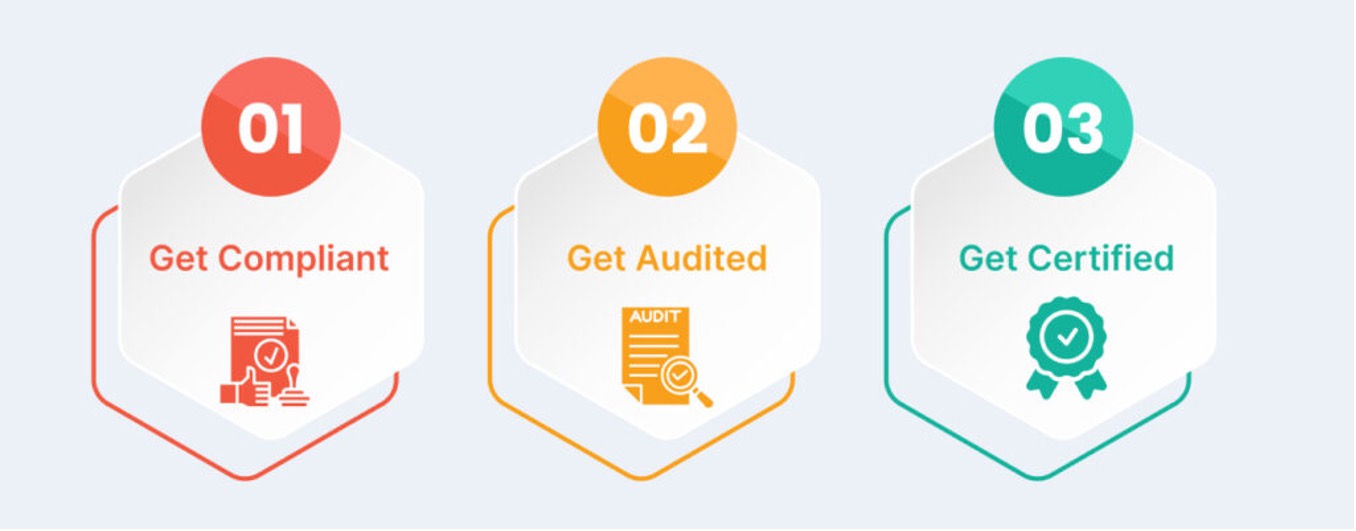
CERTIFICATION PROCESS
Ready to Get ISO Certified?
Join 500+ Global Companies that have Successfully Achieved ISO Certification with Us.
Missing Something?
We’re here to help you find exactly what you need—just let us know, and we’ll guide you in the right direction.