Home / ISO Certification for Oil and Gas Industry
ISO Certification for Oil and Gas Industry
Apply for ISO Certification
Oil and Gas Industry – ISO Certification & Compliance Solutions
The oil and gas industry operates in highly challenging and high-risk environments. From exploration to distribution, every stage involves significant safety, environmental, and operational risks that need careful and disciplined management.
ISO standards, including ISO 9001, ISO 14001, ISO 45001, ISO 50001, and ISO 22301, provide oil and gas companies with internationally recognised frameworks to manage these risks, comply with regulatory requirements, and demonstrate operational excellence to investors, regulators, and host communities.
The oil and gas industry is facing growing challenges, including the energy transition, stricter environmental regulations, rising ESG expectations, and increasing cyber threats. At the same time, safety or environmental failures can lead to serious financial, legal, and reputational damage, making strong risk management more important than ever.
At the same time, companies must control costs and improve efficiency in a market with fluctuating prices and long-term investments. ISO systems help them manage these challenges in a clear, structured, and reliable way.
ISO Certification for the Oil and Gas Industry
India’s oil and gas sector including exploration, refining, pipeline operations, and city gas distribution is implementing ISO management standards to meet regulatory requirements from bodies such as PNGRB, OISD, and the Ministry of Petroleum, and to align with international industry standards. ISO 45001:2018 and ISO 14001:2015 are widely adopted by Indian oil and gas companies, refineries, and pipeline operators to manage process safety, environmental compliance, and occupational health risks.
Major operators in Gujarat, Rajasthan, the Krishna-Godavari basin, Assam, and the Mumbai offshore fields are implementing ISO standards to demonstrate operational excellence and meet international partner requirements.
Globally, international and national oil companies implement ISO standards alongside API and IOGP guidelines to provide comprehensive quality, safety, and environmental management. ISO 14001 is widely expected for oil and gas operations worldwide due to strict regulations around spills, emissions, and environmental impact. ISO 22301 is also becoming increasingly important, as supply disruptions in this sector can affect national energy security, making business continuity a key priority for operators.
Which standards or ISO certificates are required for the Oil and Gas industry?
There are many standards published by the International Organization for Standardization (ISO) that cater to the quality, safety, and efficiency of oil and gas industry operations, products, and services.
ISO 9001:2015 (Quality Management System)
Providing the quality management foundation for oil and gas operations, ISO 9001 helps companies standardise processes across drilling, construction, procurement, and project management, ensuring consistent quality in operations and equipment critical to safe and efficient production.
ISO 14001:2015 (Environmental Management System)
Critical for managing the significant environmental risks of oil and gas operations including spill prevention, emissions management, water disposal, and habitat protection, ISO 14001 helps operators comply with environmental regulations and manage community and regulatory relations.
ISO 45001:2018 (Occupational Health and Safety Management System)
Oil and gas operations involve extreme occupational hazards including hydrocarbon releases, fire and explosion risks, confined spaces, and offshore and remote working conditions. ISO 45001 provides a systematic framework for managing these hazards and protecting the workforce.
ISO 50001:2018 (Energy Management System)
As a major energy producer and consumer, the oil and gas industry uses ISO 50001 to manage energy efficiency across refining, processing, and compression operations, reducing energy costs and meeting the growing pressure to reduce carbon intensity.
ISO 22301:2019 (Business Continuity Management System)
Ensuring operational continuity during equipment failures, natural disasters, or geopolitical disruptions, ISO 22301 helps oil and gas companies maintain supply commitments, protect revenue, and manage the consequences of unplanned production interruptions.
ISO/IEC 27001:2022 (Information Security Management System)
Protecting operational technology, SCADA systems, and critical production infrastructure from cybersecurity threats, ISO 27001 is increasingly important for oil and gas operators as industrial control systems become high-value targets for state and criminal cyber actors.
ISO 28000:2022 (Supply Chain Security Management System)
For oil and gas companies managing complex supply chains of equipment, materials, and services across remote and geopolitically sensitive operating environments, ISO 28000 provides a framework for managing supply chain security risks.
Strengthen your oil and gas industry operations with globally recognised ISO standards. Improve safety, efficiency, and compliance while building trust with clients and partners.
Key Challenges in the Oil and Gas Industry
Oil and gas operations involve inherent major accident hazards including hydrocarbon releases, fires, and explosions. Systematic process safety management is fundamental to protecting people, assets, and the environment from catastrophic incidents.
Oil and gas operations occur in environmentally sensitive locations including offshore areas, tropical forests, and ecologically significant regions. Environmental management systems help operators manage their impacts and maintain regulatory compliance.
Oil and gas workers face occupational hazards that are exacerbated by remote locations, harsh weather, and complex technical operations. Systematic safety management is essential to protect the workforce across diverse and challenging operational environments.
Industrial control systems and SCADA networks in oil and gas operations are increasingly targeted by cybersecurity threats that could cause production disruptions or safety incidents. Structured information security management is critical for protecting these systems.
Oil and gas supply disruptions can have severe consequences for energy security and operator revenues. Business continuity management frameworks help operators maintain supply commitments and manage the consequences of unexpected disruptions.
The oil and gas industry faces intense investor scrutiny on environmental, safety, and governance performance. ISO certification provides a recognised framework for demonstrating responsible management practices that meet investor ESG requirements.
Common Questions
Most Popular Questions.
ISO 45001 for safety, ISO 14001 for environmental management, ISO 9001 for operational quality, and ISO 22301 for business continuity are the most critical standards for oil and gas operators.
ISO 14001 provides a framework for managing spill prevention, emissions monitoring, and environmental improvement across exploration, production, and refining operations.
Yes, SCADA systems and operational technology in oil and gas are high-priority cyber targets, and ISO 27001 provides a framework for protecting these systems from threats that could disrupt production or cause safety incidents.
ISO 22301 helps companies manage production disruptions, equipment failures, and supply chain interruptions, protecting revenue and maintaining supply commitments.
Yes, ISO certification demonstrates quality, safety, and environmental management capability that supports the due diligence requirements of project lenders and equity investors.
ISO 50001 helps companies manage the significant energy consumption of refining and processing, identifying efficiency opportunities and meeting investor requirements for carbon intensity reduction.
Have questions or need assistance?
Why ISO 14001 Certification Is Gaining Importance for Saudi Chemical and Petrochemical Companies
Saudi Arabia’s chemical and petrochemical industry is growing very fast.…

ISO 41001 Certification: Complete Guide to the ISO 41001 Standard and Certification Process
Introduced by the International Organization for Standardization (ISO) in 2018,…
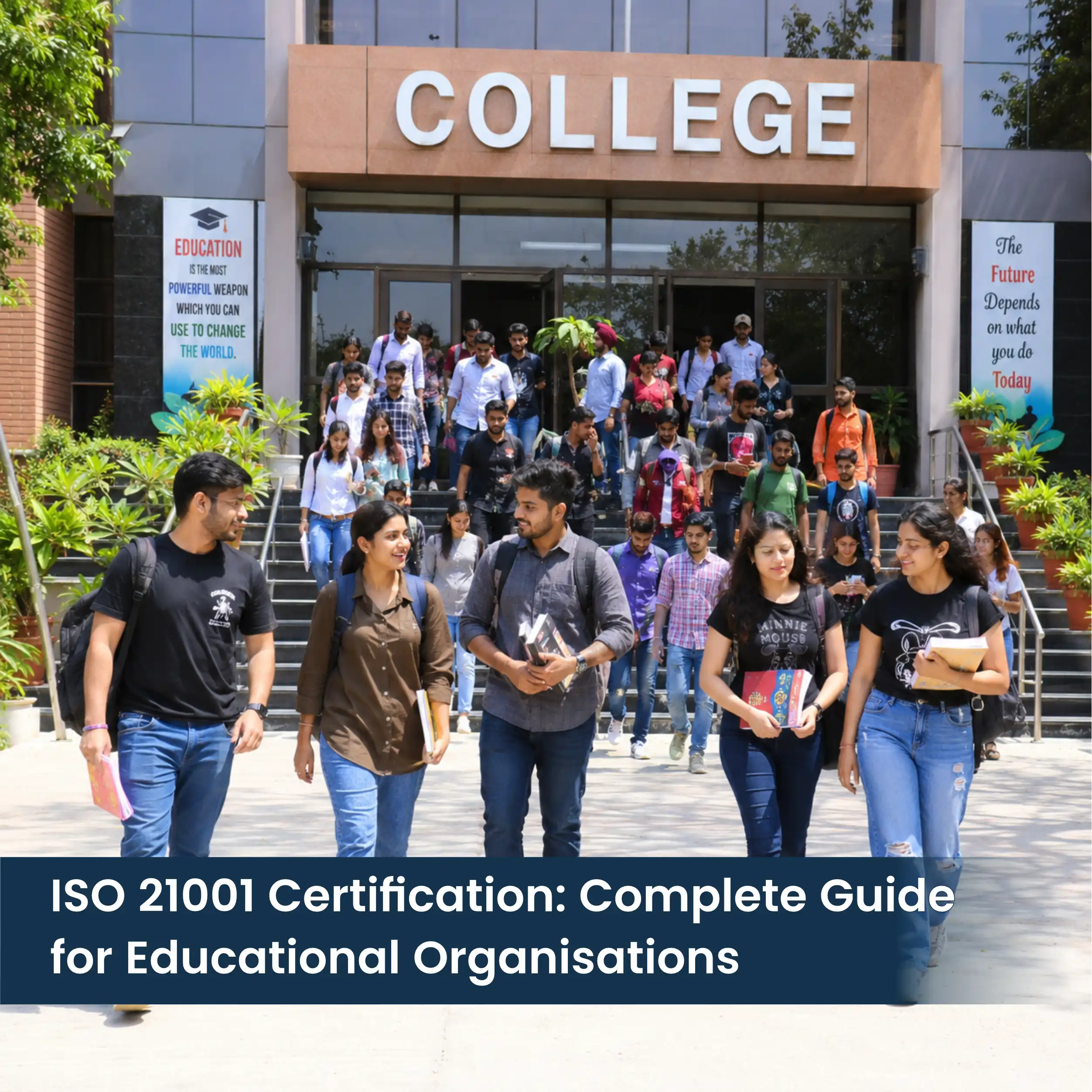
ISO 21001 Certification: Complete Guide for Educational Organisations
Education plays an important role in building a prosperous society.…