All about ISO 22301 Certification
An organization’s ability to respond effectively to the unexpected determines its capability to survive in the long term. ISO 22301 standard measures an organization’s level of preparedness to maintain critical functions even during a crisis or unexpected incident.
ISO 22301 certification outlines the requirements for a Business Continuity Management System (BCMS). It provides a comprehensive and systematic process for organizations to incorporate adaptive and proactive measures to eliminate the potential factors that might cause disruptions.
ISO 22301 standards follow a dynamic approach to identify the amount and type of impact it is willing to accept following a disruption and tailor a business continuity plan sized correctly for the organization’s needs. It is a set of interrelated elements that provide a holistic framework for organizations to build resiliency and agility.
A Business Continuity Management System (BCMS) is based on the organization’s legal, regulatory, organizational, and industry requirements to ensure that a business is not vulnerable to disruptions. ISO 22301- Certified organizations follow a High- Level Structure (HLS) and incorporate the Business Continuity Management System standard into core business processes to achieve the desired outcomes. It consists of four components.
Four Components of BCMS
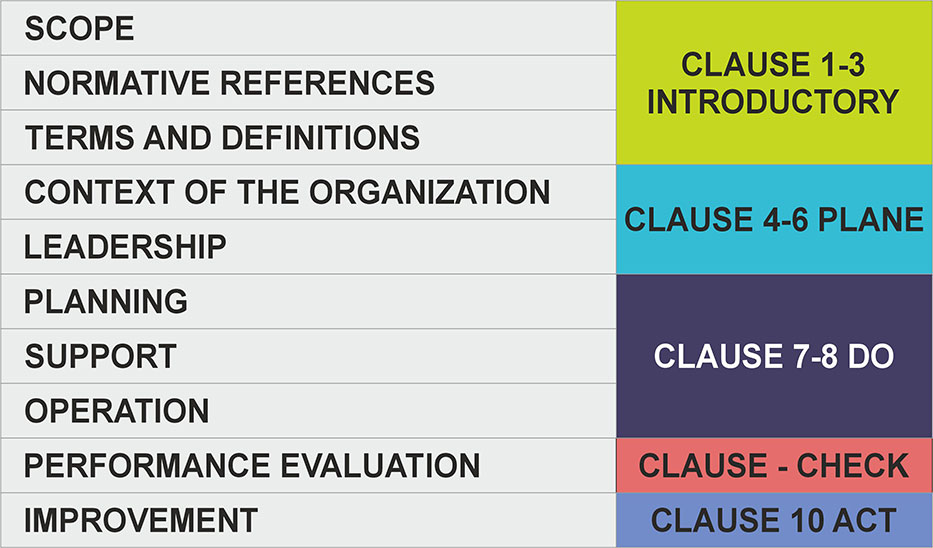
The Ten Clauses of ISO 22301 Certification
ISO 22301-certified organizations follow the Plan-Do-Check-Act methodology that provides a simple and effective approach to managing changes and problems. It is an effective management tool used to improve the performance of organizations.
Tips to Maintain ISO 22301 Certification Compliance
In order to maintain compliance with the ISO 22301 certification, an organization requires to keep a check on the following things:
ISO 22301 Standard at a Glance
“An entrepreneur reduces risk in many places in order to focus on what’s most important, which is the PRODUCT.” – GUY KAWASAKI
Product is indeed the most significant element of any business, and it becomes essential to maintain business continuity to deliver goods and services to customers. ISO 22301 certification provides tools and techniques for organizations and strengthens an organization’s ability to manage the unexpected.
ISO 22301 Certification sets down the requirements for Business Continuity Management System BCMS. It enables an organization to take adaptive and proactive measures to ensure the survival and sustainability of the core business activities in the long run.
Is ISO 22301 Certification right for my Organisation?
ISO 22301:2012 was developed as the first international standard by the International Organization for Standardization (ISO) for helping organizations develop a Business Continuity Management System (BCMS). The purpose of this standard is to ensure the operational continuity of the business even in the face of external threats, such as catastrophic weather conditions, Cyber threats, and so on. Recently, we have all been witness to the disruption caused by the Covid-19 pandemic for businesses across the globe. Its impact on the global supply chain has impaired the economies of a majority of nations. This has hurt many businesses and even led to the closure of some of them.
By adopting the requirements of ISO 22301, you can make your organization resilient against any such risks and assure your customers and shareholders regarding the robustness of your processes. A Business Continuity Standard – ISO 22301 Certification is proof that your organization has a management plan in place that assigns roles and responsibilities to your staff in order to hold your fort in times of emergencies. The global acceptance of this standard ensures all interested parties that the international best practices have been incorporated
ISO 22301 Requirements
The business continuity Management System standard consists of ten Clauses. Out of these ten clauses, three clauses are introductory in nature, while the rest seven clauses define the mandatory requirements for ISO 22301 Certification.
Context of the Organization– Determining the scope of the Business Continuity Management System BCMS and ensuring compliance with all the legal and regulatory requirements. An organization shall identify both external and internal factors that might cause disruptions and affect its ability to achieve intended outcomes.
Leadership– The senior management should ensure the implementation of the business continuity policy and business continuity objective within the organization. The organization shall assign roles and responsibilities to employees and implement an effective communication system to measure ISO 22301 compliances.
Planning – An organization shall determine potential risks and opportunities to design appropriate plans and policies to address them accordingly. It requires an organization to establish its business continuity objectives and formulate policies to achieve them.
Support – An organization requires determining and providing the needed resources to implement BCMS successfully. It shall give necessary training and education to employees to increase their competency. ISO 22301 directs organizations to establish an active and productive communication system.
Operation – Clause 8 and Clause 6 go hand in hand. Clause 6 comes in the domain of planning, while clause 8 is associated with the action. An organization shall conduct a risk assessment to detect weak areas and implement significant changes where required.
Performance Evaluation – An organization shall monitor, measure, analyze, and evaluate its BCMS performance. It requires an organization to conduct internal audits to identify non-conformities and eliminate them.
Improvement – It requires organizations to take corrective actions and implement necessary changes to achieve the desired outcomes. It follows the principle of continual development that promotes the sustainability, adequacy, and effectiveness of a BCMS.