How to Start a Spice Business in India
We Indians are insane when it comes to food. We are divided through states, but one thing that keeps us connected is “Spices”. The spices strongly influence our every festival, event and even everyday lifestyle. Therefore, for your knowledge, we present you with a blog where we talked about the 7 processes of starting a spice business in India. India is a prominent spice producer and exporter. It is also recognized as a profitable company within India. Anyone can start this business as a small, medium and large-scale base depending on their investment capacity. Spice powder is an essential ingredient in cooking. None of the Indian food is made without it. Let’s begin with an in-depth understanding of the spice business in India. MARKET OPPORTUNITY FOR SPICE BUSINESS IN INDIA ⮯ India is known as “the home of spices”, an Indian spice sought globally because of its taste, texture, aroma and medicinal properties. India produces approximately 75 of the 109 varieties listed by the International Organization for Standardization and represents almost half of the global trade. It is the number one exporter of this product. Its internal demand is thriving since it is a mass consumer product mainly used in culinary products or food seasonings. With varying lifestyles and particularly with changes in dietary habits and increased incomes, these use has increased. There is a requirement for various certificates or permits to start the business. 7 FACTS ABOUT STARTING A SPICE BUSINESS IN INDIA. ⮯ To set up this business in India successfully, you need to know the following facts: COSTS ASSOCIATED WITH THE BUSINESS: ⮯ The Indian market is expected to reach approximately $18 billion by 2020. India is the largest producer, producing 50 different spices that people seek for ready-to-use food, and this powder makes their cooking more accessible. Few important cost considerations are highlighted in this respect. These are practical to use, and it saves time and physical effort in preparing different delicious cuisines. Every commercial food industry, such as hotels, restaurants, catering and many others, uses these powders daily. This powder makes it an easy and profitable business to start, and you can start that business with small investments. Initial investment: INR 50000 to INR 100000. Space requirement: 250 square metres. Profit Percentage: between 50% and 70% Income: Average sales of 100 kg/day, from 50,000 to 150,000 per month. Other additional expenditures will include equipment maintenance, employee salaries and marketing fees. LICENSING REQUIREMENTS: ⮯ Since spice powder falls under the food category, it must therefore comply with a wide range of government regulations, including: The registration of the enterprise must be carried out on the scale of the business, if it is Pvt. Ltd. or partnership or sole proprietorship. The company shall be recorded accordingly. Registration of the GST is also essential for getting a GST number. With an SME, companies may register and get facilities and grants from the state government. Get a commercial licence, FSSAI and apply for a trade-mark, Udyam/MSME Registration BIS and IEC certification. Businesses must get ISO 9001 certification for ensuring efficient products and services to the customers. It is recommended to get the AGMARK certificate. SPACE REQUIREMENTS: ⮯ You don’t need a massive space to start the business, about 250 square meters can be used for processing pieces, and another 250 squares is required for packaging. Check the commercial space or basic conveniences such as water, electricity, etc. The state government has restrictions on starting the food business from home, so make sure the location is under the government’s law. Ensure the site is convenient and easily accessible to the target market. RAW MATERIALS REQUIRED: ⮯ The essential ingredients required in this powder are unrounded products, and with raw materials, you will need wrapping materials that will act as a shield for the powder. MACHINERY UTILIZATION: ⮯ The grinding machine is the machinery required in this business. According to the scale of industries, the equipment is employed. Large-scale industries use the impact pulverizer machine, while small-scale industries use the two-stage pulverizer. Other machines like spice mill, balance, packing machine, compressor, and the roster are also required. MANUFACTURING PROCESS: ⮯ CLEANING: It is a very initial process for the production in which the unrounded material are cleaned manually by eliminating impurities such as stone, dust and dirt. DRYING: After cleansing and washing them, display them in full sun to dry. The quality of the powder will depend on the well-dried product. If cleaning and washing do not occur, it will lead to bacteria that poison food. ROASTING: Once it is dry, they proceed through the roasting process. Roasting is essential as it will help to give flavour, colour and good taste to the powder. GRINDING: The grinder is used for pulverization to convert spices into powder. GRADING: Grading is a process that provides the basis for the inclusion and proportion of mixed with the raw material used. It also depends on the spices (aroma), size, shape, density and colour. SIEVING: Make sure the powder has a consistent mesh. PACKING THE PRODUCT: ⮯ Seasonings and spices add a lot of flavour to your favourite foods, but they must be fresh to make their magic work, so proper packaging is mandatory. Protect and keep the spices and seasonings with zip pockets, and these packaging bags will give you the flexibility of choosing the best size, style and characteristics for the product. Choose from options such as gas release valves, teargas notches, heavy-duty zippers, suspension holes, spouts, and various styles that give you lots of space to bring the brand to life. Once it is converted into powder, then the quantity-weighted has to package. These are then packaged in a polythene pouch and sealed using the sealing machine. The pouches will protect the product from moisture, perforation, odour and more. You guarantee that your seasonings and spices are safe from the warehouse to your customers’ taste buds. Tags
How to Start a Food business in India
Food is a fundamental need for people in all countries. Everybody loves to eat. This love is the main reason the food business has flourished worldwide. It is the need for nearly all living organisms, so there will always be a demand for it. For this reason, the Indian and international food industries will always be profitable. Keeping all this in mind, many people are thinking that how to start food business India and other countries. However, before we do that, we must all understand this industry. Many people find registration and licensing for the food business in India complicated. Therefore, we are offering you this guide. This guide provides a detailed description of starting a business in India. Understanding the food business in india ⮯ Every enterprise that manufactures, imports, processes, packages, stores, distributes or sells edibles in India is a food industry. These industries offer the following services to the public: Catering and dining services. Bake house and café. Sweetshops and Truck for Food. Delivery services. Household occupation, etc. Today, like all other businesses, this industry has also become online. This technology typically involves home delivery of grocery products, online delivery aggregators, online sellers, etc. Food Market Opportunities in India⮯ There are several opportunities for this sector. India is a crucial exporter of spices and other horticultural products. India is the second-most populous country. This means an enormous market for the industry. Food is essential, and everyone in this vast population needs it. In 2018, this industry had a CAGR of 9 per cent. As a result, it is incredible how Indians changed their eating habits and routines, especially for millennia. Quick-Service Restaurants (QSR) have become an essential component of our diet. Seeing how the market is stable is starting a profitable, low-cost business in India. Quick-Service Restaurants (QSR) have become an essential component of our diet. Seeing how the market is stable is starting a profitable, low-cost business in India. Requirements to set up a food business in India ⮯ Before starting the business, it is important to keep the following documentation readily available. FSSAI License Certification of shop establishment. Site map and development. Water Quality Review. GST certificate Fire Protection (NOC) Certificate. Certificate of Health NOC Estimate all cost and market One of the most important aspects of getting a business off the ground is cost analysis and other factors. Here are the costs you need to estimate before start food business in India Cost of raw material: Food is a combination of different raw materials. Therefore, it is necessary to complete the vendor to supply raw materials in advance to ensure a smooth supply of stock ingredients. Labour cost: Labour cost is the second largest cost added to the expenditures. Therefore, we need to find the best labour force that operates at affordable prices. Operating costs: This industry has several operating costs besides raw material and labor costs. For example, a delivery company may incur marketing costs. Costs of renting premises: If your plan to start food business in India, unsubscribe from a famous place in the city where occupancy is massive. Rental is also expensive. The rent of the premises is a fixed cost, which is a substantial amount that cannot be ignored in evaluating the global cost. Registration and License To start production in India, it is important to be aware of registration and licensing. Not getting the proper registration and license can seriously harm the profitability and credibility of your business. In addition, the government can impose heavy penalties if the company does not operate under specific mandatory registrations and licenses. So let’s look at some of the most important and required steps to apply when starting a business in India. Company Development As we all know, it is essential to understand its legal structure before starting a business. There are different business training. For instance, Private Limited Company Public Limited Company One Person Corporation Partnership Firm Limited company. Sole Proprietorship GST Enrollment & Tax Compliance We all know there are a lot of mandatory tax rules within the organization. Currently, the taxation scheme is the GST (goods and services tax). To get a GSTIN number for the food industry, you must submit three following documents. PAN card/permanent account number. Professional tax license for the use of salaried employees. The tax is paid to all employees who earn 10,000 rupees or more within a month. No statement of objection from the owner or neighbors. Therefore, any incorporated industry must get GST registration to keep the business running properly. Trade Licensing Issued by the relevant municipality. In addition, the licenses issued in most states are valid for one year, so you can quickly get them ISO Certification International Organization for Standardization (ISO) has established ISO 22000 Certification. It implements the best food safety management system that applies to every industry along the supply chain, from farm to fork. If you want to turn the company into a long-term success, you can start with more ISO certifications. For example, ISO 9001 for QMS, ISO 14001 for EMS and ISO 45001 for OH&S. FSSAI Registration Refers to the Food Safety and Standards Authority of India. Whether for manufacturing, refining, packing, shipping or storage, it is mandatory to have an FSSAI registration if you work in this industry. MSME Registration Also known as Udyam Registration, it is available to start food business in India. If someone wants to benefit from the central or state government and the banking industry, this is the government system. Benefits include financial help, training and more. Trademark Registration Trademark registration offers legal protection and many other benefits, like maintaining a level of confidence that no one can erase. Liquor License If anyone wishes to offer alcohol on their premises, they must apply for a license. The Liquor License is issued by the local Excise Commissioner who wishes to serve any beverage containing alcohol In short, starting up a food business in India is one of the most profitable ideas. However, that is a tough job. Therefore, the market must be entered
ISO Certification for Hospitality Businesses
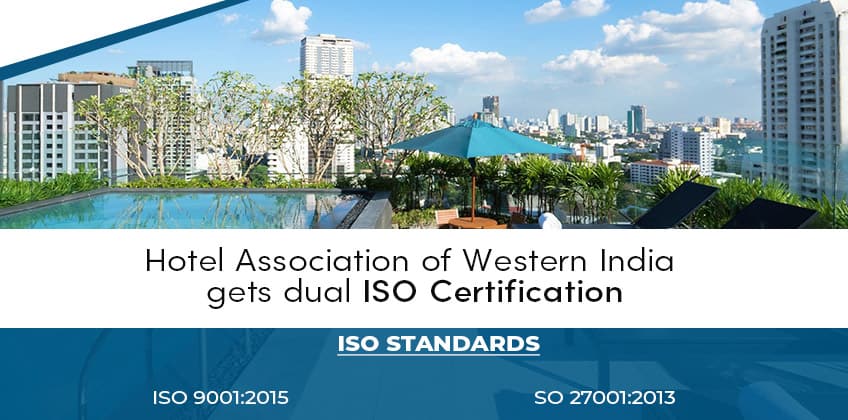
Recently the Hotel and Restaurant Association of Western India (HRAWI), a regional affiliate association of the Federation of Hotel and Restaurant Associations of India (FHRAI) achieved dual ISO certifications – ISO 9001:2015 and ISO 27001:2013. It is the first association in the hospitality sector to receive these certifications from one of the best ISO certification body. So, What does these Dual Certifications mean to the Association? ⮯ The membership base of this 71-year-old association is spread across western India covering the states of Maharashtra, Gujrat, Madhya Pradesh, Chhattisgarh, Goa, and the Union Territories of Daman, Diu, and Silvassa. With ISO 9001 and ISO 27001 certifications, the association has a proof of credibility in terms of data management, business continuity processes, back-up plan, risk management, security of data and communication channels, incident management, monitoring, and compliance. With this certification, the association has raised the bar for their members for their own benefit. What is ISO 9001 and ISO 27001 Certification? ⮯ The International Organization for Standardization publishes a set of standards that helps the organizations in maintaining the quality and safety of products, efficiency of processes, and wellbeing of the organizational as well as natural environment. ISO 9001 standard aims at helping the organizations to implement Quality Management System (QMS) that would ensure the quality of products and services. With ISO 9001 certification of the association, all the hotel and restaurant businesses of the member states will be required to apply certain quality controls that would help them to meet the requirements of the market as well as customer’s satisfaction. Similarly, ISO 27001 standard aims at implementing the Information Security Management System (ISMS) in an organization. This helps in making the data infrastructure robust so that the event of any breach or loss of data can be prevented. By complying to the requirements of ISO 27001 certification, the hotels and restaurants can assure their guests, clients, and customers that their data that has been shared with the hotels or restaurants are in safe custody, devoid of any misuse. Both ISO 9001 and ISO 27001 certificates help in gaining the trust and confidence of not just the customers, but also the clients, shareholders as well as all the associated parties. What other ISO Certificates are applicable for Hospitality Business? ⮯ There are several other ISO certifications that may be applied for hospitality businesses. These include :- ISO 14001: ISO 14001 standard helps hotels in implementing Environmental Management System (EMS) which keeps check on all their activities that adversely affect the environment. This gives a great boost to the reputation of the hotels for being responsible towards the environment. In addition to that, it makes the hotels compliant to all the environment-related regulations of the country that are getting stricter day-by-day. ISO 22000: This standard is one of the most important ISO standards for hospitality businesses as it establishes the Food Safety Management System (FSMS). With ISO 22000 certificate, the hotels and restaurants assure their customers that the food served to them is safe to consume. ISO 45001: ISO 45001 certificate is a validation of the effectiveness of Occupational Health and Safety Management System (OHSMS) in an organization. It ensures that the health and safety of staff as well as guests have been taken care of. In addition to that, it prevents any infrastructural vulnerabilities that may cause harm. ISO 50001: ISO 50001 standard helps in establishing and implementing the energy management systems (EnMS) within the organization so that they are able to reduce their carbon footprint. It requires the organizations to optimally utilize their resources and reduce wastage. The benefits of achieving ISO certificates are huge. If you ever make up your mind for the ISO certification, get in touch with best ISO Certifications bodies. With more than 25000 clients from more than 55 countries, we are one of the reputed names in Management System Certification service providers. Read more : Guide for Food Safety CertificationsHow to Start a Food business in IndiaHow to Start a Spice Business in IndiaWhy is ISO 22000 a Valuable Tool for Minimising Foodborne Hazards Tags
ISO 22301 & ISO 27001 in an Organization

Let us consider the following two statements: ISO 27001 for Information Security Management System can help in business continuity, which is the essence of ISO 22301. The business continuity guidelines, as mentioned in ISO 22301 can be helpful in the implementation of ISO 27001. This article talks about the above two statements or simply, the usefulness of ISO 22301 for ISO 27001 and vice-versa. The A.17 section of Annex A of ISO 27001 standard talks about business continuity management. Now, it is quite obvious for many of us that in the modern times, where all our critical data are digitally stored, data-security becomes the key to a business’s survival and its continuity. However, the framework of ISO 27001 does not include the details about the methods to ensure business continuity. It mentions something about “information security aspects of business continuity management”, which basically means that the organizations are required to maintain information security so that the business operations do not get affected due to any incidence of data breach or loss. What are the similarities between ISO 27001 and ISO 22301? ⮯ Protection of data is necessary for continuity of business. Therefore, both ISO 27001 and ISO 22301 address this aspect in any organization. That is the reason why ISO 27001 has a section for business continuity controls in its Annex A. Both ISO 22301 and ISO 27001 follow a common High -level Structure (HLS) that makes it easier to integrate the management systems. It can be said that both of these standards are based on the Plan-Do-Check-Act cycle and they both have the same elements of management: document controls, internal audit, management review, corrective actions, awareness, training, etc. Therefore, if you have implemented the controls mentioned in ISO 27001 for Information Security Management System, you become automatically compliant to the requirements of ISO 22301 for business continuity management system. In addition to that, certain elements of ISO 27001 are fully compatible with ISO 22301, such as risk management. How are ISO 22301 and ISO 27001 different? ⮯ When it comes to business continuity documentation, ISO 27001 is not very resourceful. It can only be used to frame a Disaster recovery plan that would cover control A.17.1.2 (that requires implementation of continuity procedures) and control A.17.2 (that requires the availability of IT). However, implementation of ISO 22301 for business continuity requires the development of more documents that cover the core business continuity elements, such as: Business continuity policy Business continuity strategy Business impact analysis Business continuity plans Exercising and testing Therefore, it is obvious that ISO 27001 alone cannot help you with establishing procedures for business continuity, it can only help you with a single document. For preparing your organization against any incident that would affect the continuity of your business, you are required to implement ISO 22301. Using ISO 22301 for ISO 27001 ⮯ The common and best way to include the essence of ISO 22301 in ISO 27001 is by using the know-how of the former as a sub-project of the later. This means that you must implement ISO 27001 as planned in your organization and when it comes to section A.17, you can implement the core concepts of business continuity from ISO 22301. Since both ISO 22301 and ISO 27001 follow the same High-level Structure (HLS), it becomes easier for you to implement both of these standards simultaneously. Once you implement ISO 22301 for business continuity management system, the additional effort for implementing ISO 27001 is only 10%. Although you can comply with the requirements of section A.17 of ISO 27001 by writing a single document, i.e Disaster Recovery Plan, implementing ISO 22301 takes care of your business holistically. It is a very important tool for making your organization resilient to any unforeseen situation. Enjoy Reading- How to get certified to ISO/IEC 27001Understanding ISO 27002:2022 Control 8.9Achieving ISO 27701 Compliance: A Step-by-Step JourneyWhy is ISO 27001 Important These Days Tags