What is ISO/IEC 42001:2023?
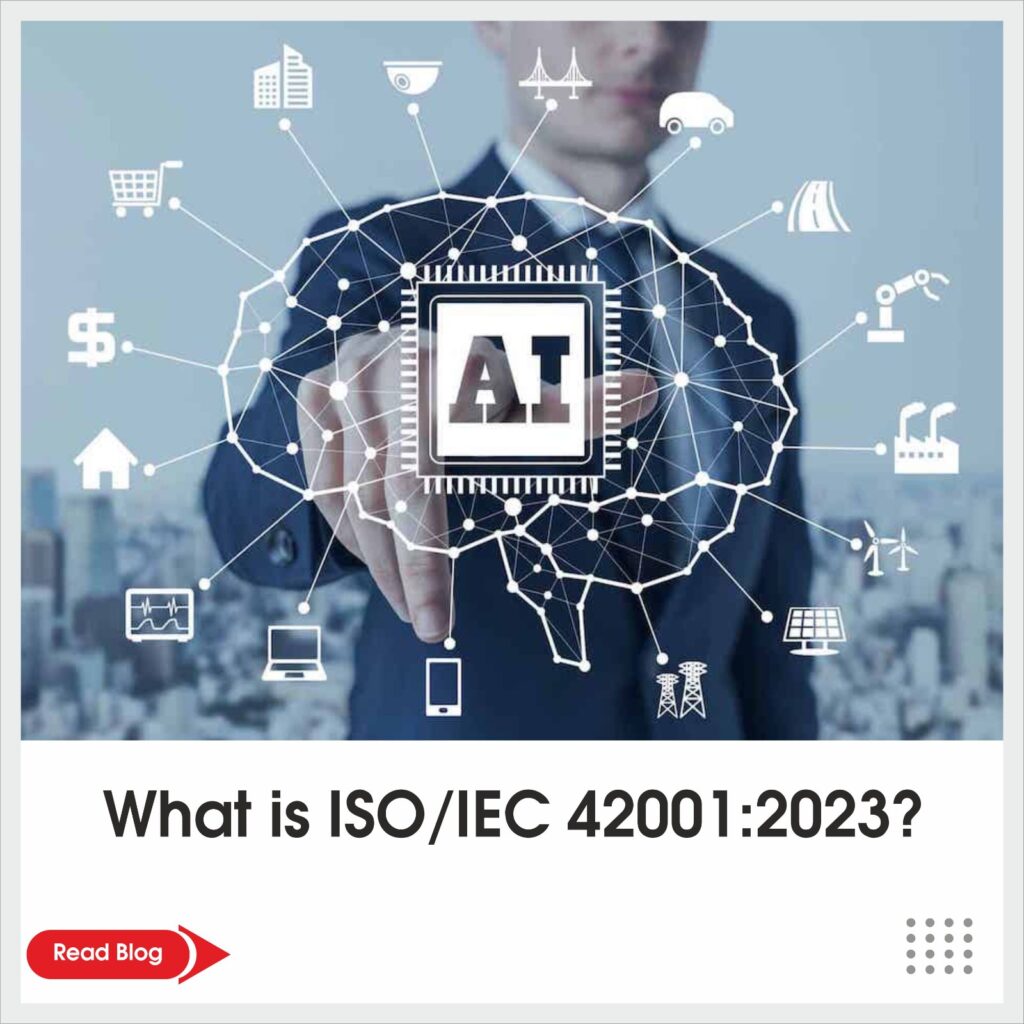
ISO/IEC 42001 is a global standard that describes the requirements for establishing, implementing, maintaining, and continuously improving an Artificial Intelligence Management System (AIMS) in businesses. It is designed for enterprises that sell or utilize AI-powered products or services, ensuring that AI systems are developed and applied responsibly. Importance of ISO/IEC 42001:2023 Addressing ethical issues is critical in the age of artificial intelligence, as judgments made by computers affect people’s lives. AI systems must be effective and compliant with moral standards, and ISO/IEC 42001 serves as a beacon in this regard. As a means of reducing possible social effects, it encourages enterprises to explore the ethical subtleties of AI responsibly. Integrity is essential to the ethical use of artificial intelligence. By promoting transparent and understandable AI systems, ISO/IEC 42001 acknowledges this. To provide openness throughout the development and deployment lifecycle, the standard requires businesses to describe data sources, types utilized for AI training, and the resilience of AI systems. The Purpose of ISO/IEC 42001:2023 ISO/IEC 42001 standard promotes an organization’s accountability on an ethical and moral level. At its core, it stipulates the appearance of a concerned organization responsible for upholding ethical practices in all its business operations and decision-making. The practicalized standard is built to serve as a comprehensive guide for forming, implementing and sustaining the AI management system of an organization with a focus on continual improvement. The major objective of the framework is to guide in the responsible development, application or use of Artificial Intelligence (AI) systems by organizations, and hence help them in the attainment of their goals, meeting the proper governing rules, observing the obligations they have towards the relevant stakeholders, and aligning the activities with the right expectations. In short, ISO/IEC 42001 is the process where the creation of AI that is responsible, its providing and the usage of AI is targeted and focused on. Here’s a breakdown of what this new standard addresses AI Governance: This standard ISO/IEC 42001 is based on which the organizations can make policies and work procedures for AI governance. Such as the completion of these bounds comprises the clearly stated roles and procedures for decision-making and the strategies for the good management of risks. Impact Assessment: Organizations should undertake an analysis of the societal, environmental, as well and individual impact of their AI systems. This allows the prevention and the prediction of misuse of these AI technologies and the guidance on their ethical development. Data and Model Lifecycle Management: Effective data and model methodology are a vital part of the standards delineation. It covers a range of operations such as data collection including labelling and validation then it goes through a model development, training, evaluation and deployment process that is followed by continuous monitoring. Diversity and Inclusiveness: The norm stresses the need to account for inclusiveness and the diversity of the AI systems. It requires organizations to examine AI technologies given how they may affect both human groups sharing similar backgrounds, qualities, and features. Monitoring and Auditing: Similarly ISO/IEC 42001 stresses the fact of regular inspection and checking of AI systems. This is important for the graceful degradation of these systems, whenever a false trigger or an adjustment is needed, and the software engineers, technicians, and researchers respond in the right way to it. Benefits of implementing ISO/IEC 42001:2023 The implementation of ISO/IEC 42001:2023 standard within organizations has multiple benefits: Enhances trust and credibility: An ISO/IEC 42001 certification implies that an organization has taken a responsible approach to AI practices, thereby increasing trust levels among clients and society in general. Competitive advantage: Those who follow the standard are ahead of their competitors in the AI-oriented field. Addresses pressing concerns: The standard ISO/IEC 42001 will be an efficient tool for the treatment of AI-related issues like fairness, transparency, and security. Flexible and adaptable: It is not too stringent and could be customized to the particular needs of an organization, thus making it more adaptable than sector-specific regulations. Increases consumer confidence: Consumers whose expectations are met through the implementation of ISO/IEC 42001:2023 standard get a feeling of trust towards AI products and services. Access to global markets: The standardization maintains uniformity, through which organizations can readily operate in global markets. Third-party seal of approval: If a certification is sought, it acts as a third-party guarantee of trustworthiness, signifying accountability. Contractual obligations: Some organizations may have contractual commitments to keep such certification. Internationally recognized risk mitigation: Certification underscore the dedication to internationally recognized techniques of risk prevention. Signal of priority: ISO/IEC 42001 sends a message to customers and stakeholders that a management system for AI, which is responsible, is the top priority. Internal governance: Setting the standards can strengthen the internal governance. Board Awareness: Standards highlight effective AI system governance to the board and hence promote decision-makers awareness and support at the apex level. Alignment with best practices: Even without direct certification, the reviewing of procedures as per ISO/IEC standards helps organizations continue to follow best practices and future trends in AI governance. Key Features of ISO/IEC 42001 The flexible ISO/IEC 42001 becomes a pillar of AI governance. The certifiable standard delivers essential characteristics that expand artificial intelligence’s applicability across many settings, sectors, and future developments, as more and more businesses adopt it. Verifiable Standard: Organizations are given a concrete certification process by ISO/IEC 42001. As a trust signal to partners, lawmakers, and consumers, independent auditors can evaluate and certify businesses. This certification attests to ethical and responsible AI management and indicates conformity to the standard’s concepts. Innovation Support: ISO/IEC 42001 stands out in an era of constantly shifting regulations and rapid technological development because it actively promotes innovation rather than stifles it. Concerning future advancements in AI, the standard is made to be forward-looking. Organizations may build ethical AI without imposing prohibitive obstacles by using common principles. Risk Management: The importance placed on a systematic approach to risk management by ISO/IEC 42001 is one of its main advantages. To guarantee that AI systems are both creative and dependable, the standard addresses hazards related to AI, such as data abuse and operational errors. The
Understanding everything about HIPAA Certification
Data privacy and information security are significant in all industries, including the healthcare and IT sectors. The acronym HIPAA refers to the Health Insurance Portability and Accountability Act. It also assists organisations in protecting individuals’ private and sensitive data to maintain the integrity and confidentiality of health information. The certification oversees and tracks adherence to domestic and global best practices to preserve the integrity of the healthcare system. What is HIPAA Certification? Obtaining a HIPAA Certification confirms that a company complies with the 1996 Health Insurance Portability and Accountability Act (HIPAA). HIPAA’s main objective is to protect people’s protected health information (PHI). PHI is any information about a person’s medical history, current condition, course of treatment, or amount paid for medical care. HIPAA is a comprehensive evaluation of an organisation’s technology infrastructure, policies, and practices to monitor and maintain compliance with the regulation. Why is HIPAA Certification important for Organisations? Legal Compliance – Organisations with HIPAA Certification monitor and maintain legal compliance with the certification requirements to protect PHI. However, non-compliance and non-conformities can attract heavy fines and penalties that can damage its brand value. Enhances clients’ and customers’ trust and reputation – Patients trust healthcare organisations with their most private and sensitive information. Patients feel more at ease knowing that their data is handled with the highest care and security thanks to HIPAA Certification. Achieving a HIPAA Certification enhances an organisation’s credibility and reliability to ensure privacy and information security. Data Security – Strong security measures, such as encryption, access controls, and frequent audits, are required for HIPAA certification. Additionally, the certification supports the organisation’s general data security culture to guard against possible breaches and growing cybersecurity threats. A List of Organisations that can apply for HIPAA Certification HIPAA Certification is relevant for multiple organisations within the healthcare ecosystem. The following are the main categories of organisations that can benefit from HIPAA Certification :- 1. Hospitals and Clinics2. Insurance Companies3. Healthcare Clearinghouses.4. Business associates handling Protected Health Information (PHI)5. Information Technology (IT) Service Providers6. Legal firms What are the benefits of HIPAA Certification? HIPAA certification applies to various industries and offers a goldmine of benefits. The following are the benefits of HIPAA certification :- Organisations can lower the legal risks connected to non-compliance through HIPAA Certification. Moreover, it helps organisations monitor and manage the legal complexities to avoid expensive penalties and fines. HIPAA Certification is a hallmark of trust and credibility that demonstrates an organisation’s commitment to patient privacy protection. Moreover, it increases patient trust and confidence in the organisation by ensuring patient satisfaction and loyalty. Organisations shall implement robust security measures to guarantee data privacy and information security to improve overall data security posture. Furthermore, it promotes a mindset of continuous data security practice to protect individuals’ information against potential breaches. Organisations investing in HIPAA Certification gain a competitive edge in the cutthroat healthcare market. It is a differentiator that helps them stand out from rivals and draws clients and partners who value privacy and data security. Conclusion ✅ Data is the foundation of healthcare in the digital age, and HIPAA Certification is an essential tool to protect data from threats. The certification process is also a calculated financial investment apart from a legal necessity. HIPPA certification upholds legal compliance with privacy and information security regulations to improve patient trust and organisational resilience.
What is ISO 22716 GMP for Cosmetics?
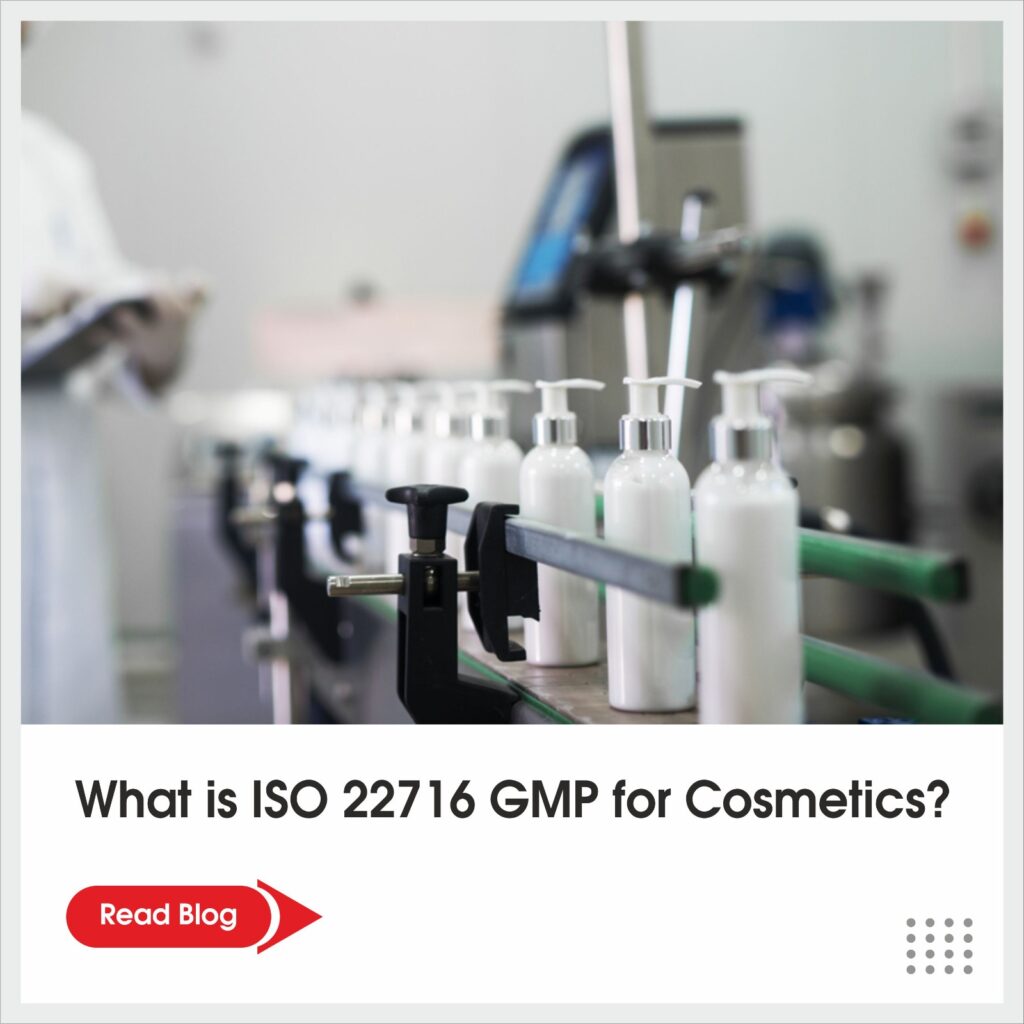
ISO 22716 is a comprehensive set of GMP requirements for the cosmetics and personal care sector introduced in 2007. Cosmetics are commodities or materials designed to improve, cleanse, or change a consumer’s face or body, such as cosmetics, oral care products, lotions, deodorants, hair products, and scents. The ISO is a globally known non-governmental organization that develops standards for various businesses. In 2007, the International Cooperation on Cosmetic Regulations (ICCR), which was founded by the United States (US), Canada, the European Union (EU), and Japan, agreed that this standard would be used to suggest or publish cosmetic GMP standards for each country. Why ISO 22716 is Crucial to Cosmetics? ISO 22716 is a quality and management system that encompasses the entire beautification process, ranging from production to control, storage, and transportation of products including buying raw materials, components as well as packaging material. Cosmetics are any substances applied to the face or body that are intended to beautify, cleanse, or change the colour, texture, smell, or taste of a user via make-up, creams, deodorants, hair products, and fragrances. Thus, makeup products are made from a mixture of chemical components built from natural substances or synthetic ones. In the USA, the Food and Drug Administration (FDA), is the regulatory agency of the FDA. The Food and Drug Administration (FDA) determines cosmetics as those “that are specifically intended to be used on the human body for cleansing, beautifying, promoting attractiveness, and altering the appearance without affecting the body’s structure or functions”. Advantages of having ISO 22716 GMP in your organization Lower liability risk: Certification enables you to demonstrate that you have taken all reasonable precautions to guard against or rectify mistakes and to preserve your legal rights. Enhanced trust among partners and customers: By obtaining certification, you can show your partners and customers that you have complied with regulatory requirements and establish your reputation as a reliable supplier of high-quality, safe cosmetic goods. Supply chain management: The certification of ISO 22716 offers reliable proof that you have examined and assessed the safety and quality protocols through the supply chain of your cosmetic goods. Enhanced business efficiency: By streamlining production procedures, you may accomplish your objectives faster and with more dependability. EU Cosmetics GMP Requirements GMP, or good manufacturing practice, requirements for cosmetics form the core of the EU Regulation on Cosmetics. This law, intended to safeguard consumer safety, imposes stringent requirements on all European and non-European parties engaged in the supply chain of cosmetic products. Despite these legal requirements, all cosmetic products manufactured in the EU have to follow the ISO 22716:2007 standard’s Cosmetics Good Manufacturing Practices. Proof that the items are created by ISO 22716 can be provided by the ISO 22716 certificate or a declaration attesting to that fact. The following enumerates the domains for which ISO 22716:2007 stipulates certain requirements, together with their principal guidelines :- Employees: employees should possess the necessary training to manufacture, oversee, and keep goods of a certain caliber. Premises: The location, layout, design, and use of the premises should guarantee product protection; allow for effective cleaning, sanitizing, and maintenance as needed; and reduce the possibility of product, raw material, and packaging unit mix-ups. Equipment: For equipment to be utilized for its original function, it must be able to be maintained, cleaned, and sanitized as needed. The equipment must be calibrated regularly in addition to being appropriately installed and cleaned. It should only be accessible and used by those who have been granted permission, and there should be enough backup procedures in place. Raw materials and packaging materials: raw materials and packaging materials that are purchased should meet defined acceptance criteria (physical, chemical, and microbiological) relevant to the quality of finished products. There should be proper measures and criteria in place for purchasing, receipt, identification and status, release, storage and re-evaluation of raw materials. The quality of water used in production should also be controlled. Production: steps should be performed at every level of the production and packaging processes to ensure that the final product has the specified qualities. Final products: The manufacturer must make sure that the products fulfil the specified acceptance criteria and are regulated using the approved test procedures before releasing them into the market. To preserve the quality of the final goods, care must be taken during storage, shipping, and return processes. Laboratory for quality control: The same guidelines that are outlined for staff, space, tools, subcontracting, and paperwork should also be applied to the lab. For materials to be released for use and products to be released for shipment, only when their quality meets the necessary acceptance criteria, the quality control laboratory must make sure that all relevant and necessary controls are carried out within its activity concerning sampling and testing. It is necessary to establish how a product that does not meet specifications is treated. Wastes: They need to be disposed of promptly and hygienically. Subcontracting: When it comes to subcontracting operations, a formal contract that is established, mutually confirmed, and controlled by both the contract giver and the contract acceptor is required. Deviations: Corrective action should be conducted after deviations have been found and enough data has been gathered about them. Recalls and complaints: The factory should evaluate, look into, and follow up on any concerns about the items that have been brought to their attention. Upon decision-making regarding a product recall, the necessary actions ought to be conducted to conclude the recall and execute the corrective measure. The procedure for handling complaints in contracted operations should be agreed upon by both parties. Change control: authorized staff must approve and carry out modifications that may have an impact on the product’s quality and do so only after gathering enough information. Internal audit: GMP implementation and status should be kept track of. Corrective measures should be suggested if needed. Documentation: An essential component of GMP is documentation. Depending on its organizational structure and product offerings, every business should have its document management system created, planned, implemented, and maintained. To
How is ISO/IEC 27001:2022 related to ISO/IEC 27002:2022 Certification?
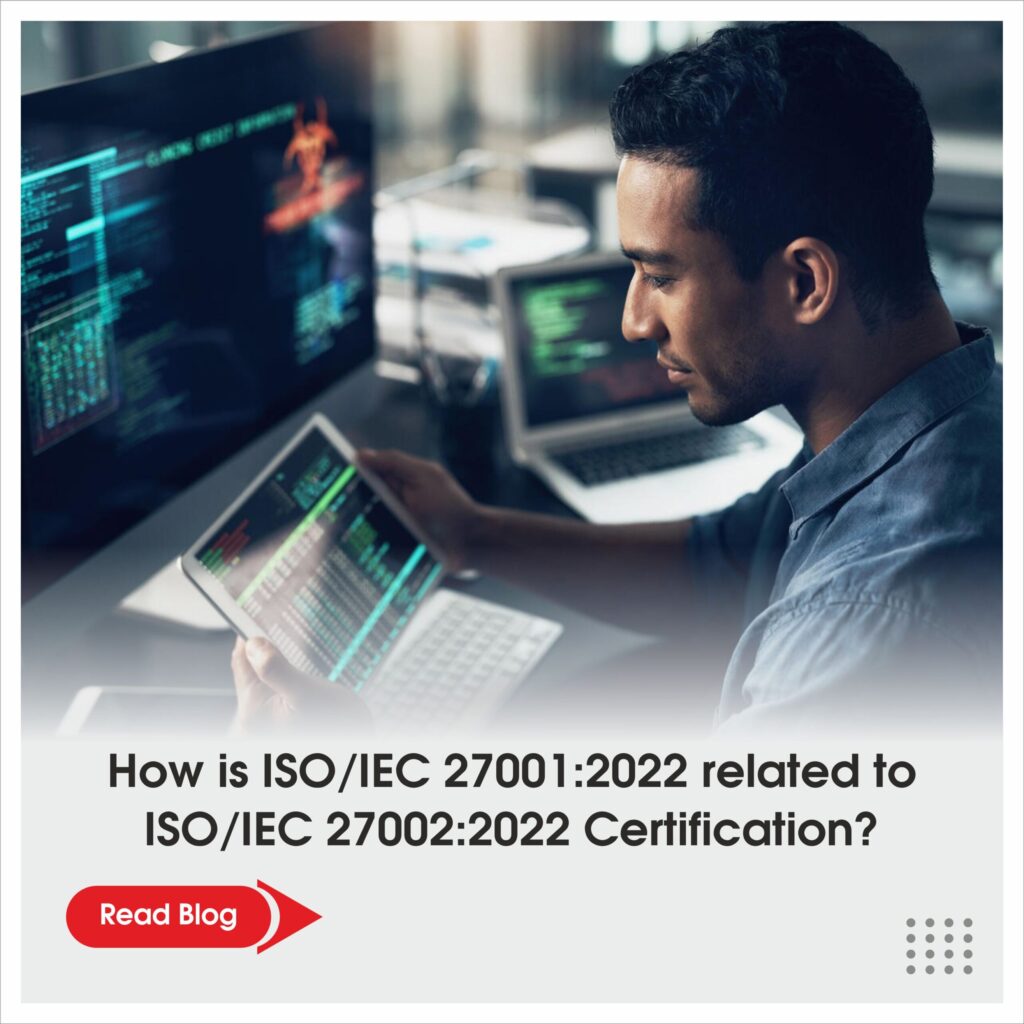
Corporate organisations must protect the users’ and clients’ sensitive information. However, companies have found it difficult to prevent unauthorised access to sensitive, vital, or restricted information. As a result, it can lead to permanent harm to their operations. Organisations can protect information assets using the ISO 27000 series of standards. Furthermore, it helps organisations better manage the security of assets like financial data, intellectual property, and employee information. The most well-known standard in this family is ISO/IEC 27001 for Information Security Management System (ISMS), also connected to ISO 27002 Certification. What is ISO/IEC 27001:2022 Certification? Organisations often face challenges in effectively managing cyber risks in the face of escalating cybercrime and the emergence of new threats. However, ISO/IEC 27001:2022 certification offers a robust framework to address these challenges for organisations across various sectors. Organisations can systematically enhance their ability to identify, assess, and mitigate cyber vulnerabilities by adhering to ISO/IEC 27001 standards. The certification promotes a comprehensive approach to information security, encompassing the scrutiny of personnel, policies, and technological infrastructures. Implementing an information security management system with ISO/IEC 27001 not only serves as a pivotal tool for risk management but also fosters cyber resilience and operational excellence within the organisation. What is ISO/IEC 27002 Certification? ISO/IEC 27002 is a complementary standard focusing on the information security controls that organisations must deploy. These controls are part of Annex A of ISO/IEC 27001, a reference frequently cited by information security professionals when discussing such measures. However, while Annex A security controls provide concise descriptions of each control in a sentence or two, ISO/IEC 27002 offers a more comprehensive exploration by allocating approximately one page per control. This depth allows the standard to explain the functionality of each control, articulate its objectives, and provide guidance on its implementation. Is ISO/IEC 27001 the same as ISO/IEC 27002? ISO 27001 is the primary standard for certifying a business, whereas ISO 27002 is a supplementary standard offering guidance on implementing security controls. An essential distinction is while ISO 27001 certification is attainable for a company, ISO 27002 certification is voluntary. How is ISO/IEC 27001 different from ISO/IEC 27002 Certification? ISO/IEC 27001:2022 certification is achievable, whereas ISO/IEC 27002 certification is not. ISO/IEC 27002 is intended for use by organisations as a reference for control selection that provides guidelines for information security management practices, including security controls implementation and management. ISO/IEC 27001 also documents requirements for setting up, implementing, maintaining, and continuously improving an information security management system. Standards that contain regulations can be certified by organisations, but standards that offer guidance cannot be certified. Other differences are as follows: ISO 27001 offers a concise overview of an Information Security Management System (ISMS), leaving detailed guidance to supplementary standards like ISO 27002. Other standards, such as ISO 27003 and ISO 27004, provide specific advice on ISMS implementation and monitoring. An organisation can attain ISO 27001 certification but not ISO 27002 certification. Moreover, this is because ISO 27001 outlines comprehensive compliance requirements as a management standard, while supplementary standards like ISO 27002 focus on specific facets of an Information Security Management System (ISMS). Implementing an Information Security Management System (ISMS) is crucial to recognise that not all information security controls are relevant. ISO 27001 underscores this by requiring organisations to conduct a risk assessment to identify and prioritise security threats. However, ISO 27002 lacks directives and is challenging to determine suitable controls. Latest Revision in ISO/IEC 27001 and ISO/IEC 27002 Certification ISO/IEC 27001:2013, last updated in 2022, the full title of the new version is ISO/IEC 27001:2022 for Information Security, Cybersecurity and Privacy Protection. Changes of ISO/IEC 27001:2022 Certification Annex A provides references to the controls included in ISO/IEC 27002:2022, encompassing both the control and its title. Editorial revisions to the note in Clause 6.1.3 c) include the removal of the “control objectives” and the substitution of “control” for “information security control.” Clause 6.1.3 (d) has been reworded to remove ambiguity and increase clarity. Scope and Context: It requires an organisation to identify the pertinent requirements of stakeholders and determine which ones need to be incorporated into the ISMS. Moreover, this involves explicitly outlining the necessary processes and their interrelationships within the ISMS framework. Planning: The latest updates to information security standards emphasise monitoring information security objectives by mandating an organisation to maintain proper documents. Moreover, a new subclause addresses planning changes to the ISMS without prescribing specific processes. Therefore, organisations must ascertain methods to demonstrate the planning of changes within their ISMS. Annex A: The Annex A has undergone revisions to ensure alignment with ISO 27002:2022. The subsequent section delves into a detailed discussion of the controls outlined in Annex A. Changes in ISO 27002 Certification ISO 27001:2022 now lists 93 controls compared to the 114 in ISO 27001:2013, primarily due to the consolidation of 56 controls into 24, while no controls have been eliminated. These controls are organised into four overarching themes rather than 14 clauses, namely: People (8 controls) Organisational (37 controls) Technological (34 controls) Physical (14 controls) Additionally, several new controls have been introduced, including Threat Intelligence, Information security for the use of Cloud services, ICT readiness for business continuity, Physical security monitoring, Configuration management, Information deletion, Data masking, Data leakage prevention, Monitoring activities, Web filtering, and Secure coding. ISO 27002 controls are further categorised into five attribute types; these are: Control type (preventive, detective, corrective) Information security properties (confidentiality, integrity, availability) Cybersecurity concepts (identity, protect, detect, respond, recover) Operational capabilities (governance, asset management, etc.) Security domains (governance and ecosystem, protection, defence, resilience). Conclusion ✅ The transition to the updated ISO/IEC 27001 standard should be smooth, with minor adjustments required for compliance. The main standard changes are minimal to facilitate quick updates to documentation and processes. Annex A controls see moderate changes but can be integrated into existing documentation. Expectations for sweeping revisions were high but not realised.
ISO 13485:2016 MD-QMS – Catering the needs of Non-Active Medical Devices
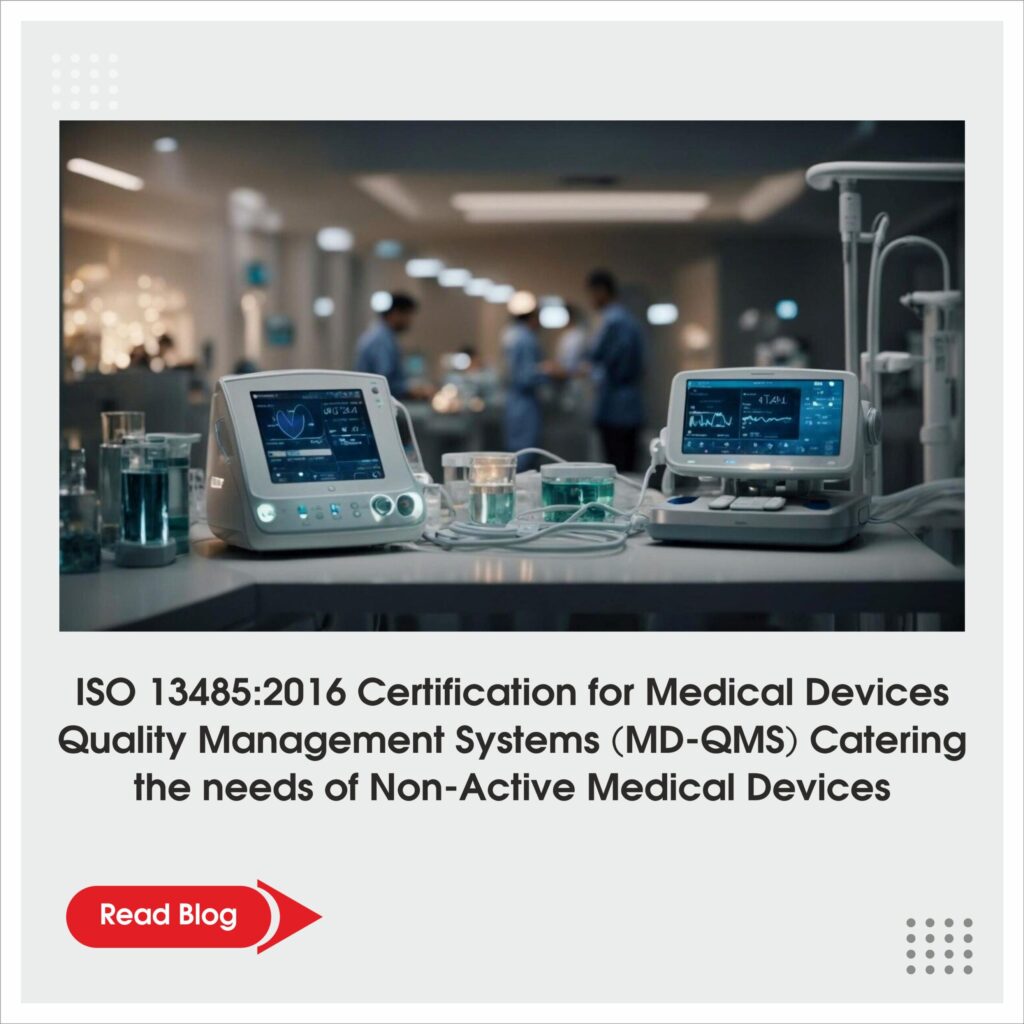
ISO 13485 Certification outlines the framework for organisations to provide high-quality medical equipment to satisfy consumers, clients, and stakeholders. Organisations engaged in one or more phases of the life cycle of a medical device, such as design, development, production, storage, distribution, installation, and technical support, should take note of this accreditation. The MD-QMS requires external parties and suppliers to provide top-notch goods and services to guarantee the safety and well-being of clients and customers. What is Non-Active Medical Devices? Non-Active Medical Devices form part of the Main Technical Areas under ISO 13485:2016 Certification. Moreover, Main Technical Areas are divided into five categories; these are :- General Non-Active, Non-Implantable Medical Devices Non-active medical devices do not rely on an external energy source for operation. These devices are crucial in healthcare settings and necessitate thorough testing to ensure user safety and intended functionality. It includes: Non-active devices for emergency, anaesthesia and intensive care Non-active devices for injection, transfusion, infusion and dialysis Non-active medical devices with measuring function Non-active ophthalmologic devices Non-active medical devices for disinfecting, cleaning and rinsing Non-Active Implants Inactive implants encompass various types, such as non-active cardiovascular, orthopaedic, functional, and soft tissue implants. Moreover, these implants are not used for permanent placement within the human body. It includes: Non-active cardiovascular implants Non-active orthopaedic implants Non-active functional implants Non-active soft tissue implants Devices for Wound Care Wound care medical devices assist in dressing wounds. They encompass materials such as cotton wool, bandages, gauze dressings, sutures for closing dermal wounds lasting less than 30 days, and surgical gloves. These devices do not contain antimicrobial agents and do not utilize animal tissues. It includes: Wound dressings and bandages Clamps and suture material Other medical devices for wound care Non-Active Dental Devices and Accessories Non-active dental devices and accessories encompass various dental instruments and equipment, ranging from X-ray cones to face bows. Additionally, this category includes dental materials and implants. Non-active dental instruments and equipment Dental materials Dental implants Non-Active Medical Devices other than Specified Above Conclusion ✅ The ISO 13485:2016 certification outlines further prerequisites tailored for the healthcare and medical device sectors to address heightened risks and safety concerns for patients. However, this certification applies to organizations, offering detailed guidelines for establishing, monitoring, and managing quality management systems to regulate processes and services effectively.
Unlocking Excellence in Education: Understanding ISO 21001:2018 and its Benefits

ISO 21001 is an international standard developed by the International Organization for Standardization (ISO) that provides management tools for organizations that offer educational products and services. It aims to help educational providers meet students’ requirements and needs. The standard was first published in 2018 and is applicable to all organizations involved in the educational sector, such as schools, universities, distance learning centres, corporations, and non-profit or governmental organizations. The ISO 21001 standard is based on the ISO 9001 Quality Management Systems standard but is tailored specifically for the educational sector. It includes a set of guidelines and principles that focus on the specific needs and challenges of educational institutions, with an emphasis on enhancing the satisfaction of learners and other beneficiaries. Understanding ISO 21001:2018 Educational Organizational Management System (EOMS): The standard establishes an Educational Organizational Management System (EOMS) to ensure that the organization can consistently provide a product that meets the learner’s and other beneficiaries’ needs. Quality and Competence: ISO 21001 emphasizes quality education and competence. It ensures that educational organizations are competent in providing effective learning opportunities. Inclusivity: The standard promotes inclusivity by encouraging educational organizations to understand and respond to the diverse needs of their learners. Life-long Learning: ISO 21001 supports the concept of lifelong learning, recognizing that education is not confined to traditional classroom settings or specific periods in a person’s life. The key benefits of implementing ISO 21001:2018 Improved Educational Processes: By implementing the standard, educational organizations can streamline their processes, making them more efficient and effective. This can lead to improved educational outcomes. Enhanced Learner Satisfaction: The standard focuses on meeting the needs and expectations of learners. As a result, learner satisfaction can be enhanced. Increased Credibility: Being certified to ISO 21001 can increase an organization’s credibility in the eyes of stakeholders, including learners, parents, governmental bodies, and potential partners. Risk Management: The standard helps educational organizations identify and manage risks associated with their activities, thus ensuring a safer and more secure learning environment. Inclusive and Equitable Quality Education: ISO 21001 supports the United Nations Sustainable Development Goal 4 – to ensure inclusive and equitable quality education and promote lifelong learning opportunities for all. ISO 21001 implementation in your educational centre can turn regulatory requirements into the source of the constant development of students as well as the surroundings of the institution. If you follow a detailed directive, you reduce the time needed for start-up and guarantee that you comply with the established requirements for your organization. Start with an introduction in the ISO 21001 which includes its (ISO 21001) requirements. Under this international standard, the schools are concerned, and the framework is developed on the fundamental approach for the design, implementation, operation, and improvement of the educational organisational management system (EOMS). With the knowledge of the main ideas and aims of the ISO 21001 standard, one will have the ground to build the entire structure on. Thus, check your institution’s current practices versus the criteria of ISO 21001. Establish whether there is any gap or necessity for improvement this shortcoming should be corrected. This assessment will be your primary tool in identifying the incentives and assistance required to ensure the success of the implementation. Now that you have ascertained your deficiencies, figure out your action plan. The suggested plan should explicitly declare concrete actions, assign a person responsible, set deadlines, and identify milestones structured in a manner that will help you through the process. It is pertinent to include all the stakeholders comprising the administration, teachers, and staff in the planning phase of ISO 21001 so that everyone is in the same wave of the organization. Make fund placement available for implementation. Financial resources as well as human resources should be part of these resources to ensure a successful outcome. Employees will need to be trained with the nature of their position and the EOMS framework into which they belong. Moreover, there is a need to adopt the technology or the software proposed which can assist the data entry and documentation procedures required for ISO 21001. Effective communication in the whole implementation process is of great significance. Be sure that all the stakeholders understand the overall purpose of and the advantages of implementing ISO 21001. Continuously provide them with the updates on the progress, and respond promptly to their questions and concerns as the journey goes on. Furthermore, keep an eye on and assess your organization’s progress toward achieving ISO 21001 compliance on a continual basis. To verify that the standard is being followed, internal or external certifying organizations should do routine audits. You may establish a culture of continuous improvement and provide your students access to a top-notch learning environment by using this step-by-step guide to apply ISO 21001 at your educational institution. Educational establishments can achieve excellence in education by comprehending and putting into practice ISO 21001, offering top-notch learning opportunities that satisfy the various demands of every student.
Benefits of ISO Certifications in Mongolia
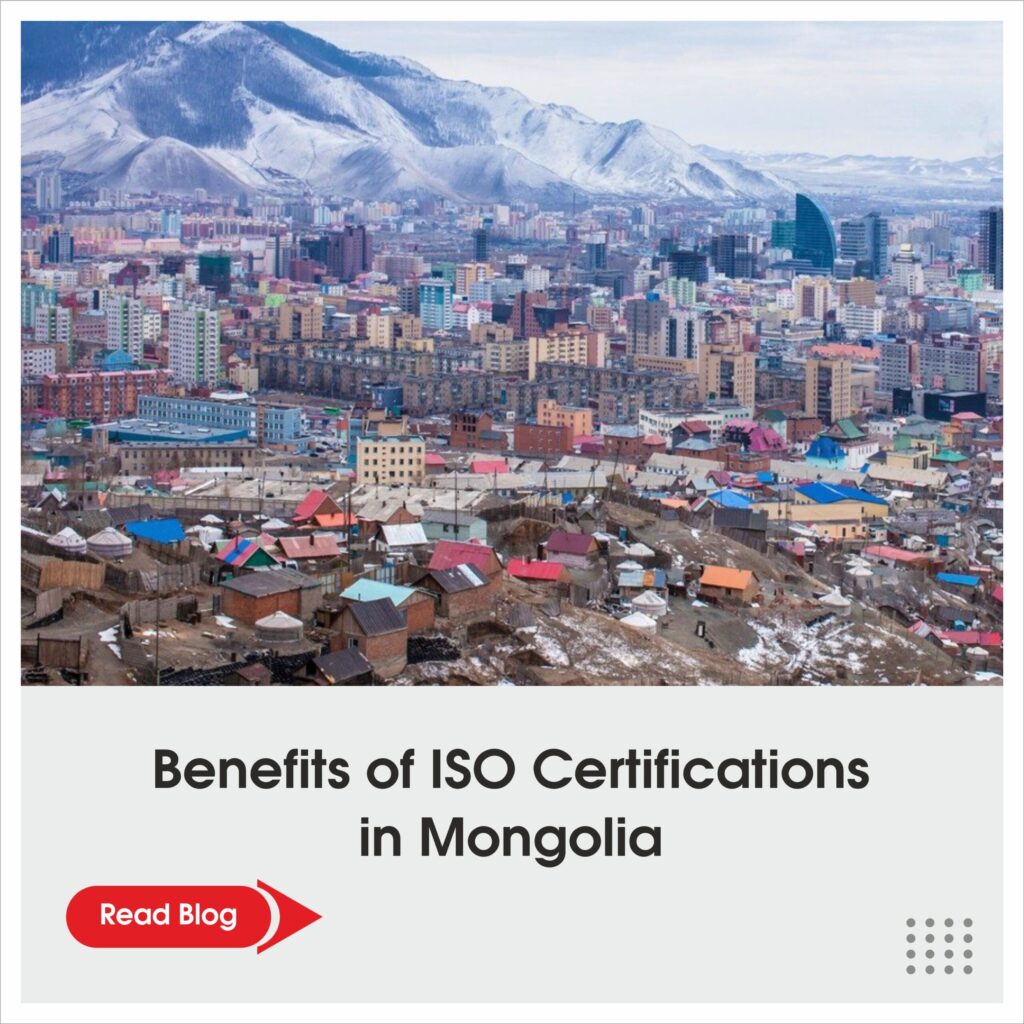
ISO certification bodies in Mongolia provide a range of ISO certification services, encompassing ISO 9001, ISO 14001, and ISO 27001. Among the respected ISO certification bodies in Mongolia is SIS Certifications Pvt Ltd, which extends diverse services to companies aimed at grasping the significance of international standards. These certification bodies offer extensive assistance in implementing and acquiring ISO certifications, ensuring adherence to global standards. Organisations in Mongolia can apply for the following ISO Certifications The International Organisation for Standardisation (ISO) has developed more than 22,521 international standards covering various sectors of the economy, such as technology, food safety, services, healthcare, and agriculture. The global influence of ISO International Standards is evident from the growing demand and importance for businesses. The various types of ISO Certifications are as below :- ISO 9001:2015 Certification for Quality Management Systems (QMS) in Mongolia :It is one of the most widely used methods for developing, implementing, and maintaining a “Quality Management Programme” that can be used by any business and is adaptable enough to meet the needs of various sized and types of organisations. ISO 14001:2015 Certification for Environmental Management Systems (EMS) in Mongolia : ISO 14001 offers guidance for establishing an environmental management system (EMS) comprising documents, policies, strategies, processes, and procedures that outline how a business interacts with the environment. ISO 45001:2018 Certification for Occupational Health and Safety Management Systems (OHSMS) in Mongolia :ISO 45001 is a management system for occupational health and Safety Management System (OHSMS). It provides companies with a framework for risk management and improves the effectiveness of OH&S. Essential elements include the commitment of the leadership, employee involvement, risk assessment and hazard identification, legal and regulatory compliance, emergency preparedness, incident investigation, and continuous improvement. ISO/IEC 27001:2022 Certification for Information Security Management Systems (ISMS) in Mongolia: The latest edition of the information security standard, ISO 27001, was published in 2022. It delineates precise requirements for designing a suitable management system for information security under managerial oversight. Organisations in Mongolia that fulfil these requirements may undergo an audit process and become certified by an accredited certification body. ISO 41001:2018 Certification for Facility Management Systems (FMS) in Mongolia:ISO 41001 accreditation for Facility Management Systems (FMS) shows an organisation’s dedication to providing the necessary assistance to deliver quality services. Additionally, it supports the implementation of suitable controls and technologies by an organisation to guarantee efficient facilities management. ISO 22301:2019 Certification for Business Continuity Management System (BCMS) in Mongolia:The ISO 22301 standard offers a strong and durable framework for organisations to maintain essential operations even during crises or unexpected events. Certification under this standard equips organisations in Mongolia to prepare for unforeseen incidents by developing suitable recovery and disaster management plans. ISO/IEC 27701:2019 Certification for Privacy Information Management Systems (PIMS) in Mongolia:The Privacy Information Management System (PIMS) requires organisations to deploy suitable security measures to protect users’ personal and confidential data. Additionally, it entails implementing the security controls outlined in the ISO 27002 certification. ISO 22000:2018 Certification for Food Safety Management Systems (FSMS) in Mongolia:ISO 22000 outlines the requirements of a food safety management system (FSMS) applicable to any organisation involved in the food chain, directly or indirectly. It demonstrates compliance with pertinent legal and regulatory standards concerning food safety. Benefits of ISO Certifications in Mongolia An organisation in Mongolia can benefit from ISO certification in multiple ways by solving different problems. These are the following :- It provides an organisation in Mongolia with international recognition, enhancing its credibility and dependability in the global market. The International Organisation for Standardisation (ISO) provides best practices to maintain compliance with environmental, information security, and quality standards. Organisations can show their dedication to quality and compliance by meeting the demands of stakeholders, clients, and customers with ISO certification. ISO standards help organisations in Mongolia to save costs by improving customer satisfaction and business processes to ensure sustainable growth. ISO standards assist businesses in identifying and reducing any risks and threats by implementing the necessary actions to guarantee long-term sustainability. Conclusion ✅ ISO Certification enhances the credibility and reliability of different industries in Mongolia. Furthermore, selecting a reputable and dependable certification body enhances an organisation’s accreditation credibility. The industrial and service sectors constitute a significant portion of Mongolia’s GDP. Additionally, ISO certifications are vital for addressing healthcare and education challenges and can foster economic growth by ensuring long-term sustainability.
Why is ISO/IEC 27001:2022 Certification Important for the Information Technology (IT) Industry?
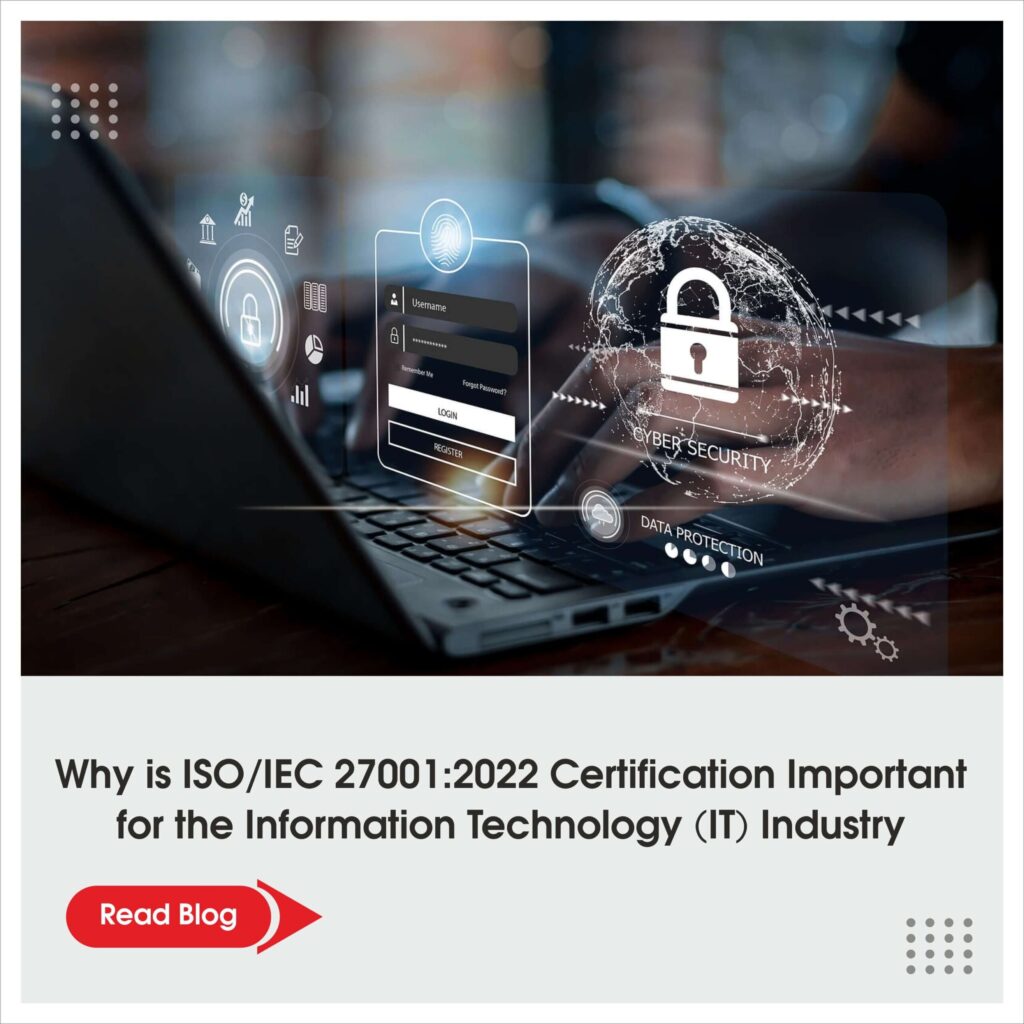
ISO 27001 is a universally acknowledged information security framework that evaluates the effectiveness of an organisation’s Information Security Management System (ISMS) in safeguarding its data. Achieving an ISO 27001 certification showcases that an organisation adopts a robust information security stance to protect the sensitive information of clients, customers, partners, and other stakeholders. What is ISO/IEC 27001 Certification? The ISO/IEC 27001 standard emerged from a collaboration between the International Organisation for Standardisation (ISO) and the International Electrotechnical Commission (IEC) to assist businesses in crafting secure systems and validating their security stance through certification. ISO/IEC 27001 centres on an organisation’s Information Security Management System (ISMS), including policies and procedures to eliminate security threats and risks and safeguard data. Organisations must undergo an audit ensuring compliance with requirements and mitigation of potential system risks to attain ISO 27001 certification. Which Organisations Can Apply for ISO/IEC 27001:2022 Certification? Organisations across various sectors and industries are eligible to pursue ISO/IEC 27001 certification. Moreover, the certification provides the organisations with an adequate Information Security Management System (ISMS) following the standard’s requirements. A list of organisations that can apply for ISO/IEC 27001 Certification :- Finance Sector Healthcare Industry Information Technology (IT) Industry Manufacturing Sector Education Sector Government Sector Importance of ISO/IEC 27001:2022 Certification for Information Technology (IT) Industry ISO/IEC 27001:2022 Certification is the world’s first and most widely used standard for International Standard for Information Security Management. Tech companies face many information security-related difficulties when they develop and enter foreign markets. Moreover, this is particularly valid when handling sensitive data, such as financial transactions or personal information. A business can streamline and verify various processes to safeguard clients’ and customers’ data by obtaining ISO/IEC 27001 certification. Some of the benefits of ISO/IEC 27001 Standard for Information Technology (IT) Companies are as follows :- ISO/IEC 27001 requires an organisation to conduct a risk assessment to formulate appropriate incident response and risk management strategies. Information Technology (IT) Companies can showcase their commitment to information security to customers and partners through certification under this standard. ISO/IEC 27001 for Information Security Management Systems (ISMS) signifies that the IT company prioritises safeguarding sensitive data and has established effective processes and systems to achieve information security goals. Tech companies can tap into new revenue sources and explore new business opportunities nationally and internationally by becoming an ISO/IEC 27001-certified organisation. Numerous countries enforce laws and regulations mandating companies to safeguard personal information and other sensitive data. Information Technology (IT) companies can exhibit compliance with these regulations with ISO/IEC 27001 Certification. ISO/IEC 27001 certification helps IT companies identify and mitigate potential risks by adopting a risk-based approach. Additionally, it helps companies avoid penalties and fines while affirming their commitment to data protection. Obtaining ISO/IEC 27001 certification is the first step towards a tech company’s international expansion. In today’s highly competitive environment globally, businesses contest to attract new customers and clients. However, possessing an ISO/IEC 27001 certification to demonstrate a company’s dedication to information security can provide it with a significant competitive edge. Conclusion ✅ Many well-known businesses, including those on the Fortune 500, need their suppliers to be ISO/IEC 27001 certified. However, this need is mandatory in industries like finance and healthcare, where maintaining data security is vitally important. Moreover, the information technology (IT) industry can become more aware and information security conscious with ISO/IEC 27001:2022 Certification.
What are the requirements of ISO 41001:2018 Certification?

The ISO 41001 standard amalgamates individuals, locations, and procedures within constructed spaces to improve occupants’ experiences and boost business productivity. However, the International Organisation for Standardisation (ISO) released the ISO 41001 for Facility Management System (FMS) in 2018. The certification is suitable for organisations, including public or private, irrespective of their size, scope, or geographical remoteness. Furthermore, the ISO 41001 standard is crafted to address the growing intricacies of facility management. Why should an organisation apply for ISO 41001:2018 Certification? ⮯ ISO 41001 is the first international facility management system (FMS) standard in the world. Facility management is an organisational function that combines people, place, and process to enhance the built environment’s quality of life and the productivity of the company’s main business. ISO 41001 certification constructs a comprehensive environment for buildings, external works, and infrastructure in a given area. It improves quality of life by raising safety standards and improving working conditions for those who operate in the built environment, for example, walkways, walls, buildings, electrical and mechanical systems, and more. However, implementing ISO 41001 enhances the productivity of core company operations. Furthermore, it focuses on improving societal services, including healthcare, education, retail centres, hotels, condos, and hospitality, among other areas. Which organisations can apply for ISO 41001 Certification? ⮯ ISO 41001 helps organisations adopt an adequate facility management system to build safe communities and attain sustainable growth. Here is a list of organisations that can apply for ISO 41001 standard :- Corporate businesses Government agencies Educational institutions Healthcare facilities Manufacturing companies Retail establishments Hospitality industry Non-profit organisations Transportation and logistics companies Energy and utility providers Real estate management firms Technology companies Construction companies Financial institutions Telecommunications companies Pharmaceutical companies Requirements of ISO 41001 standard ⮯ ISO 41001 is an internationally recognised standard for Facility Management systems that improves and modernises an organisation. The ISO 41001 has ten requirements, and out of these, seven requirements are mandatory. These are: Section 4: Context of the organisation This section deals with understanding the requirements of an organisation for implementing the appropriate Facility Management System. It also helps organisations to tailor the FMS as per the organisational requirements. Section 5: Leadership This clause focuses on the importance of top management in the FMS implementation. Every individual within the organisation must understand their specific duties and responsibilities to adopt an effective FMS. Section 6: Planning The planning clause entails risk analysis and system analysis to reduce risks and establish goals for an efficient FMS. It also mandates organisations to examine its interaction with itself at all levels and through various channels. Section 7: Support This clause mandates an organisation to arrange all the required resources to establish an effective FMS, from implementing a system to overseeing documented information within the organisation to allocating resources. Section 8: Operation Clause 8 of ISO 41001 addresses the operational specifications for facility management. Moreover, it also entails getting the company ready for any unforeseen circumstance. Section 9: Performance Evaluation It guaranteed the effectiveness of an FMS. Moreover, this part monitors things to evaluate the system and pinpoint areas that could use improvement. Section 10: Continuous Improvement Section 10 of ISO 41001 guarantees the effectiveness of the FMS. Organisations ensure ongoing evaluations of their compliance with the ISO 41001 standard. Conclusion ✅ The International Organisation for Standardisation (ISO) has released ISO 41001:2018 as a global standard for the Facility Management System (FM) into practice in businesses. Moreover, it deploys the most upgraded standards for facility management within the organisation. Since the frameworks for ISO 45001, ISO 9001, and ISO 14001 certifications are the same, it is simpler to integrate all of these management systems.
Achieving Excellence in Facility Management: The Role of ISO 41001 Certification
ISO 41001 certification outlines the framework for organisations to improve operational effectiveness, allocate resources optimally, and safeguard the welfare of stakeholders and employees. Organisations can increase productivity and cut expenses by streamlining their facilities management procedures by putting ISO 41001 into practice. Implementing ISO 41001 offers a goldmine of benefits for various companies irrespective of their size and nature. It helps organisations improve their decision-making procedures to enhance operational effectiveness, allocate resources optimally, and safeguard the welfare of stakeholders and employees. In terms of the organisation’s facilities management procedures, it also aids in identifying possible hazards and areas for development. Furthermore, ISO standards are essential for maintaining quality and uniformity across businesses. Organisations can increase their competitiveness in the market and show their dedication to quality by following globally recognised standards like ISO 41001. What is ISO 41001:2018 Certification? ⮯ The first worldwide facility management system (FMS) standard produced by ISO was the ISO 41001 standard, launched in 2018. It combines a variety of disciplines to impact people’s interactions with the physical environment and the productivity and efficiency of economies in societies, communities, and organisations. Through the services it administers and provides, the Facility Management System impacts the health, happiness, and standard of living of a large portion of global society and population. The goal of ISO 410001 is to enhance the productivity and the well-being of people and stakeholders by integrating People, Places, and Processes within the built environment. The standard is significant for companies that use or incorporate facilities management systems and wish to implement compliance with the new standard into their operations. Why is there a Need for ISO 41001 standard ⮯ ISO 41001 is one of the most relevant and significant standards in the current economic landscape, yet it is the most underrated one. The following points explain the need and significance of ISO 41001 certification for organisations :- ISO 41001 for FMS can show that its facilities management services are delivered effectively and efficiently. The certification has the potential to satisfy the needs of clients and interested parties. The certification enables an organisation to make plans to be sustainable in a highly competitive global context. Types of Facility Management System ⮯ ISO 41001 for Facility Management Systems (FMS) divides the facility management procedures into two groups. These are: Soft Facility Management Systems Hard Facility Management Systems Soft Facility Management System: Facility Management services like cleaning and catering fall under the soft facility management system. Hard Facility Management System: Facility Management services that oversee physical aspects, like plumbing and building maintenance, are part of the hard facility management system. Scope of ISO 41001 Certification ⮯ The scope of ISO 41001 certification for Facility Management Systems (FMS), includes : – Hard facility management takes care of the infrastructure and the area. With an emphasis on (work-) space and (building-) infrastructure (such as planning, design, workplace, construction, lease, occupancy, maintenance, and furniture), this refers to the physical built environment. Hard facility management is concerned with the structural elements of the immovable structure. These constitute “the essentials” and guarantee employee safety and well-being. The majority of hard services are mandated by law and come with requirements like: Heating Lighting Plumbing Fire safety systems Air conditioning Preventative building maintenance or building improvements Electro-mechanical maintenance Benefits of ISO 41001 certification for organisations ⮯ The following are the benefits of ISO 41001:2018 Certification Facility Management Systems (FMS). These are :- No regulatory body governs the ISO 41001, and compliance with the guidelines is entirely voluntary and attracts no penalty. On the other hand, it aims to guarantee adherence to all FMS-related rules and regulations and to enhance the facility management system. It improves an organisation’s profitability and marketability. The facility services provided by an organisation are guaranteed to be safe and to foster a productive workplace by ISO 41001 standards. The ISO 41001 Certification is an affordable requirement. It reduces the additional expenses incurred for premiums and compensation amounts by improving worker productivity, safety, health, and well-being. ISO 41001 helps a company adjust to the constantly shifting trends in infrastructure development and use strategies and tools to manage them appropriately. It seeks to give workers a better working environment. Establishing supportive, sustainable, and productive workplaces is the goal of ISO 41001 certification. Conclusion ✅ ISO 41001 certification is the first standard in the world for Facility Management Systems (FMS). It increases a facility management company’s brand visibility and offers a foundation for building safe and secure environments. Any organisation, regardless of size, can apply for ISO 41001 Certification to enhance its reputation in the marketplace and grab new opportunities.