Benefits of ISO 22000:2018 Certification
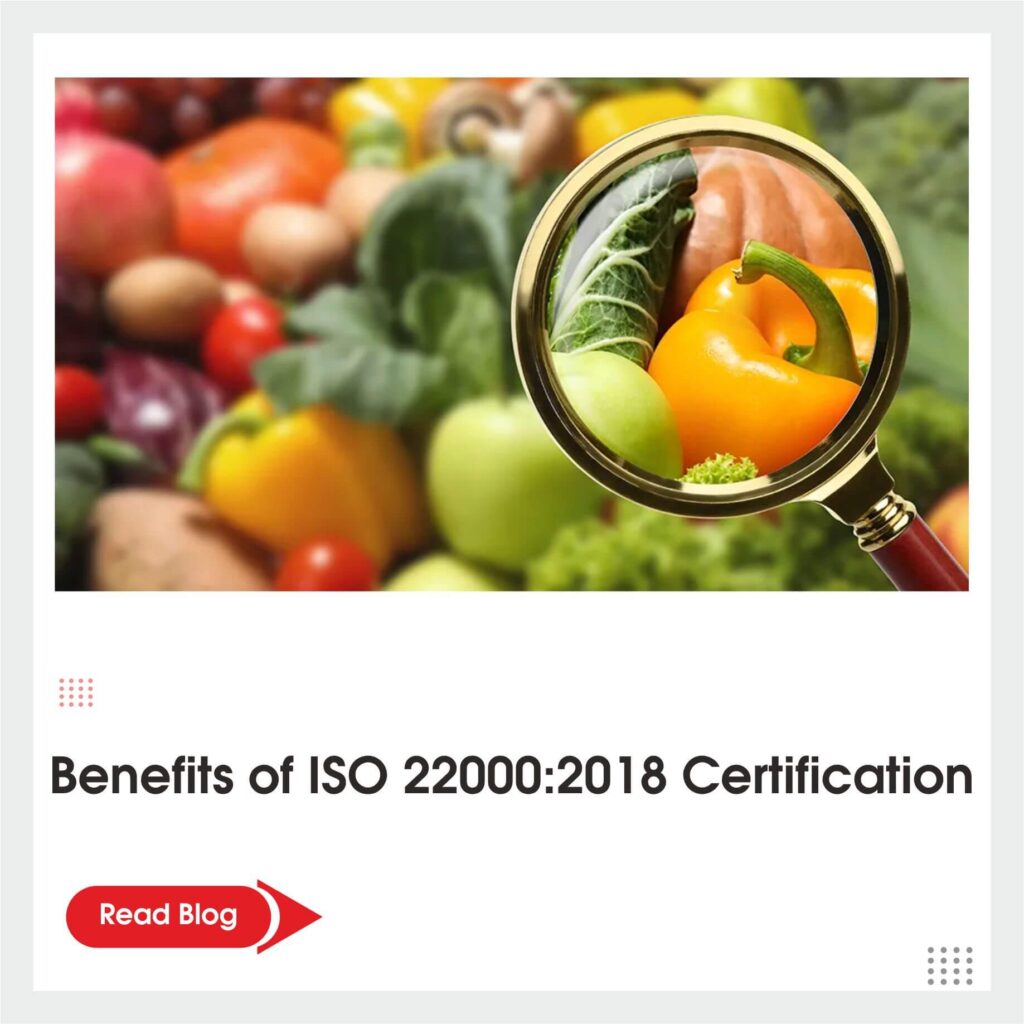
An organisation that operates by the standards created and disseminated by the International Organisation for Standardisation (ISO) can receive ISO Certification. However, an ISO Certification is a kind of endorsement from an impartial third party. The advantages of various ISO Standards and Certifications vary, as an organisation involved in the food chain can implement the Food Safety Management System required by ISO 22000 certification. The advantages of ISO 22000 certification for the food industry are covered in this article. What is ISO 22000:2018 Certification? ⮯ The independent organisation ISO issues ISO Certifications. Furthermore, it exhibits a company’s compliance with any standards established by the International Organisation for Standardisation. It is an independent, non-governmental organisation that brings experts together to share knowledge and create international standards that address pressing global issues. Although promoting trade is its principal objective, process improvement, safety, and quality are also important considerations. ISO 22000:2018 outlines the requirements for the international standard for Food Safety Management Systems (FSMS). Its goal is to assist businesses in the food sector in guaranteeing the safety of their goods. The standard incorporates management standards, prerequisites, and Hazard Analysis and Critical Control Points (HACCP) and covers the whole food chain, from production to final consumption. Businesses with ISO 22000:2018 certification can show their clients and other stakeholders that they have a comprehensive food safety management system. Ways in which a Food Safety Management System (FSMS) helps organisations achieve a safe and sustainable food supply chain ISO 22000 standard is a widely used framework for food safety that assures clients and customers that a particular organisation follows national and international best practices. Moreover, the standard is based on the seven HACCP principles to ensure an effective food safety management system. ISO 22000 and HACCP together assist organisations in identifying and mitigating risks before they endanger the safety of consumers and food. The seven HACCP principles are as follows:-⮯ Hazard Analysis: Hazard Analysis provides a preventive strategy for food safety by identifying physical, chemical, and biological food safety risks during the production process. Critical Control Point: Critical Control Points (CCPs) provide tools and controls for organisations to use at different points in the procedure to lower the risks to a manageable level. Critical Limit: Every CCP has a maximum and minimum value attached to it to define its safety restrictions. It distinguishes between the harmful or unacceptable product and the safe or acceptable product. Moreover, it measures or observes the food supply chain at various levels to identify and eliminate food safety hazards. Monitoring: It monitors all the techniques and procedures to evaluate their impacts and determine the effectiveness of implemented CCP controls. Corrective Actions: In case an organisation finds a shortcoming or deviation from the defined critical limit, it must implement appropriate tools to address them. Corrective actions demonstrate an organisation’s commitment to attain defined results. Verification: It analyses the effectiveness of a food safety management plan. Moreover, the verification process ensures that the implemented plan appropriately covers and identifies all the areas of danger. Record Keeping and Documentation: An organisation must maintain all the records under Record Keeping and Documentation to establish a smooth and flexible checks and balances system. Moreover, it ensures that the organisation complies with the Food Safety Policy and requirements to avoid errors and discrepancies. Some Key Benefits of ISO 22000:2018 Standard ⮯ Organisations can reduce food safety incidents and recalls by developing a food safety management system that satisfies ISO 22000:2018 requirements. Moreover, this will help them better detect and control food safety concerns. The certification provides a robust food safety management system and helps organisations demonstrate their commitment to identifying and eliminating food safety threats and hazards. Moreover, it boosts customer confidence in the security and calibre of the company’s products. Companies certified to ISO 22000:2018 can use their certification as a marketing tool to improve the company’s brand name and its products’ reputations. ISO 22000:2018 is a widely accepted standard that can assist organisations in adhering to national and international rules and regulations concerning food safety. Organisations can find and rectify inefficiencies and enhance overall operations. As a result, it can save extra costs by implementing a food safety management system. It enables businesses to exert more control over their subcontractors and suppliers as it exhibits dedication to adopting international and national best practices. It also results in a safer and more effective supply chain. Conclusion ✅ The efficacy of a food safety management system is contingent upon the organisation’s unique installation and continued dedication to improving the system. Although ISO 22000 certification indicates that an organisation implements a food safety management system that satisfies food safety requirements, it does not guarantee food safety. To maintain the system’s continued efficacy, the organisation must continue to monitor and review it.
ISO Certification in India- Online Process, Fees, Procedures
The Process of certification starts from filling up of the below form and providing the technical information which is then used to calculate the man-days required for the audit. Once the relevant information is received the same is technically evaluated and the cost and timelines are communicated to the organisation. “We value our clients’ time and respond with urgency, ensuring swift communication and timely delivery of services.” What is ISO Certification? ⮯ The role of the independent organisation ISO- International organisation for Standardisation is to review, update, publish new and old ISO Standard issues the international standard.These standards are then implemented in the organisation to become eligible to apply for certifications. SIS Certifications is one of the prominent and most stable certification body to be applied for ISO Certifications. There are various management system standards- ISO Standards which are valid for ISO Certifications which focus on various parameters of the system in any of the organisation. ISO 9001, ISO 14001, ISO 45001, ISO 22000 , ISO 27001, ISO 27701, ISO 13485, ISO 20000-1 and various other international management system standards. Types of ISO Certifications ⮯ ISO has produced over 22521 international standards that span nearly every sector of the economy, including technology, food safety, services, healthcare, and agriculture. The worldwide impact of ISO International Standards is evident through its increasing demand and significance for businesses. The different types of ISO Certifications are as follows:- ISO 9001:2015 Certification for Quality Management Systems (QMS): It is one of the most popular techniques for creating, carrying out, and upholding a “Quality Management Programme” that applies to any company and is flexible enough to cater to the requirements of organisations of diverse nature and size. ISO 14001:2015 Certification for Environmental Management Systems (EMS): ISO 14001 provides the guidelines for implementing an environmental management system (EMS). It consists of documents, policies, strategies, processes, and procedures that set the broad guidelines for how a business engages with the ecosystem. The 2015 standards have received global approval. ISO 45001:2018 Certification for Occupational Health and Safety Management Systems (OHSMS): ISO 45001 is an occupational health and safety management system. It gives businesses a framework for risk management and enhances OH&S effectiveness. Leadership dedication, employee involvement, risk assessment and hazard identification, legal and regulatory compliance, emergency preparation, incident investigation, and ongoing improvement are integral components. ISO/IEC 27001:2022 Certification for Information Security Management Systems (ISMS): The most recent version of the information security standard, ISO 27001, was released in 2022. It outlines specific requirements while designing an appropriate management system for information security under management control. Organisations that meet the requirements may be certified by an accredited certification body after the audit process. ISO 41001:2018 Certification for Facility Management Systems (FMS): ISO 41001 certification for Facility Management Systems (FMS) demonstrates an organisation’s commitment to provide the required support to deliver effective services. Moreover, it helps an organisation to implement appropriate tools and controls to ensure effective facility management. ISO 22301:2019 Certification for Business Continuity Management System (BCMS): ISO 22301 standard provides a robust and resilient framework for organisations to sustain minimum operation even during crises or unforeseen events. The certification prepares the organisation for unprecedented events or incidents by formulating appropriate recovery and disaster management plans. ISO/IEC 27701:2019 Certification for Privacy Information Management Systems (PIMS): Privacy Information Management System (PIMS) mandates organisations to implement appropriate security controls to safeguard users’ personal and confidential information. However, it also requires an organisation to implement the list of security controls defined in ISO 27002 Certification. ISO 22000:2018 Certification for Food Safety Management Systems (FSMS): The requirements in the document are for a food safety management system (FSMS) for any organisation involved in the food chain, whether directly or indirectly. It proves adherence to relevant legal and regulatory standards for food safety. Click here to know more about certifications and get your organisation certified. Benefits of obtaining an ISO Certification in India ⮯ The benefits of ISO Certification are as follows: Businesses often make the same mistakes again because they lack a process to document good problems as they arise. Maintaining meticulous records of issues, identifying their underlying causes, and having long-term solutions ready are all mandated by ISO. Obtaining an ISO credential, an internationally recognised standard to ensure management methods, will strengthen your business and increase sales. Suppliers to many large communities must hold an ISO authorisation. When workers see that the organisation is committed to cutting waste and putting together the highest calibre, it encourages and grows their confidence. Additionally, ISO mandates that you specify job duties, close skill gaps within your company, and communicate your quality standards to employees. ISO requires you to track, gauge, assess, and monitor how well organisations differentiate administration systems and their working. To create performance measures that let the organisation gauge how successfully it conducts its operations. How can an organisation obtain ISO Certification in India? ⮯ Click here to apply for ISO Certifications. Stages of Audit Stage 1 audit: Once the organisation applies for ISO Certification, SIS Certifications performs the technical review and goes for the stage 1 audit. This includes the verification of the documentation, site, scope and other details provided at the time of application. We at sis certifications understands that no organisation is perfect. We give the gaps identified in the stage 1 and the closure of the gaps is required to qualify stage 1 audit. Stage 2 audit: Once the organisation qualifies the stage 1, we proceed with the audit to verify the implementation of the ISO Standard. The gaps in the implementation are notified to the organisation and the closure of the gaps is required to process the further steps for certifications. Cost of ISO Certification in India Click here to know the cost of the certification. Conclusion ✅ It can be difficult for small businesses and microbusinesses to navigate the complexity of ISO certification. Hence, it becomes necessary for an organisation to consult an ISO certification body to understand the complexities and processes thoroughly. However, acquiring an ISO
Primitive Analysis: The most common ISO non-conformity occurs in every organisation
Primitive Analysis is an initial examination or assessment of an organisation’s processes and practices to identify fundamental issues and potential non-conformities with ISO standards. However, an organisation must conduct it at the initial stages of pursuing ISO certification to outline the foundational challenges. “Primitive” in ISO Certification refers to the essential aspects of an organisation’s operations. Moreover, it involves a comprehensive examination to monitor the five key components of primitive analysis to maintain compliance with ISO standard requirements. These five components are as follows: Five Components of Primitive Analysis ⮯ The dream of every organisation is to achieve defined quality requirements. However, quality is an impeccable component in the complex web of organisational procedures. The International Organisation for Standardisation (ISO) certification provides international and national best practices for many people and organisations to attain intended outcomes. In their quest for excellence, organisations often find themselves entangled in the labyrinth of non-conformities. Of these, the most common ISO non-conformity stands out as a persistent issue that is straightforward but persistent. Common Non-Conformities that can occur during Primitive Analysis ⮯ Organisations can attain a more seamless path to ISO certification depending on recognising and resolving the problems early in the certification procedure. Organisations can identify non-conformities during the Primitive Analysis due to non-compliance with ISO standards. The following are possible non-conformities: Incomplete Documentation An organisation must maintain proper documentation of processes as missing, outdated, or incomplete documentation can lead to an ISO non-conformity. Lack of Understanding of ISO Requirements Organisations must gain sufficient knowledge and understanding of the specific ISO standards. However, a misalignment between organisational processes and ISO requirements can cause non-compliance. Inadequate Training and Awareness Programs Adequate training and awareness programs help employees gain a deeper understanding of ISO standards and requirements. Moreover, a lack of training programs to educate employees on ISO standards can result in ISO non-compliance. Vague Resource Allocation An organisation must allocate resources adequately, including human and technological resources, for implementing and maintaining ISO standards. However, inadequate resource allocation can produce unintended outcomes in the organisation. Failure to Identify and Manage Risks Risk identification and management is an essential component of ISO Certification. However, incomplete identification and management of risks could cause ISO non-compliance. Strategies an organisation can implement to prevent non-conformities ⮯ An organisation must resolve ISO non-conformities by adopting a comprehensive strategy. Organisations must take proactive measures to manage documentation clutter and strengthen their procedures against the potential risk of non-compliance. Organisations can take the following measures to manage ISO non-conformity: Regular Audits and Reviews: An organisation must conduct regular internal audits to monitor and review the documentation system. Moreover, conducting regular audits and reviews helps organisations identify disparities and shortcomings in the ISO Certification process. Training and Awareness Programmes: Organisations should organise extensive training programs to educate staff members. Educating employees about the possible repercussions of nonconformities can establish accountability and responsibility within the organisation. Adequate Documentation: Organisations must maintain accurate documentation to maintain compliance with the ISO standards. Continuous Improvement: ISO Certification encourages an organisation to adopt a framework for continuous improvement. An organisation’s ability to take corrective actions to manage ISO non-conformities helps it achieve sustainable growth. Conclusion ✅ Organisations must carefully and strategically negotiate the complex web of standards to become ISO-certified. The most common nonconformity stems from a disorganised documentation system and is a warning sign for organisations to strengthen their foundations.
How to Identify and Address ISO 9001 Non-Conformities

What is ISO 9001:2015? ISO 9001:2015 is a global standard that specifies the standards for an effective Quality Management System. It specifies the precise processes, procedures, and activities that businesses must develop, implement, maintain, and improve to properly manage the production of goods or the delivery of services. A certificate is issued by a third party to give clients more trust that the company has a system in place to meet their needs. When an error happens, the system can assist the company in swiftly responding to the customer and putting steps in place to ensure the issue does not occur again. What is ISO 9001 non-conformity? ISO 9001 non-conformance occurs when a corporation fails to adhere to ISO 9001 specifications. ISO 9001 is a standard published by the International Organization for Standards that describes the quality management system (QMS) standards that must be followed to ensure your products and services fulfil customer expectations as well as regulatory policies. Nonconformity can be an unanticipated event that has a detrimental impact on the final product quality. It can also refer to a method, service, or product that is not following the specifications. TYPES OF NON-CONFORMITIES ⮯ Major Non-Conformity: Major non-conformities are serious deviations from the requirements of a standard or management system. They often pose a significant risk to the organization’s objectives, compliance, or product/service quality. Major non-conformities can result in certification suspension or withdrawal in the case of ISO certification. Minor Non-Conformity: Minor non-conformities are less severe than major ones but still represent a deviation from the standard or management system’s requirements. While they may not pose an immediate or significant risk, they should be addressed to ensure compliance and continuous improvement. Observation: Observations are findings made during an audit or assessment that are not classified as non-conformities. They are typically used to report areas where the organization’s practices, processes, or documentation deviate slightly from the requirements of the relevant management system standard. The purpose of reporting observations is to bring attention to areas where improvements or adjustments could be beneficial for the organization. Opportunities for Improvement (OFI): These are specific areas within the organization’s processes or practices where enhancements or optimizations can be made. These areas may not necessarily be deviations from the standard’s requirements, but they represent chances to improve efficiency, effectiveness, or performance. Six reasons for non-conformance to ISO 9001 ⮯ A lack of commitment from management – The C-suite must be fully committed for ISO 9001 to be implemented successfully. Poor resource allocation, poor communication, and subpar QMS implementation might result from senior management’s lack of commitment to the process. Setting clear goals, actively participating in the QMS development process, and making sure that the required resources are available are all critical steps that senior management must take to show their commitment to resolving this problem. Insufficient Training and Awareness for Employees – Workers at every level need to understand the organization’s quality management system (QMS) as well as their respective tasks and duties, particularly those that have to do with meeting quality targets. Non-conformance can be brought about by inadequate training and ignorance. Organizations should offer thorough training programs and chances for ongoing education to keep staff members abreast of the most recent ISO 9001 standards and best practices to address this problem. Inadequate keeping of records and documentation – Complying with ISO 9001 requires accurate record-keeping and documentation. Inconsistencies and mistakes in the QMS’s implementation can result from inadequate documentation. Establishing a document control system that specifies the processes for generating, updating, and archiving documents will help businesses avoid this problem. To make sure their documentation is up to date and accurate, companies should also examine and update it regularly. Inadequate Process Monitoring and Controls – Organizations must design, develop, and maintain processes in accordance with ISO 9001 to achieve quality goals. Non-conformance may arise from insufficient process controls and monitoring. Effective process control systems should be developed and implemented by organizations, and KPIs should be used to measure and track performance. To find opportunities for improvement and make sure the QMS is running well, regular audits and management reviews should be carried out. Lack of Coordination and Communication – A successful ISO 9001 implementation depends on efficient coordination and communication across the many departments and activities of the company. Ineffective communication can result in miscommunication, effort duplication, and non-conformance. Organizations should foster an environment of open communication, create clear communication channels and protocols, and support cross-functional cooperation to address this problem. Unwillingness for Change – When implementing ISO 9001, enterprises frequently need to make considerable changes to their current systems and procedures. Opposition to change can make it more difficult to successfully implement the QMS and increase the risk of non-conformance. Organizations can solve this problem by involving workers in decision-making, explaining the advantages of the changes, and offering sufficient assistance and training to enable workers to get used to the new procedures. Ways to address ISO 9001 non-conformities ⮯ A structured procedure that includes finding, assessing, and correcting the non-conformities, as well as taking preventative action to make sure they don’t happen again, is required to deal with ISO 9001 non-conformities. These are the general procedures:- Identification of Non-Conformity: Finding the non-conformity is the first step. Internal and external audits, as well as frequent monitoring and measuring of environmental performance, can help with this. Record the Non-Conformity: The non-conformity should be noted as soon as it is discovered. The record should contain information on the nonconformity nature, how it was discovered, who found it, and when and where it occurred. Evaluate the Non-Conformity: The non-conformity must next be evaluated to determine its source and consequences. This entails determining the source of the non-conformity and evaluating any potential effects to quality that resulted from it. Correct the Non-Conformity: The organisation should take steps to address the non-conformity after fully comprehending its origin and effects. Depending on the non-conformity’s nature, this may entail fixing machinery, changing processes, or retraining employees. Preventive Action: The
What is HIRA in ISO 45001:2018 Certification?

The whole world is talking about and emphasising the significance of HSE; HSE stands for Health, Safety, and Environment. It’s a broad discipline that includes practices, policies, and procedures to protect employees, visitors, contractors, and the environment. Moreover, the S in HSE stands for safety, which aims to reduce hazards, prevent accidents and injuries, and promote sustainable practices. What are the standards for Health and Safety? ⮯ ISO 45001 is an internationally recognized and widely used Occupational Health and Safety Management System (OHSMS). The standard aims to reduce and eliminate work-related injuries, accidents, and diseases to protect employees and visitors. The standard applies to any organization, regardless of size, industry, or geographic location. Moreover, the standard is effective for higher-risk industries like construction, manufacturing, oil and gas, mining, and agriculture. Evolution of ISO 45001 Certification The International Organisation for Standardisation (ISO) has developed the ISO 45001:2018 certification. The standard was proposed in 2007; however, it was published in 2013. So, the first published version of the standard was ISO 45001:2013 certification, and the standard was last updated in 2018. OHSAS 18001 was the first occupational health and safety standard published in 1996. Later, with the introduction of ISO 45001, the Occupational Health and Safety Management System (OHSMS) replaced OHSAS. Elements of ISO 45001:2018 Standard What is HIRA in the ISO 45001 standard? ⮯ Occupational Health and Safety Management System (OHSMS) is a widely used certification to ensure the safety and well-being of employees in an organization. The ISO 45001:2018 standard has a separate clause, Clause 6.1.2.1., to help organizations create a safe and healthy work environment. Moreover, it requires an organization to identify and eliminate the potential work-related risks and hazards to address them proactively. Hazard Identification and Risk Assessment (HIRA) offers a systematic method for evaluating work-related hazards and risks. Moreover, it helps organizations to frame comprehensive metrics for identifying hazards and implementing risk-management strategies. Purpose of Hazard Identification and Risk Assessment (HIRA) It helps organizations recognize all those factors that can cause injuries to workers. The assessment determines potential threats and opportunities to evaluate their severities and address them accordingly. It assesses existing controls and safety measures in the management system to understand their effectiveness. The assessment recommends ISO 45001 controls and measures to manage the potential hazards. Factors that influence Hazard Identification and Risk Assessment (HIRA) ⮯ Continuous improvement in education is a key process that serves to guarantee that children receive the best education possible. This technique entails continuous reviewing and improvement in teaching methods, curriculum, and learning environments to find areas for improvement and make changes to improve student learning results. Continuous improvement is fundamentally about always striving for perfection. It necessitates the establishment of objectives and making improvements as and when required to meet their goals. This type of approach is very significant in education. There are several benefits to exercising a continuous improvement strategy in education. One of the most significant is that it helps children get a high-quality education that boosts their confidence and prepares them to work for their goals. Teachers will get up to date with the latest methods and research by regularly keeping an eye on the teaching techniques and curriculum. Fostering an innovative and collaborative culture among educators is another advantage of continual development. Continuous improvement has the potential to foster a community of educators committed to giving children the best education possible by empowering them to take prudent risks, try out novel strategies, and share their triumphs and disappointments. The promotion of equity in education is arguably the most significant benefit of continuous improvement. Through continuous assessment and improvement of teaching strategies and curricula, educators may spot and close gaps in learning outcomes and guarantee that every student has access to the tools and assistance they require to achieve. Factors that influence Hazard Identification and Risk Assessment (HIRA) The following factors can impact the Hazard Identification and Risk Assessment (HIRA); these are: Workplace or Process Changes: Any changes to the workspace, tools, or procedures could introduce new risks, calling for an evaluation of the HIRA. Occurrence of Incidents: Any incidents or near-misses at the workplace can set off an expeditious HIRA review to pinpoint and rectify the root causes. Adopting Industry Best Practices: A review of the HIRA ensures compliance with current standards to modify occupational health and safety laws to improve risk management techniques. Feedback from Employees: Employee concerns or recommendations regarding potential risks can prompt a thorough review of the Hazard Identification and Risk Assessment (HIRA) to ascertain their validity. Conclusion ✅ An efficient Occupational Health and Safety Management System (OHSMS) must include the HIRA (Hazard Identification and Risk Assessment) process. It helps businesses to eliminate possible risks in the workplace by evaluating risks and creating suitable policies.
VAPT is a mandatory requirement for the Information Technology (IT) Industry
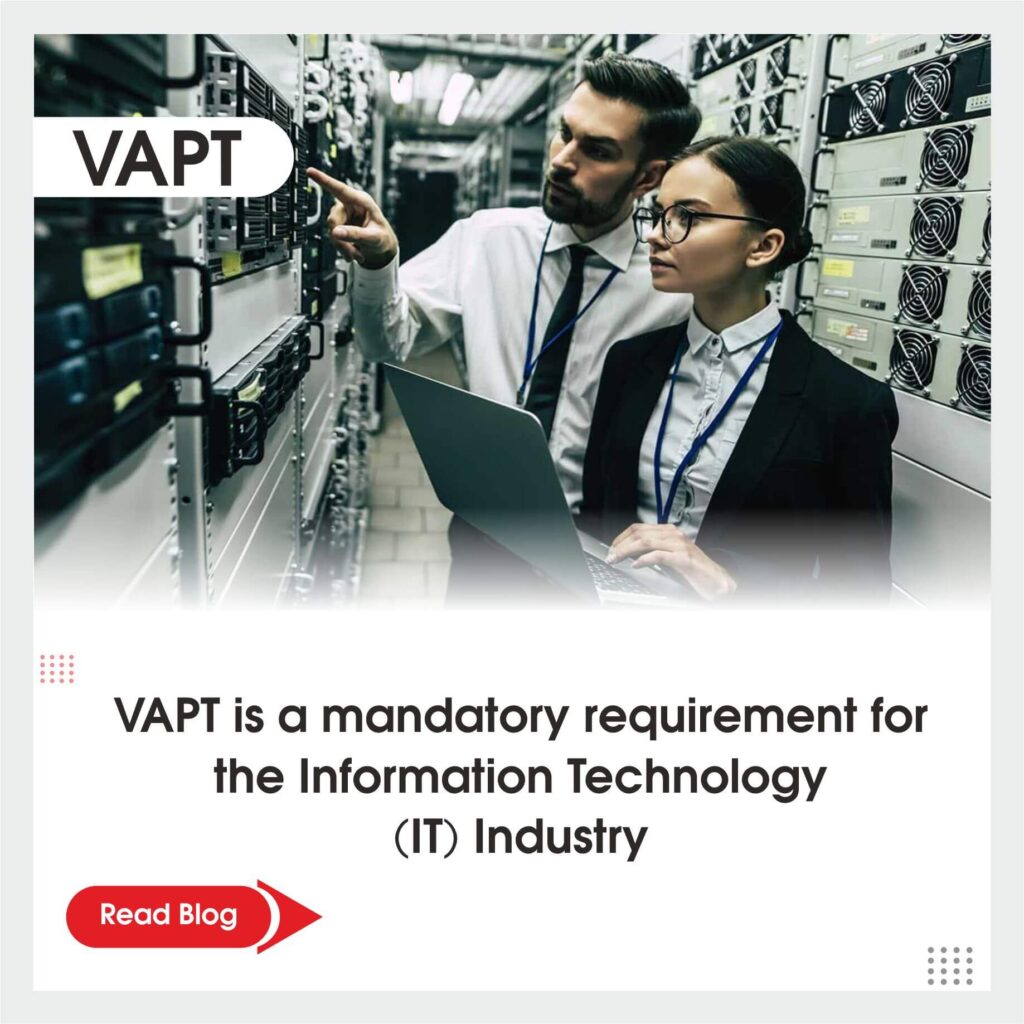
Introduction: Understanding the Importance of Continuous Improvement in Education ⮯ The digital landscape is constantly evolving; hence, it becomes necessary for organizations to build robust Information Technology (IT) infrastructure. The Information Technology (IT) sector amalgamates innovation and interconnectedness to ensure the security of digital assets and confidential data. As organizations become more dependent on digital infrastructure, they become more vulnerable to cyber threats and attacks. Vulnerability Assessment and Penetration Testing (VAPT) is mandatory for the IT industry to safeguard frontline defense against potential cyber-attacks. Benefits of Vulnerability Assessment and Penetration Testing (VAPT) for IT Industries An organization can reap the benefits of VAPT assessment with the ISO 27001:2022 standard. Significance of Vulnerability Assessment and Penetration Testing (VAPT) in the Information Technology (IT) Industry with ISO/IEC 27001:2022 Certification are as follows:- IT Industries must prioritize vulnerability assessment and penetration testing (VAPT) to ensure robust security measures. Moreover, it helps organizations to protect information assets against data breaches and cyber threats. Vulnerability assessment protects valuable data of clients and customers from hackers by identifying potential weaknesses in a network or system. Organizations must conduct a risk assessment to identify potential threats and opportunities to proactively eliminate them and minimize the risk of data breaches from unauthorized access. VAPT simulates real-world attacks to evaluate the effectiveness of existing security controls. Moreover, this process helps identify gaps in network security and strengthen their defenses against cybersecurity attacks. VAPT protects sensitive data along with safeguarding an organization’s reputation. A single data breach can have severe consequences, including financial loss; moreover, it can also damage the brand’s reputation and attract legal implications. IT industries must comply with information security and data privacy regulations such as GDPR (General Data Protection Regulation), ISO 27001, CMMI, SOC-1 and SOC-2 Certification. Moreover, conducting regular VAPT assessments helps organisations comply with international and national regulations and avoid fines and legal penalties. Why is VAPT a mandatory requirement for the Information Technology Industry ? ⮯ The Vulnerability Assessment and Penetration Testing (VAPT) examines the vulnerabilities during the data and information security test. Moreover, the assessment provides adequate measures to protect against cybersecurity threats. It provides organizations with valuable insights into their security posture by detecting areas for immediate attention. ISO 27001 information security standards mandate VAPT for organizations striving to maintain data integrity and protect customer trust. Benefits of Vulnerability Assessment and Penetration Testing (VAPT) for IT Industries ⮯ Data breaches are the most common information security threats experienced by Information Technology (IT) Industries. However, VAPT helps organizations identify and understand the intricacies concerning vulnerable data assets. The consumer is the god and holds immense power to change market trends. As a result, organizations must win clients’ and customers’ trust to expand business and generate more profit. VAPT safeguards the organization’s assets and strengthens customers’ trust by demonstrating a commitment to robust cybersecurity practices. The IT industry operates in a highly regulated environment with stringent compliance standards. VAPT ensures that organizations adhere to these regulations, avoiding legal consequences and financial penalties. Conclusion ✅ Vulnerability Assessment and Penetration Testing (VAPT) is an indispensable tool for identifying and mitigating information security threats and risks. Moreover, the assessment monitors organization compliance with the regulatory and world best practices to protect users’ personal and confidential information.
ISO 21001 Continuous Improvement in Education Industry: Leveraging ISO 21001:2018 for Ongoing Growth

Introduction: Understanding the Importance of Continuous Improvement in Education ⮯ In every nation, education is the foundation of growth. In addition to altering people’s view of the outside world, it plays a significant part in bringing about good change by improving people’s thought processes and assisting them in discovering their passions. As a result, rather than being compromised, educational quality should always be improving and growing. ISO 21001 is a set of standards that apply to all educational organisations, regardless of size, kind, or location. To guarantee optimum compliance, the standard is particularly created for educational companies, considering elements such as complexity, maturity, and strategic direction and policies. An educational organization must be accredited with a quality management system, preferably based on the internationally known ISO 9001 standard, to fulfil the ISO 21001 requirement. The goal of ISO 21001 is to increase educational quality and student experience. As a result, the standard was created to apply to any educational organization, regardless of size or sector. It applies to institutions of higher learning, vocational training facilities, and e-learning services. ISO 21001’s purpose is to improve learning outcomes for learners. The Role of ISO 21001:2018 in Driving Continuous Improvement in Educational Institutions ISO 21001:2018 is critical in promoting continual improvement in educational institutions. Institutions may verify that they are offering high-quality education and addressing the requirements of their students by applying this internationally recognized educational standard. Its emphasis on quality management in education is one of ISO 21001’s main advantages. Establishing, implementing, maintaining, and continuously improving educational management systems is made easier for institutions with the help of this framework. Their activities become more effective and efficient overall as a result of this. The implementation of ISO 21001 facilitates the identification and resolution of issues that require improvement in educational institutions. Managing relationships, resources, and procedures inside the organization, promotes a methodical approach. Students’ outputs are enhanced, decision-making becomes more effective, and responsibility rises. Additionally, ISO 21001:2018 encourages educational institutions to have a continuous improvement culture. It motivates them to examine their procedures and key performance indicators regularly to spot areas that might need improvement. Adopting this standard would allow institutions to show that they are dedicated to fulfilling learners’ changing requirements and offering high-quality instruction. Key Elements of ISO 21001:2018 that Support Ongoing Growth and Development ⮯ ISO 21001 is a game-changing standard that provides a framework for educational institutions to improve their performance while also ensuring continual growth and development. The major aspects of ISO 21001 are intended to assist schools and other learning institutions in meeting their objectives and providing high-quality education. One of the most crucial components is educational leadership, which highlights the necessity of great leadership in promoting continual improvement and innovation. Educational institutions may establish a great learning atmosphere, engage their personnel, and inspire students to attain their full potential with excellent leadership. Schools may build an excellent culture and enable their stakeholders to participate in the institution’s continued growth and development by applying ISO 21001 principles. The learner-centered approach is another essential component of ISO 21001 standards. This implies that to provide students with individualized and fulfilling learning experiences, educational institutions should put their students’ needs and expectations first. Schools may better identify their specific requirements and modify their teaching strategies to fulfill them by putting the student at the heart of their operations. This component emphasizes how crucial it is for students to participate in decision-making processes and feel empowered to take charge of their education. Schools may establish a welcoming and encouraging learning environment that fosters student achievement and well-being by implementing the principles of ISO 21001. ISO 21001 highlights the significance of continuous improvement in addition to learner focus and educational leadership. This part pushes academic institutions to assess their performance regularly, pinpoint areas that require development, and put into practice practical plans to improve operations. Schools may cut down on inefficiencies, simplify procedures, and consistently improve the quality of their educational offerings by implementing a methodical approach to quality management systems. The institution itself gains from ISO 21001’s continued support for growth and development, and the education industry as a whole also gains from this. A blueprint for success in the quickly evolving world of today is provided by ISO 21001, which emphasizes essential components such as leadership, learner focus, and continuous development. The Impact of Continuous Improvement on Students’ Learning Experience and Outcomes ⮯ Continuous improvement in education is a key process that serves to guarantee that children receive the best education possible. This technique entails continuous reviewing and improvement in teaching methods, curriculum, and learning environments to find areas for improvement and make changes to improve student learning results. Continuous improvement is fundamentally about always striving for perfection. It necessitates the establishment of objectives and making improvements as and when required to meet their goals. This type of approach is very significant in education. There are several benefits to exercising a continuous improvement strategy in education. One of the most significant is that it helps children get a high-quality education that boosts their confidence and prepares them to work for their goals. Teachers will get up to date with the latest methods and research by regularly keeping an eye on the teaching techniques and curriculum. Fostering an innovative and collaborative culture among educators is another advantage of continual development. Continuous improvement has the potential to foster a community of educators committed to giving children the best education possible by empowering them to take prudent risks, try out novel strategies, and share their triumphs and disappointments. The promotion of equity in education is arguably the most significant benefit of continuous improvement. Through continuous assessment and improvement of teaching strategies and curricula, educators may spot and close gaps in learning outcomes and guarantee that every student has access to the tools and assistance they require to achieve. Key differences between ISO 27001 and 27701 Certification The security requirements of ISO 27001 include data protection principles and requirements in ISO/IEC 27701. Organisations must outline baselines
Understand the difference between Information Security and Data Privacy with ISO/IEC 27701:2019 Certification
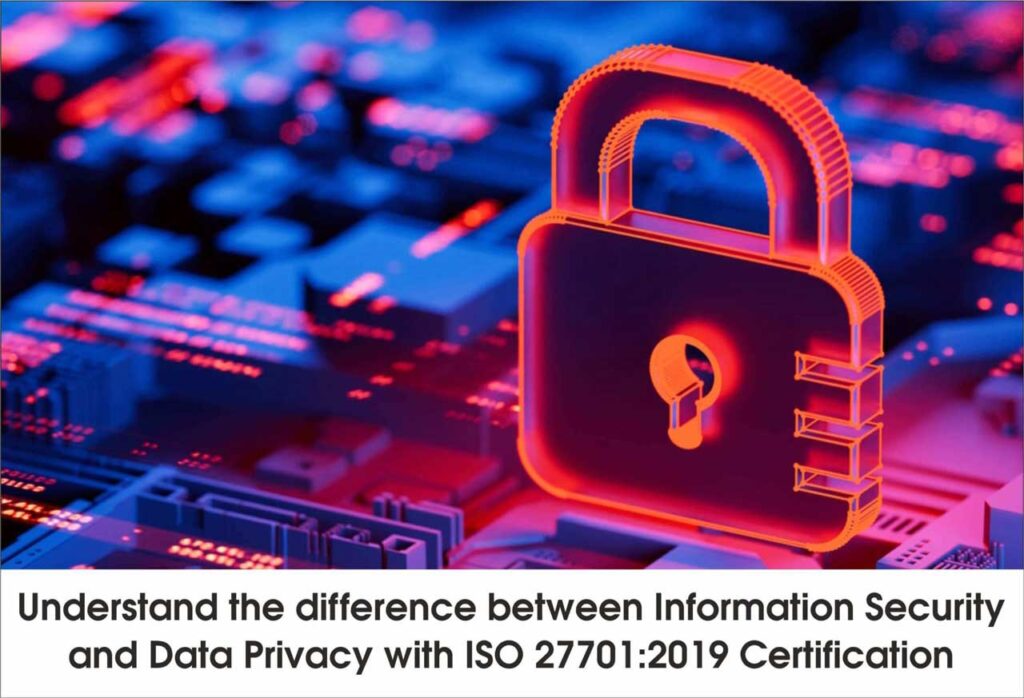
Information Security aims to adopt and implement all the necessary tools and measures to protect users’ personal and confidential information. However, Privacy gives the right to individuals to handle their personal data by giving them control to decide who can view or use their valuable data assets. Information security and data privacy are related but distinct concepts. Privacy standard aims to safeguard an individual’s right to privacy by regulating the data collection processes, use, and distribution of personal information. In contrast, information security focuses on safeguarding valuable data by protecting it from unauthorized access and destruction. What is ISO/IEC 27701:2019 Certification? The globally recognised ISO/IEC 27701:2019 Certification provides a robust and flexible framework for Privacy Information Management Systems (PIMS), also sometimes called Personal Information Management Systems. It is a significant tool for managing information privacy in an IT organisation or other industries. The certification outlines the structure for Personally Identifiable Information (PII) Controllers and (PII) Processors. ISO 27701 standard is an extension to ISO/IEC 27001:2022 Certification for Information Security Management Systems (ISMS). ISO 27001 deals with the issues related to information security by implementing appropriate controls and measures, whereas ISO 27701 gives users control to manage their sensitive and confidential data by assuring privacy. Scope of ISO 27701 for PIMS ⮯ The scope of ISO/IEC 27701:2019 for Privacy Information Management System (PIMS) includes as follows: ISO 27001 outlines additional guidelines and specifications for handling personally identifiable information (PII), such as data processing tasks and related procedures. Requirements for PIMS define identifying whether you are a “PII processor” or a “PII controller” (including belonging to a joint PII controller). Identification of applicable: Regulations Organizational context and privacy goals Contract requirements Industry requirements Organizations must appoint an independent individual(s) to ensure compliance and act as an expert(s) in privacy compliance. Organizations PIMS policy must contain: Designated privacy management team Well-trained staff Information mapping and processing documentation Specific privacy policies, procedures, and organizational functions Privacy technology Benefits of ISO 27701:2019 Certification ⮯ ISO 27701 is a comprehensive standard for Privacy Information Management Systems (PIMS). Moreover, the certification offers a goldmine of benefits for organizations including:- ISO 27701 makes organizations more reliable and trustworthy by enhancing customers’ trust and confidence that their personal information is utilized for the specified purpose. PIMS stresses the value of managing personal data in a highly competitive culture. 27701 helps in proving and managing adherence to the GDPR and other rules, regulations, and standards concerning data protection. Privacy standard maintains the integrity and confidentiality of personally identifiable information (PII). The standard helps in identifying and eliminating PIMS security hazards. ISO 27701 offers a competitive advantage by building an organisation’s positive reputation and brand value. Key differences between ISO 27001 and 27701 Certification The security requirements of ISO 27001 include data protection principles and requirements in ISO/IEC 27701. Organisations must outline baselines for 27001 to develop 27701 policies, processes, and implementation technologies. Here are the key differences between Privacy Information Management System (PIMS) and Information Security Management System (ISMS) ; these are: The Information Security Management System (ISMS) ensures information security to safeguard vital resources and operations. The ISMS aims to establish a flexible system for oversight and create accountability for the organization’s information security measures. ISO/IEC 27701 provides for a Privacy Information Management System (PIMS). Moreover, the PIMS is an addition to your ISMS, as it contains many of the essential components of the ISMS. Organizations must ensure that extending 27001 controls satisfies numerous requirements while drafting policies and procedures for data privacy. Conclusion ✅ ISO/IEC 27701:2019 provides a comprehensive framework for Privacy Information Management Systems (PIMS) while complementing ISO 27001. Understanding the distinction between Information Security and Data Privacy is crucial, as ISMS focuses on safeguarding information; PIMS, an extension of ISMS, empowers users to control their sensitive data. Moreover, both certifications adopt principles of integrity and confidentiality to fight against information security threats and create a positive brand reputation.
ISO 22000: Safeguarding Your Business and Customers through Food Safety Standards

Understanding the Importance of Food Safety in a rapidly growing era. Food safety is very important in the modern society. Customers have become more prudent about the quality and safety of the food they eat as a result of growing health and wellness knowledge and concerns. Consequently, companies in the food sector have to emphasize food safety and follow strict guidelines. Organizations must adhere to strict food safety regulations to be certified by ISO 22000, a globally recognized standard for food safety management systems. Adherence to ISO 22000 standards not only signifies a dedication to delivering secure and superior products but also amplifies client confidence. Enforcing proper procedures at every stage of production—from collecting raw materials to handling, storing, processing, and distributing the completed product—is the goal of the standards and legislation that control the food industry. They also aim to prevent contamination and minimize health risks. By implementing stringent food safety protocols, businesses may safeguard both their brand and the health of their clientele. Today’s customers want responsibility and honesty from the businesses they do business with. In addition to creating trust, proving your dedication to food safety gives you a competitive advantage in a congested industry. What is ISO 22000 and How Does it Ensure Food Safety? The ISO 22000 standard defines the standards for a food safety management system. An ISO 22000-compliant FSMS provides food manufacturers with a systematic strategy and the required tools to control the safety of their goods and services. ISO 22000, as part of the FSMS, requires the establishment of effective communication with interested parties, the implementation of a risk-based approach, the establishment and maintenance of prerequisite programs, hazard control plans (OPRPs and CCPs), the monitoring of FSMS and food safety performance, and the seeking and realization of opportunities for continuous improvement. ISO 22000:2018 integrates and complements the core aspects of ISO 9001 and HACCP to offer an appropriate framework for establishing, implementing, monitoring, and continuously improving a documented Food Safety Management System (FSMS) within the context of an organization’s overall business risks. The Benefits of Implementing ISO 22000 in Your Business ⮯ Organizations that have a strong FSMS in place are better able to react quickly and effectively to problems that might jeopardize the safety of their food. By doing this, they may stop possible contamination and other food safety problems in their tracks. Additionally, the organization can react appropriately to unforeseen events due to the presence of emergency preparedness. Implementing an ISO 22000-compliant FSMS can also boost corporate performance. Organizations may limit the likelihood of product recalls by recognizing and controlling food safety issues, which can be costly and detrimental to a company’s brand. Furthermore, firms that demonstrate a commitment to food safety may be able to differentiate themselves from rivals and attract new customers who value food safety and quality. The standard promotes a methodical approach to discovering, analyzing, and addressing food safety issues. This enables companies to make educated decisions on how to avoid or reduce possible threats. ISO 22000 accreditation displays a dedication to food safety and quality. This can boost consumer trust in the organization’s products and services. ISO 22000 is a globally recognized standard, which implies that enterprises certified to this standard are more likely to be accepted by foreign clients and partners. The Future of Food Safety: Emerging Trends and Technologies As we all are aware the e-commerce sector is expanding rapidly and food safety has become a top priority. With the expansion of the e-commerce sector, food safety has become increasingly critical. It has become very tough to guarantee the safety and quality of the food supply due to the rise of direct-to-consumer platforms and online meal delivery services. An innovative idea with great promise to solve these problems is blockchain technology. Chains from farm to fork may be traced and made transparent with blockchain technology. This enables clients to have complete knowledge about the origin, handling, and transportation of the food products they buy. Delivering perishable commodities within acceptable limits is made possible by blockchain technology, which enables real-time temperature monitoring throughout transportation. Lessening health concerns, also makes it possible to quickly identify and recall tainted or compromised items. Blockchain technology can help businesses increase customer confidence in e-commerce food supply chains by bringing transparency and responsibility to the table. Knowing that the food goods they have purchased have passed thorough safety inspections at every stage of the process will give consumers peace of mind. Additionally, by expediting regulatory compliance procedures, this technology helps firms. Audits become less time-consuming and more effective when precise and unchangeable data are accessible on the blockchain. Conclusion ✅ In conclusion, understanding the importance of food safety is vital for businesses operating in the food industry. By adhering to industry standards such as ISO 22000 and complying with relevant regulations, companies can prioritize consumer well-being while fostering trust and loyalty among their customer base.
Building Resilience with ISO 22301:2019 – The Path to Success

Organisations face various challenges that can disrupt their operations in today’s rapidly changing and unpredictable business environment. It helps organisations tackle natural disasters, cyberattacks, pandemics, supply chain disruptions, and other unforeseen events that can have a significant impact on business continuity. ISO 22301 for Business Continuity Management Systems (BCMS) provides a structured framework for building resilience and ensuring business continuity. What is ISO 22301:2019 Certification? ISO 22301 is a globally recognized standard that provides a systematic approach to business continuity management (BCM). BCMS policy outlines the best practices and requirements for organisations to establish, implement, maintain, and continually improve their business continuity management systems. Moreover, the goal is to ensure that an organisation can continue its critical operations during and after disruptive incidents while minimising downtime and financial losses. How does ISO 22301 ensure the path to success for organisations? ⮯ ISO 22301 involves several key steps and principles to build resilience for an organisation. These are:- Risk Assessment and Business Impact Analysis – ISO 22301 provides a comprehensive risk assessment and business impact analysis. Organisations must identify potential threats and vulnerabilities that can disrupt their operations. Moreover, this includes assessing risks related to natural disasters, IT system failures, supply chain disruptions, and more. Business Continuity Policy and Objectives – ISO 22301 emphasises the importance of defining a clear business continuity policy and setting specific objectives. A BCMS policy should define the organisation’s commitment to resilience while assigning the roles and responsibilities of personnel. Designing a Business Continuity Management System (BCMS) – ISO 22301 standard provides a robust and flexible Business Continuity Management System (BCMS) to ensure long-term growth for an organisation. A Business Continuity Management system includes processes, procedures, and documentation that help manage and control business continuity risks. The certification ensures that the organisation can respond effectively to disruptions and recover quickly. Business Continuity Planning – The critical element of ISO 22301 is the development of a Business Continuity Plan (BCP). ISO 22301 certification outlines the strategies and actions to maintain business operations during disruptions. Competence and Awareness – ISO 22301 emphasises the need for training and awareness programs to ensure that employees understand their roles and responsibilities during disruptive incidents. Testing and Exercises – ISO 22301 requires organisations to test their business continuity plans through exercises and simulations. Moreover, these tests help identify weaknesses in the plans and provide an opportunity to refine and improve them. Continuous Improvement – The path to success with ISO 22301 is an ongoing journey. The standard encourages organisations to continually monitor, review, and improve their business continuity management systems. Benefits of ISO 22301 for organisations Adopting ISO 22301 and embracing the principles of business continuity management brings several benefits to organisations :- ISO 22301 helps organisations build resilience by identifying risks, implementing mitigation measures, and having effective response plans in place. Moreover, this reduces the impact of disruptions and ensures business continuity. ISO 22301 certification demonstrates an organisation’s commitment to resilience and preparedness. It can be a competitive differentiator by giving the organisation an edge in the marketplace and boosting its reputation. Many industries and regions require businesses to have a business continuity management system in place. ISO 22301 certification ensures that an organisation meets these regulatory requirements. Customers and partners have greater confidence in organisations that have a robust business continuity plan. ISO 22301 certification can enhance trust and build stronger relationships with stakeholders. Organisations can reduce the financial impact of disruptions by identifying and mitigating risks. It also minimises downtime, lowers recovery costs, and reduces revenue losses. Conclusion ✅ ISO 22301 is the path to success for organisations looking to build resilience and thrive in adversities. Organisations can navigate the challenges of today’s business landscape with confidence and strength by implementing the standard’s principles and requirements.