ISO 41001:2018 Certification: Elevating Facility Management Systems to New Heights
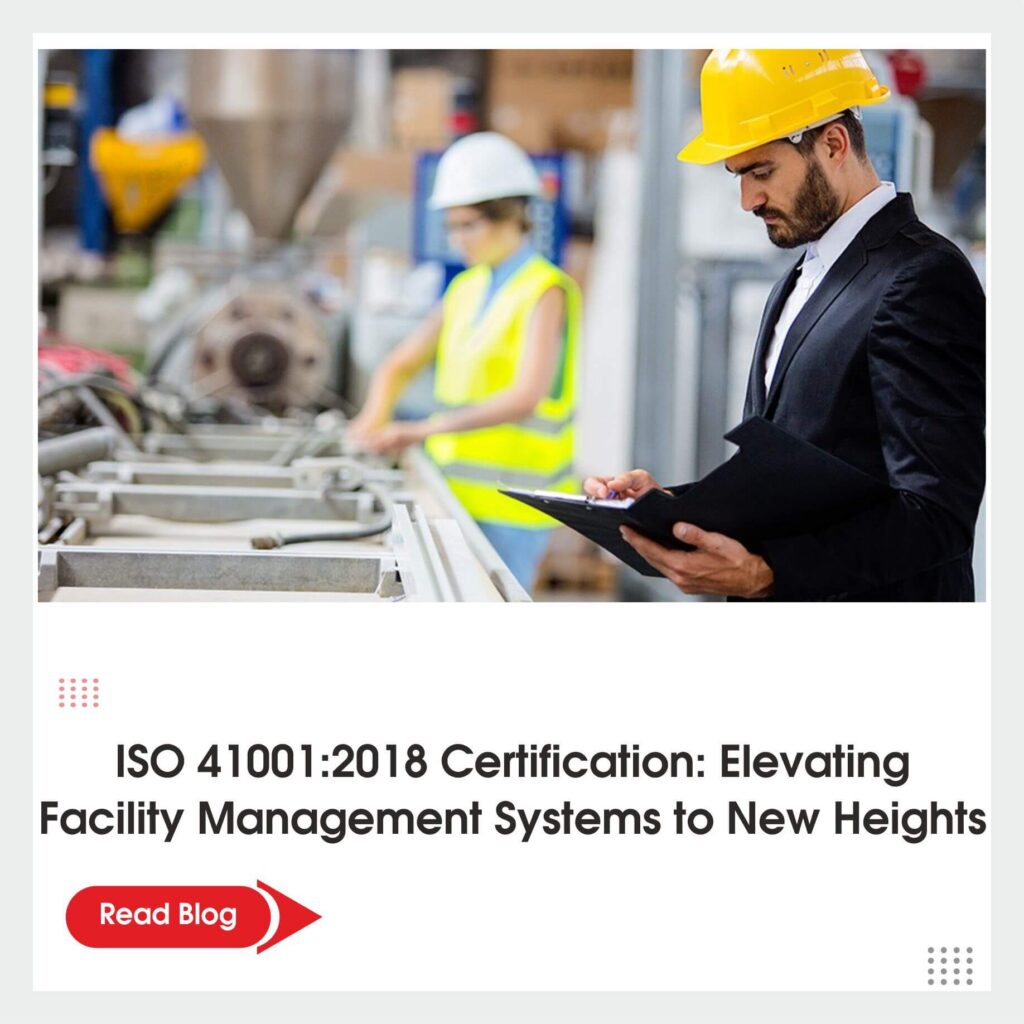
The ISO 41001:2018 certification process becomes a way of ensuring efficient and effective operation of the facility management structures. This globally acknowledged benchmark serves as the touchstone of best practices in managing facilities, not only focusing on efficiency but also sustainability and safety as well. A facility manager who follows the standards of ISO 41001, shows a clear sign of being a professional who practices excellence and constantly strives to improve their operations. Through this conciliation, enterprises will be able to improve their image, simplify their processes, and fulfil the law’s requirements with maximum effectiveness. Implementing ISO 41001 standards is necessary for office management practices to take the operations up to the desired excellent level and bring satisfaction to the occupants and other stakeholders. ISO 41001:2018 facility management provides a cutting-edge stage for industries to examine whether their management systems meet the benchmark of effectiveness and affordability. Furthermore, it teaches the update of the system, the flourish of the working process, and the stick to legal rules. By implementing ISO 41001:2018, industries can assign value to their work, for instance, high-quality products and services to their clients besides increased operation efficiency and cost-reduction. It has proved to be a very useful tool for any organisation looking to excel in Global facility management such as more advanced management operations, by the scope of the industry. The use of this standard will offer numerous advantages for industrial projects, for instance, productivity and resource management will be improved, information and command will be clear, and customer satisfaction will be provided. The Steps that Need to be Taken during ISO 41001 Certification ⮯ Through the steps which are provided below, the organization will systematically acquire and retain ISO 41001 certification to indicate dedicated effort in facility management practices. Step 1: Make sure you have a good command of the ISO 41001 basic concepts. Soak up the knowledge of the ISO 41001 and the principles of the Facility Management Systems (FMS) that it articulates. See its function, limitations, and the potential utility it will bring to your company. Step 2: Develop Backing and Support Leadership buy-in of top management level to support the ISO 41001 certification implementation. It is in this way that you can favor the allocation of funds and leadership positions in the Facility Management System. Step 3: Compile a Gap Analysis Establish your baseline—compose lists that go through your operations and match them with the relevant ISO 41001 standard requirements. Enumerate activities that your company is already in line with and possible innovations that the standard may demand to comply with. Step 4: Develop a scheme. Compose a specific plan which includes exactly the series of events of your organization implementing ISO 41001 standards. Create a job description and task division to make a management structure relevant to the project, and to make it organized and hierarchical. Step 5: Generate the Set-up Standardized Procedures Display the key processes and procedures required by ISO 41001. This will comprise a manual that describes the overall FMS structure and how it is aligned with the standard. Step 6: Training and Awareness of the Workers Train employees about the new FMS procedures and point out to them how their roles in ensuring compliance are very crucial. This move will be a guarantee that all the people in the group should be aware of their roles. Step 7: Order the FMS. Integrate what has already been documented into practice. This ranges from preventive activities such as generating an FMS maintenance plan and conducting emergency evacuation drills to ensuring consistent compliance with ISO 41001 requirements. Step 8: Conduct Management Audits Do regular internal audits to find any nonconformities as well as areas that will require you to improve over time. This measure greatly helps to sustain the necessary level of compliance for certification auditing by third-party external auditors. Step 9: Corrective Actions All discrepancies or variances noted from internal audits should be resolved. Fix those issues and adopt corrective actions for the improved Facility Management System. Step 10: Select an Accredited certification Body. Choose the qualifying and certified body for outside auditing. Make sure they are acclaimed with knowledge of ISO 41001 accreditation. Initiate agreement and proper preparations for the certification audit with them. Step 11: Undergo External Certification Audit. The certification body will carry out a comprehensive audit of your FMS to check that it fulfils the standards prescribed by ISO 41001. Show the positive results of your system as well as identify any issues. Step 12: Continual Improvement After achieving ISO 41001, work systematically at improving the overall management of the organization. Routinely modify and expand your FMS to support organizational modifications and to comply with the standard. The Impact of ISO 41001 on Sustainability and Environmental Responsibility in Facility Management ⮯ ISO 41001, or the facility management system standard, is a revolutionary step, which is mainly dedicated to facilities management study. This standard is disrupting the traditional way of managing the facilities to ensure a more sustainable and environmentally friendly future for our planet as its goal is not simply to maintain, but to elevate the state of environmental responsibility and sustainability. Sustainability is one of the core aspects of ISO 41001 that encourages its adoption. This standard is stipulated to urge facility administrators to adopt the methods of sustainability that lead to reduced waste, conserved energy, and ultimately fewer green impacts brought about by the operations. As a result, waste facilities will have more energy-efficient systems and should switch to renewable energy sources whenever available and should incorporate into their programs recycling and waste reduction. The incredible influence of sustainable well-practiced practices must be emphasized. They will give back to the world, on top of that, being a long-term gain financially to the businesses. Beyond that, ISO 41001 gives a great deal of weight to the substance of nature. The operation managers are now challenged to evaluate how the decisions they make are affecting the environment in which their business operate. This is going
ISO 21001:2018 Certification – A valuable tool to make Educational Institutions more student centric
Education helps people improve their living standards while strengthening ties to the community and preparing us to contribute as valued members of society. People can learn new things, widen their perspectives, and improve their outlook on life. Education prepares students for the workplace, life, and the future by laying out clear, measurable standards. The International Organisation for Standardisation (ISO) has created the ISO 21001 Certification for educational institutions to build and enhance a more effective teaching-learning environment. What is ISO 21001:2018 Certification? ⮯ ISO 21001 Certification provides a framework for creating adaptable, transparent, and inclusive classrooms for Educational Organisation Management Systems (EOMS), which enables an organisation to offer personalised learning to satisfy the needs and expectations of each learner. A learner-centric approach is encouraged by ISO 21001 certification, which actively involves students in their education. The International Organisation for Standardisation (ISO) released it in 2018 to enable educational institutions to offer top-notch services. In addition to providing more individualised instruction for distant learners and students with special needs, it supports fair and accessible education for all. A List of Organisations that can apply for ISO 21001:2018 Certification ⮯ Any educational institution, regardless of size, type, or location, including private ones, is eligible to apply for ISO 21001 accreditation. The following is a list of companies that can apply for ISO 21001 accreditation for their Educational Organisation Management System (EOMS): Tutoring or Coaching Centres Training Institutes Special Education Schools Universities K-12 Schools Pre-schools Colleges Adult Education Centres Vocational Education Centres Benefits of ISO 21001 Certification ⮯ ISO 21001:2018 certification offers a goldmine of benefits for Educational Institutions. These are :- ISO 21001 improves the consistency of goals with policies and raises the educational institutions’ legitimacy and dependability. Educational Organisation Management Systems (EOMS) encourage personalised teaching-learning environments to ensure that all students, regardless of gender, handicap, or place of origin, can access education. ISO 21001 Certification encourages inclusive education and provides educational institutions with the means to meet the needs of all learners, including those with special needs and multilingual classrooms. Educational Institutions can maintain compliance with ISO 21001 standards to guarantee a thorough education for students. Moreover, it helps institutions exhibit their commitment to providing high-quality instruction that goes above and beyond for students. ISO 21001 Certification gives an organisation a comprehensive approach and unifies disparate regional, national, and international laws, regulations, and standards into a single framework. Educational Organisation Management Systems (EOMS) increases the social duty of educational institutions by giving everyone access to a fair, high-quality education. Conclusion ✅ The International Organisation for Standardisation (ISO) developed ISO 21001 as a global standard to provide management tools to companies that provide educational services and goods. Organisations must first compile all pertinent company information in a systematised manner to become ISO 21001 Certified. After that, organisations must document pertinent company information. Every piece of documented knowledge needs to be implemented within the company. In the next step, the organisation must prepare for internal audits. Finally, the organisation will receive the necessary ISO standard if the certifying organisation approves the management system.
Elevate Your Cosmetic Brand with ISO 22716 GMP Standards

The ISO 22716:2007 standard considers the unique requirements of the cosmetic industry and has been designed for their consideration. The manufacturing, supervision, packaging, and distribution of cosmetics are the main topics of the standard. These recommendations include technical, administrative, and human resource management guidance that is both organized and useful in enhancing the quality of the final output. ISO 22716:2007 Good Manufacturing Practices in Cosmetics focuses on human, technological, and administrative elements that particularly impact product quality and contains a variety of applied consultation, working rules, and operational regulations. The goal of the ISO 22716:2007 standard is to identify actions that lead to an end product that fulfils the specified criteria, and hence product safety. Cosmetic producers can also be assured of satisfying international safety standards by adhering to ISO 22716. Demonstrating conformity with regulatory requirements across different markets, not only benefits the end-users but also promotes commerce. Importance OF ISO 22716:2007 Good Manufacturing Practice (GMP) ⮯ The International Organization for Standardization created Good Manufacturing Practices (GMP), which gives a comprehensive manual for the secure manufacture of cosmetics. ISO 22716:2007 standard was created and is being used by many countries. Under the headline, TS EN ISO 22716 Cosmetics – Good Manufacturing Practices (GMP) – Guidance on Good Manufacturing Practices, the Turkish Standards Institute (TSE) launched it in our nation. The ISO 22716:2007 standard describes a comprehensive quality management system strategy that covers the manufacturing, testing, packing, storing, and shipping of finished cosmetic goods. The ISO 9001 Quality Management System and the ISO 14001 Environmental Management System easily integrate with this standard. Advantages of Cosmetics Manufacturing Practices Under ISO 22716:2007 Good Manufacturing Practice (GMP)⮯ Ensure that the basic operational and environmental conditions needed to generate safe products are met by best industry practices. Make high-quality goods that are acknowledged and embraced globally. Obtain a competitive advantage over other market players. Make ensuring that products are safe for consumers to utilize. Naturally, businesses become more efficient in their operations as their expenses go down. EU COSMETICS GMP REQUIREMENTS ⮯ GMP, or good manufacturing practice, requirements for cosmetics form the core of the EU Regulation on Cosmetics. This law, which is intended to safeguard consumer safety, imposes stringent requirements on all European and non-European parties engaged in the supply chain of cosmetic products. Despite these legal requirements, all cosmetic products manufactured in the EU have to follow the ISO 22716:2007 standard’s Cosmetics Good Manufacturing Practices. Proof that the items are created by ISO 22716 can be provided by the ISO 22716 certificate or a declaration attesting to that fact. The following enumerates the domains for which ISO 22716:2007 stipulates certain requirements, together with their principal guidelines: Employees: employees should possess the necessary training to manufacture, oversee, and keep goods of a certain calibre. Premises: The location, layout, design, and use of the premises should guarantee product protection; allow for effective cleaning, sanitizing, and maintenance as needed; and reduce the possibility of product, raw material, and packaging unit mix-ups. Equipment: For equipment to be utilized for its original function, it must be able to be maintained, cleaned, and sanitized as needed. The equipment must be calibrated regularly in addition to being appropriately installed and cleaned. It should only be accessible and used by those who have been granted permission, and there should be enough backup procedures in place. Raw materials and packaging materials: raw materials and packaging materials that are purchased should meet defined acceptance criteria (physical, chemical, and microbiological) relevant to the quality of finished products. There should be proper measures and criteria in place for purchasing, receipt, identification and status, release, storage and re-evaluation of raw materials. The quality of water used in production should also be controlled. Production: steps should be performed at every level of the production and packaging processes to ensure that the final product has the specified qualities. Final products: The manufacturer must make sure that the products fulfill the specified acceptance criteria and are regulated using the approved test procedures before releasing them into the market. To preserve the quality of the final goods, care must be taken during storage, shipping, and return processes. Laboratory for quality control: The same guidelines that are outlined for staff, space, tools, subcontracting, and paperwork should also be applied to the lab. For materials to be released for use and products to be released for shipment, only when their quality meets the necessary acceptance criteria, the quality control laboratory must make sure that all relevant and necessary controls are carried out within its activity concerning sampling and testing. It is necessary to establish how a product that does not meet specifications is treated. Wastes: They need to be disposed of promptly and hygienically. Subcontracting: When it comes to subcontracting operations, a formal contract that is established, mutually confirmed, and controlled by both the contract giver and the contract acceptor is required. Deviations: Corrective action should be conducted after deviations have been found and enough data has been gathered about them. Recalls and complaints: The factory should evaluate, look into, and follow up on any concerns about the items that have been brought to their attention. Upon decision-making regarding a product recall, the necessary actions ought to be conducted to conclude the recall and execute the corrective measure. The procedure for handling complaints in contracted operations should be agreed upon by both parties. Change control: authorized staff must approve and carry out modifications that may have an impact on the product’s quality and do so only after gathering enough information. Internal audit: GMP implementation and status should be kept track of. Corrective measures should be suggested if needed. Documentation: An essential component of GMP is documentation. Depending on its organizational structure and product offerings, every business should have its document management system created, planned, implemented, and maintained. To avoid information loss, misunderstanding, etc., the documentation’s goal is to define the specified GMP activities.
What is PCI-DSS Certification
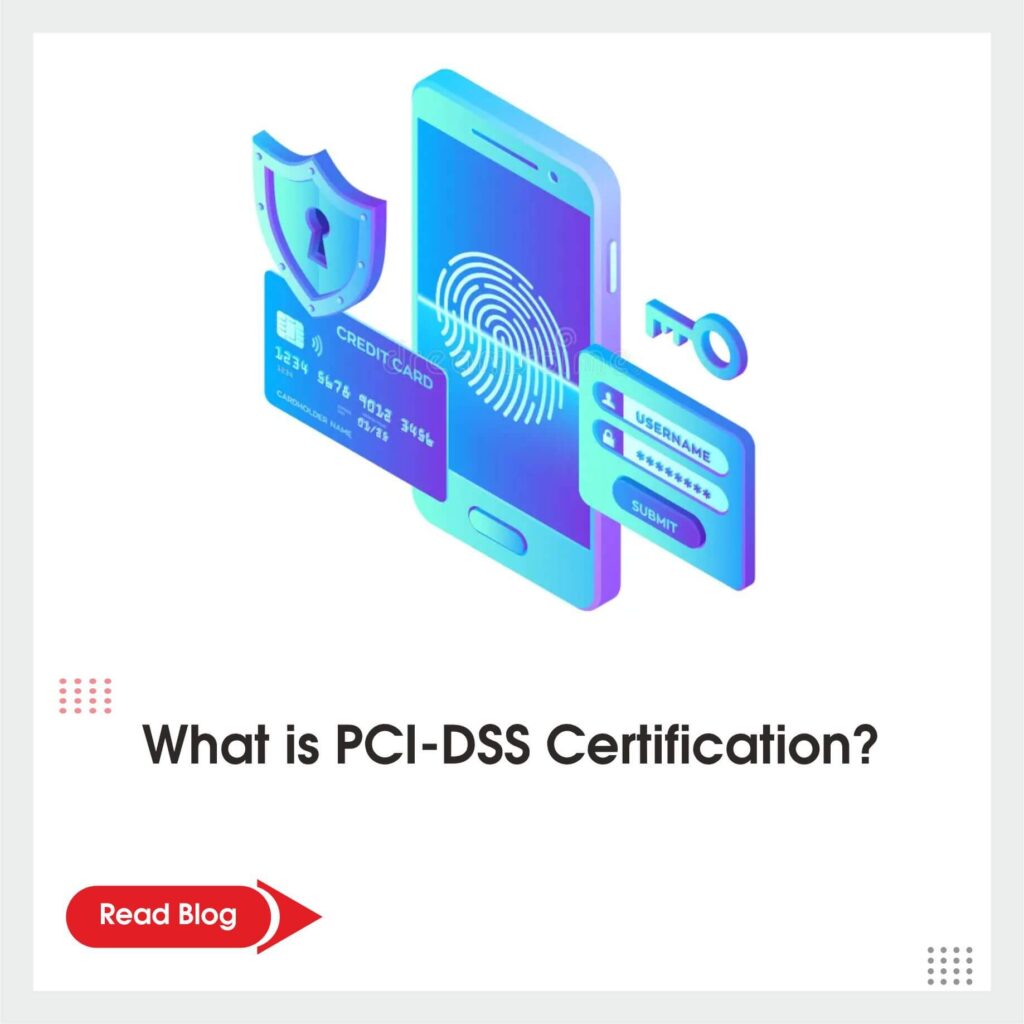
India’s economy has shown strong resilience amid global uncertainties, with a robust growth of 6.9% in the fiscal year 2022-23. The real GDP growth is estimated to be 7.7% year-on-year during the first three quarters of FY 2022-23. India’s financial sector remains strong, with improvements in asset quality and robust private-sector credit growth. The central government expects to meet its fiscal deficit target of 5.9% of GDP in FY2023-24. The Payment Card Industry Security Standards Council (PCI SSC) is an independent body founded by the major payment card brands, namely American Express, Discover, JCB, MasterCard, and Visa. The organisation has developed the Payment Card Industry Data Security Standard (PCI-DSS) to ensure safety and security in debit and credit card payments. PCI-DSS Certification ⮯ A survey conducted by an American Institution showed that 90% of Americans used a Debit or Credit Card as their Primary mode of payment. Moreover, organisations that accept card payments must know about Payment Card Industry Data Security Standard (PCI-DSS) Certification. The Payment Card Industry Data Security Standard (PCI DSS) is a set of guidelines demonstrating an organisation’s ability to handle, store, or securely transmit credit card data. It protects the cardholder’s data during credit card transactions by lowering the possibility of fraud and breaches. PCI DSS offers a comprehensive framework for organisations to adopt a proactive approach to prevent, detect, and respond to security problems. All retailers, banks, service providers, and other businesses involved in the payment card ecosystem are subject to PCI DSS. Moreover, non-compliance can attract penalties, fines, or limitations on card processing. Why is There a Need for a PCI-DSS Certification? ⮯ Organisations involved in processing or storing cardholder data, whether a start-up or large corporation, must obtain the PCI DSS certification to ensure safety and security. The PCI DSS compliance certification procedure establishes a set of rules specified by PCI SSC to assist in securing card data at your firm. It provides a baseline of security recommendations and control for any cloud-hosted business handling credit card transactions. However, getting and keeping your PCI DSS Certification requires rigorous work and complexity. The good news is that you can simplify the entire process of securing systems by taking the actions listed below. What are the Steps to get PSI DSS Certification? ⮯ Businesses can become PCI DSS certified, and it usually takes one to two weeks, depending on the complexity of the payments and the state of information security at the time. The 11 steps listed below will help you obtain PCI DSS certification are as follow :- Get Familiar with the 12 PCI DSS Certification Requirements Identify What your Company Needs Locate and Map How your Payments Card Data Moves Complete your Self-Assessment Questionnaire Check your Security Controls and Protocols Conduct Quarterly Scans Risk/ Audit/ Security Assessments Conduct Gap Analysis Conducting Internal PCI-DSS Audit Continuously Monitor your System Prepare to get PCI-DSS Certification What is a Merchant According to PCI-DSS Certification? ⮯ According to the PCI SSC – any organisation that takes card payments with the logos of any of the five PCI SSC members: American Express, Discover, JCB, MasterCard, or Visa as payment for products or services is considered a merchant. Although every payment brand has a unique compliance programme, merchants can be categorised into four broad levels. These are: Level 1 Merchants: Each year, over 6 million credit and debit card transactions Level 2 Merchants: Approximately one million to six million credit card transactions per year Level 3 Merchants: 20,000–1,000,000 credit card transactions per year Level 4 Merchants: Less than 20,000 online transactions each year. Benefits of PCI-DSS Certification ⮯ The following are the benefits of PCI DSS Certification :- It ensures the safety of payment systems by adhering to PCI Compliance requirements. Moreover, it demonstrates an organisation’s commitment to stringent controls and protocols to boost clients’ confidence in its services. It improves an organisation’s standing among acquirers and payment brands by attracting exactly the partners your company needs by ensuring PCI compliance. It offers a global card payment security solution for organisations by maintaining compliance with PCI DSS requirements. It is a continuous procedure that helps prevent security breaches and payment card data theft both now and in the future. Corporate security plans benefit from PCI Compliance. PCI DSS improves the efficiency of the IT infrastructure by ensuring PCI compliance. Conclusion ✅ Safeguarding cardholder information is a common problem for companies that process credit cards. It is a wise decision to begin with PCI standards. Problems may arise from ignoring or pursuing PCI DSS sporadically. The best way to protect your data is using PCI DSS, which is also more affordable than running the risk of a data breach. Organisations with PCI DSS Certification can demonstrate their commitment to stringent controls and protocols to make payments safer and more reliable. Moreover, it boosts the confidence of the clients and stakeholders in an organisation’s services and opens new opportunities for them.
Achieving Compliance: A Guide to ISO 41001 Non-Conformity
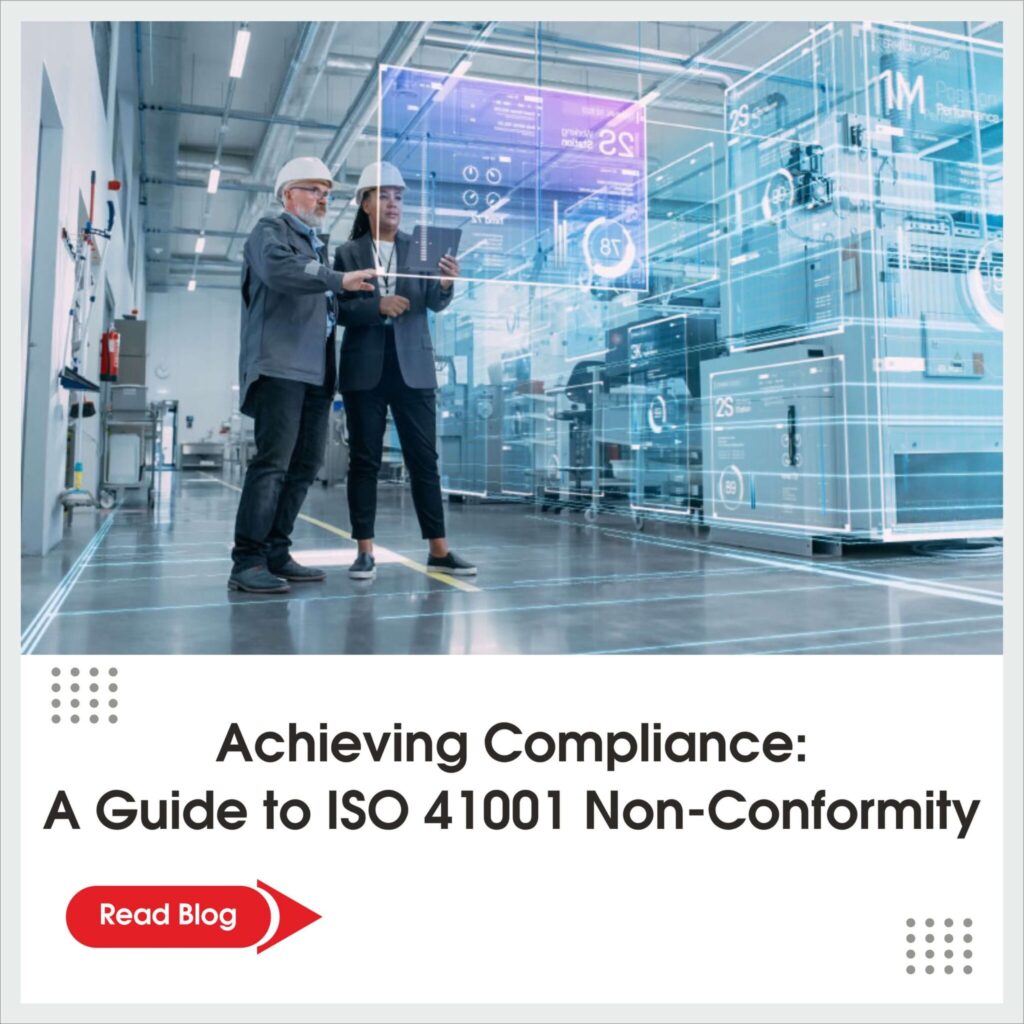
ISO 41001 is a global standard certificate by the International Organization for Standardization that presents guides for facility management. It follows the same scheme as other ISO standards, including ISO 45001 (Occupational Health and Safety Management Systems) and ISO 50001 (Energy Management Systems), with the core text, definitions, and terms kept intact. The purpose of the standard is to ensure that organizations demonstrate lean FM, and consistency when defining Facility Management system requirements and sustainability. It standardizes the notation and its requirements to serve all kinds of organizations. What is ISO 41001:2018 nonconformity? ⮯ ISO 41001 Non-Conformity is the process where an organization’s FM system does not meet the requirements of ISO 41001. The non-conformities can be originated from several sources including inadequate processes, not complying with regulations or failure to meet the pre-defined output performance criteria. Corrective or preventive measures are unavoidable in the pursuit of the certification of ISO 41001 or even the maintenance of compliance with the standard. Through appropriate control of non-conformities, organizations can advance their facilities management actions, enhance operational effectiveness, and manifest a willingness to meet the international parameters of facility management. Non-conformities in ISO 41001 can occur due to various reasons. Here are some of the main ones: ⮯ The ISO 41001 certification audits are a dynamic procedure that allows organizations to show their attitude to practising correct facility management. During these audits, certified auditors comprehensively audit the entire facility management system of an organization to confirm its conformity with the ISO 41001 standard. As the certification is taken to its perfection level, auditors may discover non-conformities that reflect the fact that the organization’s practices deviate from the standard’s requirements. There is a usual non-conformity during the ISO 41001 certification audit, and that is a lack of proper documentation. Standard highlights the need for documenting the procedures, policies, and processes that are within facility management. Auditors regularly discover instances where organizations do not have proper documentation of their systems compromising the security of the systems and leading to possible inefficiencies. Not following these standards can be a timely and valuable learning event for organizations to improve their documentation practices and make sure that all required information is accurately recorded. Besides, the incessant non-compliance noted when undergoing ISO 41001 certification audit is not reviewing and updating the facility management system. The standard dictates that organizations constantly and continuously keep reviewing and assessing their processes to identify areas of improvement. Auditors could find situations wherein organizations have not been doing regular checks or have not updated accordingly. This non-conformity means that it is extremely critical to evaluate the facility management system from time to time and make any adjustments that are needed to see continuous development. It’s crucial to remember that every organisation is different, and the precise causes of non-conformities might vary greatly. An extensive internal audit can aid in locating instances of non-compliance and serve as a foundation for corrective efforts. TYPES OF NON-CONFORMITIES ⮯ Major Non-Conformity: Major non-conformities are serious deviations from the requirements of a standard or management system. They often pose a significant risk to the organization’s objectives, compliance, or product/service quality. Major non-conformities can result in certification suspension or withdrawal in the case of ISO certification. Minor Non-Conformity: Minor non-conformities are less severe than major ones but still represent a deviation from the standard or management system’s requirements. While they may not pose an immediate or significant risk, they should be addressed to ensure compliance and continuous improvement. Observation: Observations are findings made during an audit or assessment that are not classified as non-conformities. They are typically used to report areas where the organization’s practices, processes, or documentation deviate slightly from the requirements of the relevant management system standard. The purpose of reporting observations is to bring attention to areas where improvements or adjustments could be beneficial for the organization. Opportunities for Improvement (OFI): These are specific areas within the organization’s processes or practices where enhancements or optimizations can be made. These areas may not necessarily be deviations from the standard’s requirements, but they represent chances to improve efficiency, effectiveness, or performance. Ways to address ISO 41001 non-conformities ⮯ A structured procedure that includes finding, assessing, and correcting the non-conformities, as well as taking preventative action to make sure they don’t happen again, is required to deal with ISO 41001 non-conformities. These are the general procedures:- Identification of Non-Conformity: Finding the non-conformity is the first step. Internal and external audits, as well as frequent monitoring and measuring of environmental performance, can help with this. Record the Non-Conformity: The non-conformity should be noted as soon as it is discovered. The record should contain information on the nonconformity nature, how it was discovered, who found it, and when and where it occurred. Evaluate the Non-Conformity: The non-conformity must next be evaluated to determine its source and consequences. This entails determining the source of the non-conformity and evaluating any potential environmental effects that resulted from it. Correct the Non-Conformity: The organisation should take steps to address the non-conformity after fully comprehending its origin and effects. Depending on the non-conformity’s nature, this may entail fixing machinery, changing processes, or retraining employees. Preventive Action: The organisation should work to avoid recurrence in addition to rectifying the non-conformity. This might entail changing procedures, upgrading employee training, or stepping up monitoring and measurement. Follow-Up: After corrective and preventative measures have been implemented, the organisation should check in to make sure they were successful in eliminating the nonconformity and preventing a recurrence. Review and Improvement: Regular reviews of the entire procedure are necessary to spot areas for development. This might entail strengthening the follow-up procedure, the efficiency of remedial and preventative measures, or the process for finding non-conformities. Documentation: It’s crucial to keep detailed records during this procedure. This covers the detection, assessment, and rectification of non-conformities as well as any preventative measures implemented. This paperwork can be consulted in the future and used to prove ISO 41001 compliance in audits.
What is ISO 13485 for Medical Devices?
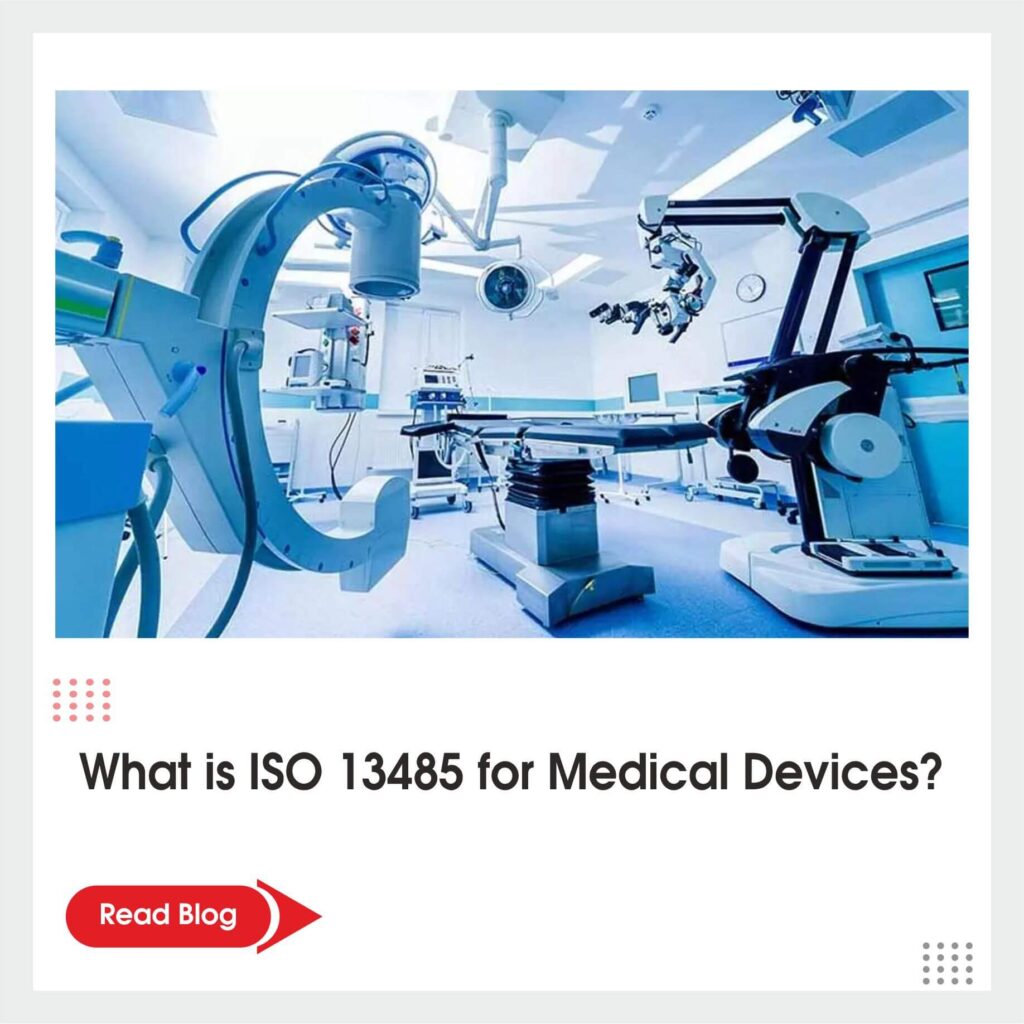
The Medical Industry forms a very significant part of the economy. However, the medical device industry is the next big emerging market worldwide that helps people fight odd health conditions and make life easy and comfortable. When it comes to medical devices, quality and safety are crucial. Manufacturers and suppliers follow strict guidelines to guarantee their products meet stringent quality and legal criteria. ISO 13485 standard is one such standard that addresses medical device quality management systems (QMS) for medical devices. What is ISO 13485:2016 Certification? ⮯ ISO 13485 is the primary Quality Management System (QMS) standard for medical devices, and various nations have their laws. The Food and Drug Administration (FDA) regulations for medical devices harmonise with ISO 13485 in the United States. The most recent version, released in March 2016, is ISO 13485:2016. The entire life cycle of a medical device is covered by ISO 13485:2016, including design and development, manufacturing, distribution, storage, installation, and servicing. It also includes providing related services like technical assistance or designing and developing. ISO 13485: A specific standard for medical devices based on QMS ⮯ An organisation utilises a quality management system (QMS) to plan, implement, monitor, and improve its performance to meet its goals. QMS standards are collections of policies, procedures, processes, and resources. It helps an organisation in the following ways: It establishes a systematic and consistent approach to managing its activities and processes with the help of a QMS built on ISO 13485:2016. It showcases that the organisation is capable of offering connected services and safe and reliable medical equipment. It meets the needs and expectations of the consumer and makes them happier. It respects relevant legal regulations and makes it easier for people to access the market. It helps organisations to determine and take advantage of opportunities and dangers. It enhances both an organisation’s overall performance and QMS constantly. Importance of ISO 13485 Certification for Medical Device Industry ⮯ ISO 13485:2016 standard is important for an organisation due to the following reasons: ISO 13485 contributes to the safety and efficacy of medical devices and associated services. Moreover, the certification provides a systematic approach for organisations to implement appropriate quality control and ongoing enhancement. ISO 13485 standard helps organisations to adhere to relevant regulatory and international standards concerning medical devices. The standard also provides a comprehensive structure for organisations to maintain compliance with the regulations and make audits and inspections easier. Five key elements of ISO 13485 standard ⮯ Quality Management System Management Responsibility Resource Management Product Realisation Measurement, Analyses, and Improvement Similarities between ISO 9001 and ISO 13485 Certification ⮯ ISO 9001 and 13485 standards help businesses in implementing a quality management system. The two standards emphasise conducting risk assessments to minimise potential threats and errors in the management system. ISO 9001 and 13485 standards use the effective PDCA cycle, sometimes called the Plan-Do-Check-Act cycle, to implement the principle of continuous improvement. The two standards focus on developing adequate infrastructure and competency for delivering quality products. ISO 9001 and 13485 standards require an organisation to identify the errors and shortcomings in the business operations to produce high-quality goods. Conclusion ✅ Organisations must adhere to ISO certification 13485:2016 for medical device quality management systems. The requirements of ISO 13485 enable the organisation to create and uphold a robust quality management system to deliver safe and effective medical devices to ensure customers’ safety and well-being. Organisations can improve customer satisfaction, reduce risks, and show dedication to achieving the desired goals and objectives.
What makes ISO/IEC 27701:2019 Certification different from ISO/IEC 27001:2022 Certification?
ISO 27000 family of standards covers a broad spectrum of business activities from information security to data privacy. However, 27000 family standards apply to all organisations and are mandatory for businesses collecting and complying with huge amounts of users’ data. The entire world is swiftly transforming into a more connected and digital interface to provide users with better facilities and make life more comfortable. The full name of the ISO 27000 family is the ISO/IEC 27000 family of standards, as these standards are jointly formulated and published by the International Organisation for Standardisation and the International Electrotechnical Commission (IEC). A list of significant standards that are part of ISO 27000 family ⮯ 1.ISO/IEC 27001:2022 Certification for Information Security Management Systems (ISMS) 2. ISO/IEC 27701:2019 Certification for Privacy Information Management Systems (PIMS) 3. ISO/IEC 27002:2022 Certification- extension to ISO/IEC 27001 and ISO/IEC 27701 What is ISO/IEC 27001:2022 Certification? ⮯ ISO/IEC 27001:2022 Standard for Information Security Management Systems (ISMS) outlines the requirements for an organisation to adopt and implement appropriate security controls to attain information security. The standard provides the organisation with the best sets of practices and measures to safeguard the vast amount of users’ data. However, the certification not only demonstrates the organisation’s adherence to the information security regulations but also showcases its responsible behaviour towards the users’ data. An effective information security system within the organisation regularly monitors and ensures the following aspects: It requires an organisation to conduct a risk assessment to identify the potential threats and risks to the valuable data assets. The next step after conducting a risk assessment is to outline appropriate strategies and frameworks to address and eliminate the identified data security risks and threats. An organisation must evaluate, monitor, and analyse the effectiveness of the implemented security controls and tools to ensure information and data security. Lastly, the principle of continuous improvement is the cornerstone of ISO/IEC 27001 to attain the intended outcome. What is ISO/IEC 27002:2022 Certification? ⮯ ISO/IEC 27002 is an extension to ISO/IEC 27001 and ISO/IEC 27701 certifications that aims to provide the organisation to establish, implement, and improve security controls to enhance cybersecurity. Additionally, ISO/IEC 27002 forms part of Annex A Controls of ISMS and provides the organisation with better controls and practices to protect and safeguard users’ data. What is ISO/IEC 27701:2019 Certification? ⮯ ISO/IEC 27701:2019 Certification is an internationally known for Privacy Information Management Systems (PIMS). The standard guides organisations, including Information Technology (IT) Companies, such as SaaS and Cloud Computing, to comply with privacy and information regulations. Moreover, ISO/IEC 27701 outlines the framework for Personally Identifiable Information (PII) controllers and Personally Identifiable Information (PII) processors to maintain users’ data privacy. ISO/IEC 27701:2019 certification aligns with the General Data Protection Regulation (GDPR) to give users the right to access personal information. Moreover, it allows users to manage who can see their confidential data and how and where to use it. Why should organisations go for ISO/IEC 27701:2019 certification even though they have ISO/IEC 27001:2022 Certification? ⮯ Information Security Management System and Privacy Information Management Systems seem to be the same on the surface; however, they are two different yet significant sides of the same coin: data protection. Privacy is a user’s personal information and how s/he allows the other party to access and view it. However, security means protecting the collected and stored data and information with the various organisations. Cybersecurity encompasses both privacy and information security and helps organisations safeguard data against unauthorised access to eliminate leaks and data breaches. Organisations can find the data protection concepts and regulations in ISO/IEC 27701. However, ISO/IEC 27701 is also a part of the security requirements of ISO 27001 standards. Organisations need to define baselines for 27001 to build 27701 policies, processes, and implementation technologies. Hence, it becomes necessary for organisations to obtain ISO/IEC 27701:2019 Certification despite having ISO/IEC 27001:2022 Certification due to the following reasons: Information Security Management System (ISMS) ensures the protection of the valuable data assets of clients and customers. Moreover, the certification provides the organisation with essential resources and controls to manage information security. ISO/IEC 27001 also establishes a flexible framework for oversight and establishing accountability within the organisation’s information security procedures. ISO/IEC 27701 outlines the framework for a Privacy Information Management System (PIMS). Furthermore, since the PIMS includes many of the ISMS’s key components, it is an extension of the organisation’s existing ISMS. Businesses need to ensure expanding 27001 controls to meet the criteria while drafting policies and procedures for data protection. Conclusion ✅ ISO/IEC 27701:2019 and ISO/IEC 27001:2022 certifications work together to provide organisations with better security controls to ensure information security and data privacy. However, the purpose and objective behind publishing both standards vary, as one works to provide tools and controls to attain information security. Whereas the other ensures the protection of users’ private and confidential information.
A Step-by-Step Guide to Mastering Capability Maturity Model Integration (CMMI) Level 3
Obtaining CMMI (Capability Maturity Model Integration) Certification offers the optimal method for demonstrating a business’s reliability and dedication to its clients and customers! Information Technology (IT) Companies attribute success to producing high-quality products and adhering to a well-structured procedure that guarantees ongoing improvement. However, this is where the Capability Maturity Model Integration (CMMI) comes into the picture; it helps an organisation drastically improve its processes and systems by becoming CMMI Level 3 certified. CMMI Level 3 is the third level of the maturity model and is a critical achievement for businesses to demonstrate their commitment to providing high-quality goods and services. Obtaining this CMMI accreditation creates a positive and professional image for software and technology organisations. What is Capability Maturity Model Integration (CMMI) Certification? ⮯ CMMI (Capability Maturity Model Integration) is a widely known framework for process improvement that helps organisations improve business operations and security controls. It provides a comprehensive process roadmap to enhance the company’s performance and attain optimal results. Organisations that effectively implement well-defined business processes can achieve CMMI (Capability Maturity Model Integration) certifications. Organisations with CMMI certifications demonstrate their dedication, determination, effectiveness, and competence. They hold significant value and global recognition among customers and partners. What are the 5 Levels of Capability Maturity Model Integration (CMMI) Certification? ⮯ International organisations can get accredited by the CMMI Institute and receive CMMI certificates. Under the Capacity Level and Maturity Level, there are various certification levels. The first tiers till CMMI (Capability Maturity Model Integration) Level 3 within the CMMI group are listed here. Capability Maturity Model Integration (CMMI) Level 0: An organisation with capability level 0 has not yet established a well-thought-out practice area. Capability Maturity Model Integration (CMMI) Level 1: An organisation that has begun to improve its operations at the beginning level is represented by capability level 1. Capability Maturity Model Integration (CMMI) Level 2: An organisation that adheres to a straightforward but efficient practice area plan with well-defined procedures is represented by capability level 2. Capability Maturity Model Integration (CMMI) Level 3: Organisations that set end goals by adhering to established industry standards are at capability level 3. Maturity Levels Within Each Capability Maturity Model Integration (CMMI) ⮯ Maturity Level 0 denotes an organisation that has not yet successfully finished a project. The first maturity level, or Maturity Level 1, denotes an organisation that has not fulfilled its goals or deadlines. An organisation at Maturity Level 2 has unrelated tasks in the execution phase. A company at Maturity Level 3 employs a conventional strategy. This organisation meets deadlines while overcoming recurring problems. An organisation at Maturity Level 4 employs a data-driven strategy to achieve the project’s final objectives. An organisation at Maturity Level 5 has demonstrated ongoing improvement. It indicates that it has changed more quickly and effectively. Benefits of Capability Maturity Model Integration (CMMI) Level 3 Certification ⮯ Enhanced performance quality: An organisation with CMMI accreditation has established processes. It can deliver excellent results. Reliable delivery: Organisations with CMMI Level 3 certification include established and meticulously recorded protocols. It guarantees consistent and dependable product and service delivery. Lower risk:Capability Maturity Model Integration (CMMI) Level 3 certified businesses have established proactive measures to manage risks. As a result, clients feel more confident in their ability to provide the intended results. Boost productivity: Businesses must streamline their workflow and operational procedures to receive this accreditation. It enhances overall productivity. Conclusion ✅ A carefully thought-out and implemented process improvement strategy that includes gap analysis, implementation, and formal assessment is necessary to achieve certification. Nonetheless, the advantages of obtaining CMMI (Capability Maturity Model Integration) Level 3 certification, like enhanced productivity, superior quality, and a competitive edge, make the effort valuable. Success in the software development business will largely depend on an organisation’s ability to change and adapt to shifting industry norms and customer expectations. In this regard, CMMI Level 3 accreditation will be essential. Tags
Understanding GDPR Guidelines: Best Practices for Data Protection
Legislation pertaining to digital privacy, known as the General Data Protection Regulation (GDPR), governs how businesses gather, utilize, and protect the personal information of EU citizens. Personal data transfers outside of the European Union are likewise governed by the regulations. Whatever personal information about EU individuals is stored, whether inside or outside the EU, will be subject to the GDPR. Firms must be aware of and prepared for the new regulations because the majority, if not all, process personal data, whether about customers or employees. The GDPR law defines personal data as any information identifying a specific individual, including name, photograph, email address, bank information, updates on social networking websites, location information, medical data, and computer IP address. Some Basic Rights of GDPR Right to access – This means that individuals may ask to see their data and find out how the company utilizes it once it has been gathered. The company is required to provide a free electronic copy of the personal data upon request. Right to be Forgotten – If a consumer no longer wants to be a client, they can ask for their data to be deleted or withdraw their permission for a business to use it. Right to data portability: Individuals are entitled to the freedom to switch service providers without losing their data. It also has to be finished in a way that is machine-readable and widely recognized. Right to be informed – This covers any data that companies may acquire, and people have the right to know before data acquisition. To allow data collection, consumer consent must be sought clearly. Right to correction – This ensures that individuals can have inaccurate, incomplete, or out-of-date information amended. Right to limit processing – People are entitled to ask that their data not be processed. Their record could be retained even if it isn’t in use. Right to object – this covers the person’s ability to stop their personal information from being processed for direct marketing purposes. This criterion cannot be waived, and processing of the request must stop as soon as it is received. In addition, people have to be informed of this directly at the beginning of every contact. Notification right – When someone learns of a data breach that exposes their personal information, they are entitled to notification within 72 hours. Data Protection Principles Lawfulness, fairness and transparency – The first principle, which highlights complete transparency for all EU data subjects, maybe the most significant. Businesses that collect data need to be transparent about their motivations and intended uses. Organizations must respond quickly when people ask questions about how their data is processed. When collecting, utilizing, and revealing data, the law must be observed. Purpose limitation – Organizations must have a clear and justified purpose to gather and use personal information. The data should only be processed for the objective for which it was collected and acquired unless the data subject has given specific consent. When processing is done for historical, statistical, scientific, or public archiving, a bit more wiggle room is allowed. Data minimisation – Compliance with the General Data Protection Regulation (GDPR) mandates that data be “sufficient, pertinent, and restricted to what is essential concerning the objectives for which they are handled.” Put differently, companies should only retain the absolute minimal amount of data required to achieve their objectives. Organizations must do more than just collect personal data in case it comes in handy later. They are most likely breaking the law if they are keeping more data than is necessary. Accuracy – Truthfulness, applicability, and timeliness are required for personal data. This means that businesses should regularly review the information they hold about specific persons and update or delete any inaccurate information as appropriate. Within 30 days, individuals can request that inaccurate or lacking data be deleted or rectified. The information will be made simpler, improving compliance and ensuring that firm records are accurate and current. Storage limitation – Personal data should be deleted or destroyed if it is no longer required for the purpose for which it was collected unless there are still valid grounds to retain it. The GDPR makes no mention of how long you should keep personal data. Your business will have to make this decision based on the grounds for processing. Database cleansing organizations must have a review process in place to ensure adherence. There are a few exceptions to the rule that says you cannot save personal data for future use, as in the case of study, statistical analysis, or archiving. Integrity and Confidentiality – Only safety is covered by this principle. To secure the personal information it has, your business must ensure that the appropriate security measures are in place. There may be security against internal hazards such as unauthorised usage, unintentional loss, or damage, in addition to protection against external threats like malware, phishing, and theft. Your systems, personnel, and services might be disrupted by inadequate information security. The GDPR requires businesses to put in place suitable security measures to reduce risks related to the data they handle, even though there isn’t a “one size fits all” solution. Accountability – The new GDPR principle states the need for enterprises to show that they have complied with the prior principles and they are responsible for the data they own. An organization is liable to provide the pieces of evidence of the actions they have performed to show that they are GDPR compliant. Analyzing the methods utilized currently Designating a Data Protection Officer Making an inventory of one’s data Getting the relevant consent Conducting Impact Assessments on Data Protection Companies may guarantee compliance with the GDPR by following these guidelines while designing, implementing, and running their operations. Conclusion ✅ Lastly, Businesses which are developing must use the General Data Protection Regulation and abide by it (GDPR). The General Data Protection Regulation (GDPR) places a heavy emphasis on individual rights and the proper use of personal data, along with
What are the requirements of ISO 41001:2018 Certification?
The ISO 41001 standard amalgamates individuals, locations, and procedures within constructed spaces to improve occupants’ experiences and boost business productivity. However, the International Organisation for Standardisation (ISO) released the ISO 41001 for Facility Management System (FMS) in 2018. The certification is suitable for organisations, including public or private, irrespective of their size, scope, or geographical remoteness. Furthermore, the ISO 41001 standard is crafted to address the growing intricacies of facility management. Why should an organisation apply for ISO 41001:2018 Certification? ⮯ ISO 41001 is the first international facility management system (FMS) 41001 standard in the world. Facility management is an organisational function that combines people, place, and process to enhance the built environment’s quality of life and the productivity of the company’s main business. ISO 41001 certification constructs a comprehensive environment for buildings, external works, and infrastructure in a given area. It improves quality of life by raising safety standards and improving working conditions for those who operate in the built environment, for example, walkways, walls, buildings, electrical and mechanical systems, and more. However, implementing ISO 41001 enhances the productivity of core company operations. Furthermore, it focuses on improving societal services, including healthcare, education, retail centres, hotels, condos, and hospitality, among other areas. Which organisations can apply for ISO 41001 Certification? ⮯ ISO 41001 helps organisations adopt an adequate facility management system to build safe communities and attain sustainable growth. Here is a list of organisations that can apply for ISO 41001 standard: Requirements of ISO 41001 standard ⮯ ISO 41001 is an internationally recognised standard for Facility Management systems that improves and modernises an organisation. The ISO 41001 has ten requirements, and out of these, seven requirements are mandatory. These are: Section 4: Context of the organisation This section deals with understanding the requirements of an organisation for implementing the appropriate Facility Management System. It also helps organisations to tailor the FMS as per the organisational requirements. Section 5: Leadership This clause focuses on the importance of top management in the FMS implementation. Every individual within the organisation must understand their specific duties and responsibilities to adopt an effective FMS. Section 6: Planning The planning clause entails risk analysis and system analysis to reduce risks and establish goals for an efficient FMS. It also mandates organisations to examine its interaction with itself at all levels and through various channels. Section 7: Support This clause mandates an organisation to arrange all the required resources to establish an effective FMS, from implementing a system to overseeing documented information within the organisation to allocating resources. Section 8: Operation Clause 8 of ISO 41001 addresses the operational specifications for facility management. Moreover, it also entails getting the company ready for any unforeseen circumstance. Section 9: Performance Evaluation It guaranteed the effectiveness of an FMS. Moreover, this part monitors things to evaluate the system and pinpoint areas that could use improvement. Section 10: Continuous Improvement Section 10 of ISO 41001 guarantees the effectiveness of the FMS. Organisations ensure ongoing evaluations of their compliance with the ISO 41001 standard. Conclusion ✅ The International Organisation for Standardisation (ISO) has released ISO 41001:2018 as a global standard for the Facility Management System (FM) into practice in businesses. Moreover, it deploys the most upgraded standards for facility management within the organisation. Since the frameworks for ISO 45001, ISO 9001, and ISO 14001 certifications are the same, it is simpler to integrate all of these management systems.