What are the Benefits of Getting ISO Certification in Singapore?
Singapore is a country in maritime Southeast Asia. It is located at the Southern tip of the Malay Peninsula. Singapore is a free-market economy, and one of the most pro-business countries. It is the world’s 4th least corrupt country and has low tax rates. What is ISO Certifications? The International Organization for Standardization (ISO) has developed more than 24491 ISO standards to address the needs and requirements of various business operations and management systems. ISO Certification provides international best practices and processes for doing something. The main purpose of ISO standards is to facilitate the exchange of goods and services worldwide. Singapore is the 2nd largest economy and promotes innovation, encourages entrepreneurship, and ensures food security. Its main exports consist of electronics, chemicals, and services. List of ISO Standards an Organization Can Apply For ⮯ There are over 22491 ISO standards covering almost every aspect of the management system. Some ISO standards are generic and apply to most industries regardless of size, nature and location. These are: ISO 9001 Certification in Singapore – ISO 9001 is a Quality Management System. It requires an organization to deliver high-quality products and services to meet customer and legal requirements. ISO 14001 Certification in Singapore– ISO 14001 Certification specifies requirements for establishing an effective Environment Management System. It aims to reduce the negative environmental impacts and adopt eco-friendly processes and practices. ISO 45001 Certification in Singapore– ISO 45001 Certification provides a framework for Occupational Health and Safety Management System. It shapes the organization into proactive rather than reactive and ensures the safety and health of employees. ISO 22301 Certification– ISO 22301 Certification is an international standard for Business Continuity Management Systems. It aims to implement, maintain and improve the organization and protects against business-related risks. A List of Sector-specific ISO standards organizations can apply for ⮯ ISO 21001 Certification – ISO 21001 Certification is an internationally accredited standard that provides management tools for an organization to improve educational services. It guides educational institutions to promote knowledge development through teaching and learning. ISO 21001 standards intend to meet the needs and requirements of beneficiaries. ISO 27001 Certification in Singapore – ISO 27001 is an information security management system that provides tools and techniques to implement adequate security management. It ensures cyber security and protects users’ data. ISO 27701 Certification – ISO 27701 Certification is an internationally accredited standard for Privacy Information Management Systems. It is the first international standard related to privacy and is solely dedicated to privacy management. ISO 50001 Certification – ISO 50001 standard is related to Energy Management Systems and specifies requirements for implementing, establishing, manufacturing and improving an energy management system. ISO 39001 Certification – ISO 39001 is an international standard for Road Traffic Safety to implement best practice road safety management in an organizational context. General Data Protection Regulation (GDPR) – The General Data Protection Regulation is one of the world’s most demanding privacy and security laws. It considers information security a component of data protection and aims to protect and address the rights and freedom of people. Capability Maturity Model Integration (CMMI) – Capability Maturity Model Integration (CMMI) aims to improve the quality of its products and services. It follows an evidence-based method to identify problem areas and design tools to enhance its current and future operations. Service Organization Controls (SOC) 1 – A Service Organization controls 1 is written documentation of the internal controls related to an audit of a customer‘s financial statements. Service Organizations Controls (SOC) 2 – A Service Organizations Controls 2 is an auditing procedure that guarantees service providers securely control data and the privacy of their clients. ISO 13485 Certification – ISO 13485 is a Quality Management System for Medical Devices. It specifies the requirements for a quality management system pertaining to medical devices and demonstrates the organization’s ability to provide safe and quality medical devices. ISO 22000 Certification – The ISO 22000 certification is a food safety management system that works to implement and operate a food safety system and offers safe food products to consumers. Hazard Analysis and Critical Control Point (HACCP) – It is a food safety management system that aims to address, analyse and control biological, chemical and physical hazards and the distribution and consumption of safe and healthy food products. Conclusion ✅ SIS Certifications is the leading ISO Certification body trusted for providing international management system certifications. SIS Certifications provide ISO standards awareness training and internal auditor training programs to assist the company personnel in learning the ISO standard and implementing them. An applicant can register for training courses offered by SIS Certifications using the SIS Certifications website. Choose SIS Certifications for ISO Certification Training in Singapore. Enjoy Reading – Benefits of ISO 45001 Certifications for Your Business ISO 45001 Certification Process in Singapore Why is ISO 27001 Important These Days
10 Benefits of Getting ISO 41001 Certification for Facility Management System
Facility Management comprises multiple disciplines and secures the safety, sustainability, functionality, and efficiency of buildings, infrastructure, and real estate. Everyone wants to work in a safe, welcoming and secure environment. Facility Management works on the principle that places where people work, play, learn and live should be more comfortable, sustainable and productive. The International Organization for Standardization published ISO 41001 Certification in 2018. It assists companies in facing unprecedented challenges because of evolving technology, fierce competition, and rapidly changing needs and requirements of people. The purpose of developing ISO standards is to meet the market needs for a specific area. What is a Facility Management System? ISO 41001 Certification sets the criteria for Facility Management System (FMS) standards. ISO 41001 Certified organizations demonstrate their ability to implement appropriate tools and techniques to enhance the entire supply chain. It enhances the production and productivity of an organization by integrating people, place, process, and technology. ISO 41001 standards follow the Annex SL structure and provide a framework for cultivating, implementing, and maintaining an effective global facility management system. ISO 41001 Certification offers sustainable growth to organizations in the long run. It encompasses the following services ⮯ 10 Benefits of ISO 41001 Certifications⮯ The value facility management sector is projected to reach 1 trillion dollars by 2025. An increase in value signifies the importance of a more reliable facility management system. The International Organization for Standardization (ISO) has developed ISO 41001 Certification to ensure the efficiency and effectiveness of a facility management system. The ten benefits offered by ISO 41001 Certification to organizations are as follows :- Maintains Regulatory Compliance – ISO 41001 standards are not part of any law; hence, there are no penalties in case of non-compliance. However, it aims to improve the facility management system and ensure compliance with all the regulations and standards related to FMS. Provides a Competitive Edge – Organizations that are ISO 41001-certified demonstrate commitment to continually improving their financial management services. It provides a competitive edge to organizations and helps them win new businesses, clients, and customers. Better Reputation – ISO 41001 Certificate enhances the reputation of an organization. It establishes a culture of safety and security within the organization and improves its performance. Increases Marketability and Profitability – It increases the marketability and profitability of organizations. ISO 41001 standards ensure that the facility services delivered by an organization are safe and create a productive workplace. Access to International Market – A facility management system standard removes trade barriers and provides access to the international market. It manifests an organization’s ability to incorporate international best practices within its management system. Cost-effective Standard – ISO 41001 Certification is a cost-effective standard. It saves the extra costs paid as compensation amounts and premiums by enhancing workforce productivity, safety, health and well-being. Strategic Approach – ISO 41001-certified organizations follow a strategic approach and give assurance and positive value to stakeholders. It ensures that the business operations are risk specific and highly efficient. Dynamic Standard – It enables an organization to adapt to the ever-changing trends in infrastructural development and adopt tools and techniques to manage them accordingly. Risk-Based Approach – Organizations with an ISO 41001 certificate follow a risk-based approach. It helps organizations to determine the potential threats and opportunities associated with the facility management system. Employee Experience – It aims to provide a better experience to employees. ISO 41001 certification aims to establish supportive, sustainable, and productive workplaces. Conclusion ✅ ISO 41001 certification is the world’s first standard for Facility Management Systems (FMS). It provides a framework for creating safe and secure places and enhances the brand visibility of a facility management company. It is a generic standard any organization can apply for ISO 41001 Certification, small, medium, and large, to improve its market rapport. The benefits of ISO 41001 standards outweigh the cost of ISO 41001 certifications. It aims to create safe, healthy, productive, supportive and sustainable places for people to grow. Enjoy Reading – ISO 41001 Certification Benefits of ISO 45001 Certifications for Your Business Everything You Need to Know About the NEW Version of ISO 27001 Certification
Benefits of ISO 45001 Certifications for Your Business
The best support one can get in this world is his/her job. The purpose behind doing any work is to support and sustain our existence. But working in a place which risks an employee’s life defies the whole ground of it. It introduces employees to new dangers. Life is certainly one of the most precious gifts we have gotten, and it is the responsibility of the organization to safeguard its employee’s life. An organization must provide safe and healthy workplaces for employees to increase productivity and efficiency. There are many laws and regulations that mandate an organization to establish safe and healthy workplaces. The International Organization for Standardization (ISO) has published over 22,000 ISO standards to address and improve the working of business management systems. It has also developed ISO 45001 certification, which requires an organization to eliminate work-related illnesses, accidents, and deaths. What is ISO 45001 Certification? ISO 45001 Certification sets out the criteria for Occupational Health and Safety Management System (OHSMS). It is the world’s first standard that aims to enhance health and well-being at work, increase safety, and eliminate work-related injuries, accidents, and deaths. ISO 45001-certified organizations implement proactive measures to improve their occupational health and safety performance. It sets the minimum practice standards for organizations to protect employees. An organization’s occupational health and safety performance has an impact on its employee’s families and the community as a whole. Benefits of ISO 45001 Certification⮯ ISO 45001 is a generic standard that applies to most organizations, regardless of size, nature, and location. The benefits offered by ISO 45001 standards outweigh the cost incurred by an organization to get an ISO 45001 certificate. It offers the following benefits to an organization: It incorporates the Plan-Do-Check-Act model within the existing management system and provides a framework for organizations to minimize the risk of injury and illness. ISO 45001 standards provide a systematic and dynamic approach for organizations. It assists organizations in establishing a strong occupational health and safety management system. It is a cost-effective standard as it helps avoid legal costs and saves the insurance costs and compensation amounts paid by the organization. It creates a positive corporate culture as it demonstrates an organization’s commitment and responsibility towards their employees’ life. ISO 45001 certification compliance manifests that the organization follows a preventive approach to reduce work-related injuries and accidents. It increases employees’ participation and productivity as it increases the number of working days. Implementing ISO 45001 standards within the organization also incorporates ISO 9001 standards and ISO 14001 standards. It creates a better image of an organization in the market and increases profitability. It helps organizations to win new businesses, clients, and customers. How to maintain Occupational Health and Safety? ⮯ How to maintain Occupational Health and Safety?⮯ ISO 45001 certification provides a set of best practices for an organization to ensure employees’ safety and establish healthy workplaces. It follows a risk-based approach to identify potential risks and opportunities and addresses them accordingly. It requires conducting frequent management reviews and audits to measure ISO 45001 certification compliance and determine non-conformities. Implementing ISO 45001 standards within the organization increases both production and productivity. It establishes a positive safety culture to ensure workers’ safety and well-being. Organizations holding an ISO 45001 certificate follow a common ‘Annex SL’ structure to eliminate work-related injuries, accidents, and deaths and provide safe and healthy workplaces to employees. Enjoy Reading – ISO 45001 Certification Process in Chennai ISO 45001 Certification Process in Singapore Know About ISO 45001 Certification
The Principles of ISO 21001 and How Can it Benefit Your Organization?
ISO 21001 Certification is an Educational Organization Management System (EOMS) standard that aims to enhance the interaction between educational institutions, learners, interested parties, stakeholders and other beneficiaries. It provides tools and techniques to educational institutions to create a more flexible and transparent educational structure and promote inclusive education to address the needs and requirements of individual learners. It integrates various national and international laws, regulations and standards in a single framework and provides a holistic approach to educational organizations. ISO 21001 Certification compliance demonstrates an institution’s commitment and ability to maintain and deliver quality education. Which Educational Organizations can Benefit from ISO 21001 Certification ? The ISO 21001 Certification is an internationally recognized Educational Organization Management System (EOMS) standard. It provides a framework for educational institutions to create a more flexible, transparent and inclusive teaching-learning classroom environment. Any educational organization can apply for ISO 21001 Certification, large and small, regardless of size, nature and location. The following organizations can apply for ISO 21001 Certification: Pre-Schools Colleges Adult Education Centres Universities K-12 Schools Special Education Institutions Training Institutions Vocational Education Centres Tutoring and Coaching Centres Why is ISO 21001 Certification Important?⮯ Education has the potential to change the future of humankind, the better the quality of education, the better the economic performance of a country. ISO 21001 Certification is the world’s first international standard solely dedicated to education. It specifies the requirements for Educational Organization Management System and provides tools and techniques for educational institutions to enhance their services. ISO 21001 standard offers the following benefits to an educational organization: Empowers an organization to offer a customized learning experience to individual learners and promote inclusive classrooms and educational institutions. An inclusive educational institution fulfills the needs and requirements of individual learners, including learners with special needs and diverse backgrounds. Helps institutions in delivering effective and efficient educational services. ISO 21001 certification compliance ensures that the learners get the desired quality of education and enhances learners’ productivity, safety, and well-being. It makes educational institutions more flexible and transparent. ISO 21001 Certification involves all the beneficiaries, learners, interested parties, and stakeholders in determining the vision, mission, and objectives of educational institutions. Promotes excellence and innovation as it focuses on making educational institutions more liberal and child-centric. Educational Organization Management System (EOMS) promotes self-learning and provides lifelong learning opportunities. ISO 21001 standard harmonizes various national and international laws, regulations, and standards in a single framework and offers a holistic approach to an educational organization. It provides a model for equitable and accessible education for all. The ISO 21001 Certification – Educational Organizations Management System (EOMS) follows 11 principles. These are: ⮯ The 11 principles of the Educational Organizations Management System benefit an organization in the following ways: Focus on Learners and Other Beneficiaries – The Educational Organization Management System focuses on meeting the needs and requirements of learners and other beneficiaries. It demonstrates an organization’s ability and commitment to address the requirements of every learner and achieve sustained growth. Visionary Leadership – It aims to create a unity of purpose and direct an organization to align plans, policies, strategies, resources, and procedures to achieve its objectives and mission. It requires the top-level management to demonstrate leadership and all the stakeholders and interested parties in determining the vision, mission, and objectives of the institutions. Engagement of People – It ensures that all people involved are competent, empowered, and engaged in delivering value. EOMS requires involving all the stakeholders and beneficiaries to manage the organization’s efficiency and effectiveness. Process Approach – It focuses on interlinking the various business operations to achieve predictable and expected outcomes. It aims to establish a coherent system and enables the organization to optimize its performance and system. Continual Improvement – Every successful organization follows the principle of continual improvement. It plays a crucial role in maintaining the current level of performance and monitors its internal and external factors to identify potential risks and opportunities. Evidence-Based Decisions – Decision-making is one of the most complex processes and can be subjective. This principle requires an organization to evaluate the prior information to understand the needs and requirements of the learners and prepare a curriculum based on the interpretation. Relationship Management – Relationship management plays a crucial role in achieving sustained growth. An organization must maintain a healthy relationship with the interested parties, stakeholders, and other beneficiaries to establish a well-managed supply chain. Social Responsibility – ISO 26000 Certification outlines the requirements and needs for an organization to be socially responsible. This principle states that an educational institution is responsible for the impacts of its processes and decisions. It aims to improve an organization’s social, economic, and environmental performance by adopting transparent and ethical behavior. Accessibility and Equitability – It focuses on the needs, interests, requirements, backgrounds, and abilities of the individual learners and creates a more flexible, transparent, and inclusive teaching-learning environment. It aims to create a child-centric educational system and offers services based on the learner’s needs and requirements. Ethical Conduct – This principle requires an organization to establish an ethical professional environment and avoid any conflict of interest. It promotes integrity and enables an educational organization to adopt honesty and fairness to establish the highest standards of professionalism. Data Security and Protection – Educational institutions collect and store a large amount of learner’s data, hence they are required to implement appropriate controls to ensure confidentiality and data security. ISO 27001 Certification and ISO 27701 Certification provides tools and techniques for organizations to maintain. Conclusion ✅ ISO 21001 Certification is an internationally accredited Educational Organization Management System (EOMS) standard that provides a framework for educational institutions to create flexible, transparent and inclusive classroom structures to address the need and requirements of individual learners. It provides tools and techniques for educational organizations to meet the needs and requirements of individual learners. ISO 21001 standards apply to all educational institutions, large and small, irrespective of their nature and geographical location. It encourages innovation, develops critical thinking and helps in the overall development of the child. Tags
Everything You Need to Know About the NEW and latest Version of ISO/IEC 27001:2022 Certification.
What is ISO/IEC 27001 Certification? ⮯ Facility Management comprises multiple disciplines and secures the safety, sustainability, f The global Cyber-security Outlook Report published by the World Economic Forum illustrates that incidents of cyber-attacks have been increased globally by 125% in 2021. Digital transformation and digital trust go hand in hand. An organization must enhance its digital resilience to increase digital trust. The ISO 27001 Certification is the most widely used standard for Information Security Management Systems (ISMS). It is a centrally-managed framework to address the cyber security challenges and eliminate threats. Achieving an ISO 27001 Certificate demonstrates an organization’s commitment and ability to implement appropriate tools to protect users’ sensitive data and information. ISO/IEC 27002 Certification is an integral part of ISO 27001 Certification. ISO 27001-Certified organizations implement Annex A control, a list of 114 Security controls to eliminate threats and cyber-security risks. ISO 27002 Certification provides an extensive description of how to implement these 114 Security controls within the organization. unctionality, and efficiency of buildings, infrastructure, and real estate. Everyone wants to work in a safe, welcoming and secure environment. Facility Management works on the principle that places where people work, play, learn and live should be more comfortable, sustainable and productive. The International Organization for Standardization published ISO 41001 Certification in 2018. It assists companies in facing unprecedented challenges because of evolving technology, fierce competition, and rapidly changing needs and requirements of people. The purpose of developing ISO standards is to meet the market needs for a specific area. What is the latest UPDATED version of ISO 27001? We live in a digital world where everything can be found online, from a pin to your dream home. But this digital world has its own drawbacks, and it is necessary to address them accordingly. The International Organization for Standardization (ISO) has updated ISO 27001 Certification to manage the security threats that are introduced by this fast-changing world. The NEW changes introduced by ISO 27001:2022 Certifications are as follows :- • No changes were made to the actual clause of ISO 27001 Certification, while Annex A Controls (ISO 27002 Certification) have undergone major changes. • The previous version of Annex A (ISO 27001:2013 Certification) consisted of 114 Security controls grouped into 14 domains. • The ISO 27001:2022 Certification contains 93 security controls classified into four domains. It also added 11 new controls to Annex A. These are:- Know about ISO/IEC 27001 ISMS Certifications ⮯ • The previous version required only policies, but the updated version requires an organization to document operating procedures too. • The updated version offers clear guidance and a more comprehensive explanation of ISO 27001 Annex A Security Controls. • ISO/IEC 27001:2022 Certification classifies security controls by five attributes. These are:1. Control Type2. Cyber-security Concept3. Information Security Properties4. Operational Capabilities5. Security Domains Enjoy Reading – CMMI Certification ISO 27001 Annex A Controls ISO 27001 प्रमाणन की तैयारी Tags
What is the Implementation Checklist of ISO 22301 Certification?
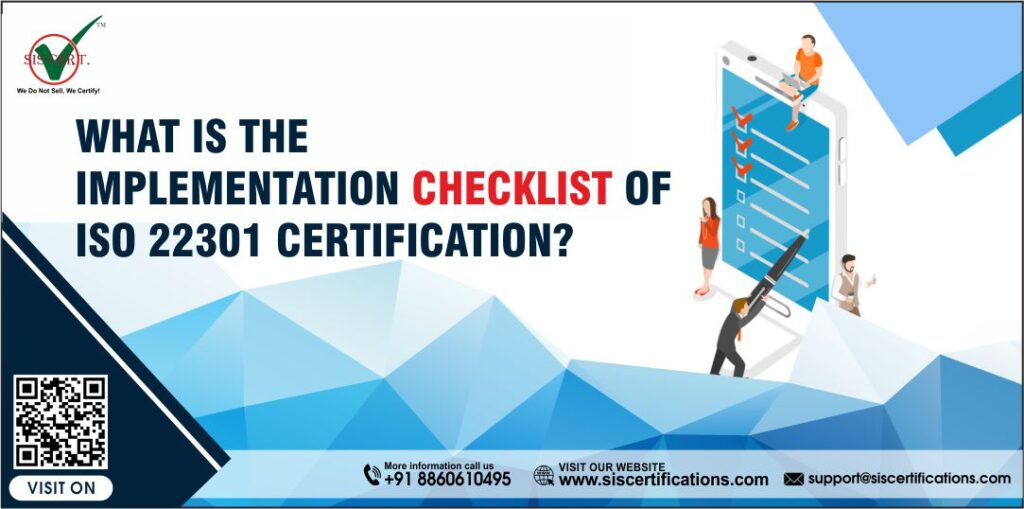
COVID-19 has changed all the dimensions of doing business. It has changed all ways organizations used to follow earlier. It has made us pursue new ideas and ways to conduct day-to-day business operations. Checklist of ISO 22301 Certification a Business Continuity Management System (BCMS) offers a framework for organizations to carry out their business operations and processes without disruption What is ISO 22301 Certification? ISO 22301 Certification is the world’s first standard that provides a framework for Business Continuity Management System (BCMS). It establishes and manages an effective business continuity and aims to provide resilience to organizations to prevent, minimize and recover from disruptive incidents or crisis. The Benefits of ISO 22301 Certification ⮯ The ISO 22301 certification offers the following benefits to an organization: Business protection is significant and safeguards the value of assets and trains an organization to manage its resources. It allows organizations to conduct operations without disruption and execute effective recovery plans when needed. Unifies regional, national, and international regulations in a single framework to establish an effective business Continuity Management System. An organization must comply with all the laws and regulations. Safeguards business investments and income. Checklist of ISO 22301 Certification helps organizations manage their assets. It allows organizations to protect their income during natural calamities and incidents and reduces losses. Increases the reliability and credibility of an organization. It creates a better image among customers and potential business partners and demonstrates its ability and effectiveness in responding to unprepared incidents. Non-conformities are identified and addressed accordingly. An organization must have a contingency plan to manage incidents of disaster or unpredictable occurrences. ISO 22301 standard follows the Plan-Do-Check-Action model to implement effective business management. Ensures continuous business operations and follows a risk-based approach to identify potential risks. It requires formulating strategies to mitigate them and demonstrates the organization’s effectiveness in implementing effective responses and reducing disruptions. Saves the life of employees as it requires conducting fire drills and implementing effective recovery plans. It demonstrates the organization’s concern for the employees’ life and responsibility to provide safe and healthy workplaces. Secures resilience in the supply chain to establish Business Continuity Management. An organization needs a robust and resilient supply chain to provide products and services. A Business Continuity Management System indicates an organization’s commitment and ability to produce opportunities and address risks. ISO 22301 Certification Implementation Checklist⮯ Gaining the support of management – An organization must win the support and confidence of all stakeholders to secure a successful implementation of ISO 22301 Certification. Employees are the human capital of any organization, and their active participation plays a significant role. Determining the requirements – The organization must identify the prerequisites to establish business continuity and communicate them with all stakeholders and interested parties. Defining scope of Business continuity – The management requires defining the policies and responsibilities for business continuity. An organization must determine the scope and objective of business continuity and review the effectiveness and efficiency of the business continuity system. Conducting a risk assessment – An organization requires performing a risk assessment to determine potential risks and opportunities and address them accordingly. Business impact analysis – It defines requirements for an organization to find out two things. That is: Effectiveness of the recovery plan Recovery time objectives are requirements for the successful recovery process. Business continuity plan – There are several kinds of business continuity plans. These are: Incident response plan Recovery plan Training and awareness – A business continuity plan prepares the business for an unexpected incident or crisis. It requires providing necessary training to employees so that they know how to save their lives during an incident. It also instructs the organization to execute mock drills and develop recovery plans. Documentation maintenance – It requires maintaining records and documents of all business operations and helps in assessing their business operations. Performing post-incident reviews – It requires conducting a post-incident review to train employees. A post-incident review allows an organization to evaluate the effectiveness of a recovery plan. Communication – Business continuity depends on the relationship between interested parties, regulatory bodies, authorities, owners, and stakeholders. An organization must establish an effective communication system, internal and external, to keep everyone informed. Performance measurement and evaluation – Performance evaluation enables the organization to understand the effectiveness and efficiency of business operations. It measures the business continuity plans and policies. Performing an internal audit – An organization must conduct an internal audit to identify the weak areas and shortcomings. An internal audit allows organizations to achieve the desired outcomes and eliminate factors that might cause unintended results. Corrective actions – After conducting an internal audit, the organization must implement corrective actions to eliminate shortcomings and mitigate factors that cause undesired outcomes. Conclusion ✅ ISO 22301 is an internationally recognized standard for Business Continuity Management Systems (BCMS). It helps organizations to protect and reduce the occurrence of unprepared events and prepare to respond and recover from incidents disrupting business operations. It seeks to implement, sustain and improve a management system to protect against business-related risks. It follows a risk-based method to identify and address the potential risks and formulates strategies to mitigate them. ISO 22301 certification is a generic standard, and any organization can apply for ISO 22301 certification, regardless of size, nature, and location. Enjoy Reading – What is the importance of ISO 22301 Certification? ISO 22301 & ISO 27001 in an Organization
Know About ISO 37001 Standards
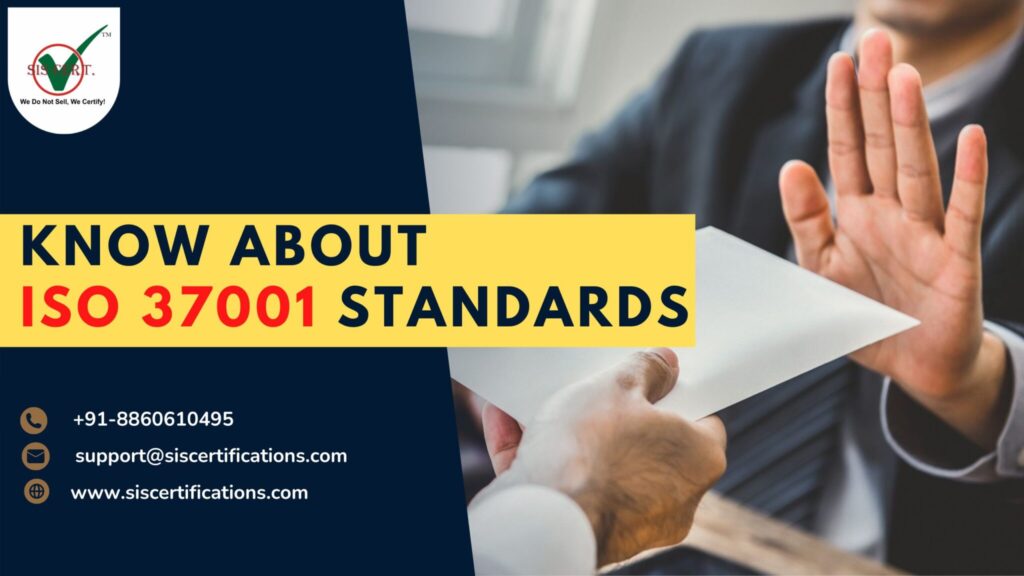
An anti-bribery management system demonstrates an organization’s ability to take proactive measures to prevent bribery. Corruption is a misuse of power and trust, and around 53% of the CEOs or high officials are aware of bribery within their organization; more than $1.5 trillion is the estimated annual cost of bribery, and 75% of the bribery incidents take place through intermediaries. To prevent these corrupt practices and implement ethical business practices, the International Organization for Standardization (ISO) has developed ISO 37001:2016 anti-bribery management system certification. What is ISO 37001? The ISO 37001 Documentation kit for Anti-bribery management system certification provides requirements and guidance for establishing an anti-bribery system. ISO 37001:2016 assures that an organization implements adequate control and addresses risks related to bribery and other forms of corruption. It follows a risk-based approach to identify potential threats and adopts policies and practices to eliminate them. Benefits of ISO 37001 to organizations ⮯ ISO 37001 standards apply to every industry, small and large, regardless of nature and location. An ISO 37001 standard offers the following benefits to an organization: Instils an anti-bribery culture and implements appropriate controls. Requires an organization to adopt ethical business practices and processes. Creates a better reputation of your organization and expands your customer base as well as helps you win new businesses and clients. It lowers the costs and enables an organization to avoid regulatory fines as it requires strict compliance with all the laws, regulations and other standards related to anti-bribery. ISO 37001:2016 Documentation kit for ABMS ⮯ ISO 37001 Manual– It has 10 Chapters and 4 Annexure It contains a sample copy of the system manual and clause-wise details of the implementation of ISO 37001:2016. It consists of the context of organization, objectives, sample policy, scope, organization structure and requirements of ISO 37001:2016 from section 4 to section 10. It has 10 chapters covering the company profile, amendment sheet, index and clause-wise details of ISO 37001:2016 and its implementation process. ISO 37001 Procedure – It consists of 7 procedures It contains a sample copy of mandatory documents of ISO 37001:2016 and covers all the details, such as purpose, scope, responsibility, a list of exhibits, reference documents and formats. in this ISO 37001 Documentation kit the list of sample procedures is as follows: Procedure for document and data control Procedure for corrective action Procedure for internal audit Procedure for management review Procedure for Bribery Risk Management Procedure for training Procedure for investigating and dealing with bribery Process Approach – It contains 10 process templates. It provides guidelines for processes, flow charts and process models for process mapping. It consists of process flow charts and activities of all the processes with an input-output matrix for the organization. It helps organizations in process mapping and preparing process documents. List of Process flow chart: Process Flow Chart of Customer Service Process Flow Chart of Dispatch Process Flow Chart of Engineering Process Flow Chart of Marketing Process Flow Chart of Production Process Flow Chart of Purchase Process Flow Chart of Quality Control Process Flow Chart of System Coordinator Processes Process Flow Chart of Stores Process Flow for Training Activity Policy – It contains only 1 policy It covers all the sample copies of policies related to ISO 37001:2016. Policies are directions provided by the management to achieve the desired outcomes. The list of policies: Anti-bribery and Anti-corruption policy Exhibits – It contains 4 Exhibits It is a helpful tool that focuses on improving and implementing quality requirements and skill requirements. It also includes document identification and codification and the needs and expectations of the stakeholders. The list of exhibits is as follows: Exhibit for Skill requirements Exhibit for Multi skill requirements Exhibit for Document Identification and Codification System Exhibit for Needs and Expectations of stakeholders ISO 37001 Forms and Templates – It contains 34 sample formats. It has a sample copy of blank forms required to maintain records and establish controls. The samples guide the users, and the organization is free to change the same as per its requirements. There are 34 blank formats that can also be used as templates. Filled Formats – It covers 17 sample-filled formats It covers a sample copy of filled forms to maintain records and establish controls. These samples work as a guide for an organization and can be changed based on its requirements. The 17 sample formats can be used as templates. ISO 37001 Audit Checklist – It contains more than 350 questions It contains audit questions based on ISO 37001:2016 requirements for every department. It is an appropriate tool for auditors to prepare audit questionnaires for auditing. It is primarily used for auditing during an internal audit for ISO 37001:2016 Certification. Sample Risk Assessment Sheet – It contains 1 excel sheet template It is a ready-to-use risk template in an editable form used to prepare the risk document for the organization. It is given in excel format. ISO 37001 Compliance Matrix – It contains 1 excel sheet template It is a requirement-wise list of documented information given in the matrix to make it easy for the user to understand how the system works. Conclusion ✅ ISO 37001 certification is an internationally accredited anti-bribery management system standard. It provides tools and techniques for an organization to implement appropriate controls and policies to prevent bribery incidents and makes an organization more reliable and credible. ISO 37001 Documentation kit gives a competitive edge and access to the global market by showing the organization’s compliance with all the national and international laws and regulations. It is a cost-effective standard and increases the revenues of an organization. Tags
Understanding Capability Maturity Model Integration CMMI Level 5
Apply for CMMI Level 3 and Level 5 We all have heard about the CMMI Certification. It is the commonly used term in the IT industry that is often not used accurately. The Capability Maturity Model Integration CMMI Certification is a model specifically designed for the Information Technology Industry. CMMI focuses on improving the organization’s performance by implementing the best practices. But many people don’t know what exactly a CMMI is and how to incorporate it within the organization. In this blog post, we will understand the intricacies of CMMI. What is Capability Maturity Model Integration CMMI Certification? CMMI replaced CMM to enable organizations to improve their business operations and customer delivery structures and implement an agile culture of transformation to adapt to the changing techniques and technologies. Capability Maturity Model Integration CMMI Certification incorporates the best practices and assists an organization in integrating multiple disciplines in a single framework. It streamlines various business processes and operations and aims to improve organizational performance and reduce risks. Different Maturity Levels of CMMI Are ⮯ Know more about Capability Maturity Model Integration ( CMMI ) Professional Certifications Elaboration of Capability Maturity Model Integration CMMI Level 5 Certification⮯ CMMI Level 5 indicates that the organization has achieved all the specific goals defined in maturity levels 2, 3, and 4. It focuses on optimizing business processes through adopting incremental and innovative technological improvements. It uses quantitative process improvement objectives to monitor and measure process improvements. CMMI level 5 addresses common causes of process variations to achieve established organizational objectives. The Benefits of CMMI Level 5 Certifications⮯ Capability Maturity Model Integration CMMI Level 5 Certifications manifest a software organization’s ability to manage and implement best practices to achieve specific business objectives. The CMMI Level 5 certification compliance offers the following benefits to an organization:- It helps organizations to enhance the quality and efficiency of their products, processes, and services by providing a set of best practices for continuous software improvement. Offers a balanced and systematic approach to address performance issues and achieve both project and organizational performance objectives. Provides a sustainable way to enhance business performance through establishing assessment, analysis, and improvement practices. Focuses on business objectives Enhances reliability and efficacy of an organization Indicates the highest level of maturity Shows the organization’s excellence at delivering business technology. Enhances Return On Investment ROI. It is a cost-effective certification as it aims to reduce defects and wastage. It enhances productivity by eliminating the problem of duplication and lowering the need to rework. It improves client, customer, and stakeholder satisfaction. Implementation process for CMMI Certification ⮯ CMMI Level 5 at a Glance⮯ CMMI replaced CMM to provide a more holistic and systematic approach to the information technology industry. It works as a bridge between software and systems to fill gaps and eliminate factors that might lead to undesired outcomes. CMMI Level 5 is the highest level of maturity and indicates an organization’s ability to achieve and implement the rest of the maturity levels within the organization. Enjoy Reading – Simplified CMMI Certification for Level 3 and level 5 ISO Certification for Information Technology ISO 27701 Privacy Information Management System ISMS ISO 27001 Certification Standard
ISO 45001 Certification Process in Chennai
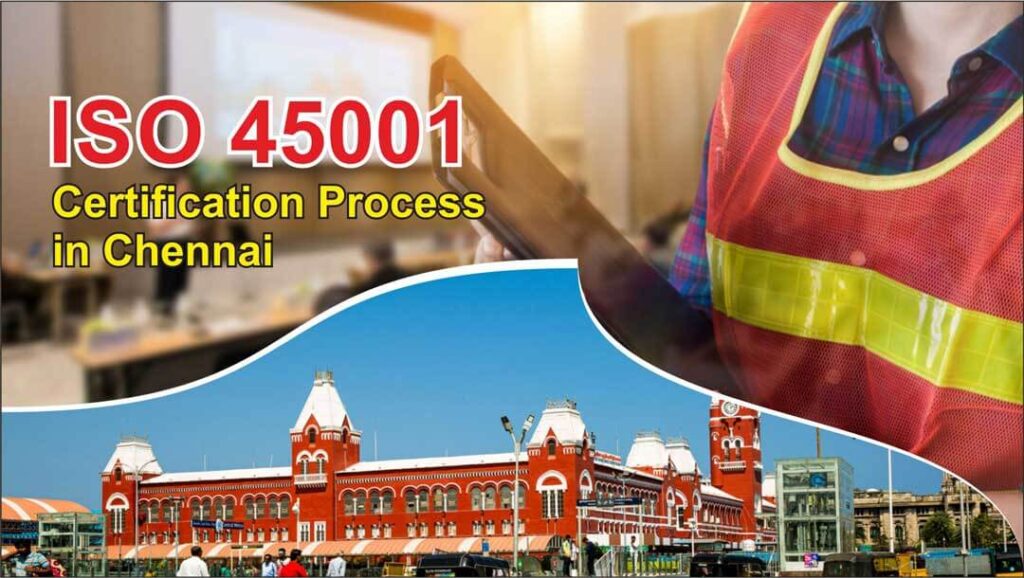
Informa markets organized the largest expos for workplace safety and security in Tamil Nadu. It marked the 7th edition of Occupational Health and safety (OHS South India) and the 6th edition of SAFE South India 2022. It also highlighted how the global manufacturing sector took over 200 years to acknowledge the need to make the workplace safe and secure for workers. The International Organization for Standardization (ISO) has developed more than 24491 ISO standards to address the needs and requirements of various business operations and management systems. ISO 45001 Certification is an internationally accredited ISO standard solely dedicated to Occupational Health and Safety Management system (OHSMS). What is Occupational Health and Safety Management System (OHSMS) standard in Chennai? ISO 45001 certification in Chennai specifies the requirements for Occupational Health and Safety Management System (OHSMS) and provides a systematic framework to establish safe and healthy workplaces. An organization must conduct a risk assessment to identify hazards and occupational health and safety risks and implement an effective risk management plan to eliminate them. It offers a proactive approach for organizations and enables them to achieve occupational health and safety by preventing work-related illness, injuries and deaths. Know more about ISO 45001 OHSMS Certification How is ISO 45001 Certification beneficial in Chennai?⮯ Chennai is known as the manufacturing hub of India. After Maharashtra, Tamil Nadu is the 2nd major contributor Indian state by GDP. Chennai is known for its Automobile, software services, medical tourism, hardware manufacturing, financial services, textiles, apparel and pharmaceuticals. ISO 45001 is a generic standard. Any organization, large and small, can apply for ISO 45001 certification, regardless of size, nature and location. Implementing ISO 45001 standards demonstrate an organization’s compliance with health and safety laws. The benefits of ISO 45001 certification in Chennai are as follows ⮯ ISO 45001 certification compliance helps in building brand integrity and assures that an organization fulfils all the legal and other requirements. It integrates national and international laws, regulations and standards in a single framework and demonstrates an organization’s compliance with all the regulatory requirements. It boosts stakeholder’s confidence and enhances the reputation of your organization. It is an internationally recognized standard for occupational health and safety and demonstrates an organization’s ability to maintain a safe work environment. ISO 45001 certification increases an organization’s credibility and reliability and helps to win new businesses, clients and customers. It provides a systematic structure for organizations to improve their performance. It follows a risk-based approach to identify the potential threats related to workplace safety and offers appropriate tools and controls for organizations to eliminate them. It demonstrates an organization’s leadership and commitment to workplace –safety. Certification Process to Get ISO 45001 Certification in Chennai⮯ ISO 45001 certification aims to eliminate personal health and safety risks and secures mental health and physical safety within the organization. Implementing an ISO 45001 certification can increase the efficiency of your staff and increases productivity. The ISO certification process to get an ISO 45001 certification is as follows:- Step 1: An organization must develop and implement an Occupational Health and Safety Management System standard based on the scope and requirements of the organization.Step 2: Conduct an internal audit to check and review documents and evaluate the preparedness of the organization.Step 3: Scheduling an audit with an accredited certification body.Step 4: On-site audit. An auditor will review the implementation of your Occupational Health and Safety policy and processes to measure compliance with the regulatory requirements.Step 5: Taking corrective actions to manage the non-conformities.Step 6: Issuance of ISO 45001 certification.Step 7: To maintain compliance and effectiveness of the Occupational Health and Safety system, an organization must conduct an audit annually. Conclusion ✅ ISO 45001 Certification is an internationally recognized standard that specifies the requirements for Occupational Health and Safety Management System. It provides a framework for organizations to reduce work-related deaths, injuries and diseases and aims to put in place an Occupational Health and Safety Management System (OHSMS). The cost of ISO 45001 Certification in Chennai varies from organization to organization depending upon many factors, including the size of the organization, the number of employees, the number of branches and the ISO certification body selected by the organization. It requires complying with all the ISO 45001 standard requirements and enhances the reliability and credibility of an organization. Enjoy Reading – ISO 45001 प्रमाणन आपके व्यवसाय को कैसे बेहतर बना सकता है | Which is the best ISO Standard to Boost Business Growth What are the Legal Requirements for ISO 14001 Certification Tags
ISO 45001 Certification Process in Singapore

Singapore is a city-state in maritime Southeast Asia located at the Southern tip of the Malay Peninsula. It is a free-market economy and the most pro-business country. It is the world’s 4th least corrupt country and has low tax rates. The main exports of Singapore include electronics, chemicals, and services. It is the 2nd largest economy and promotes innovation, encourages entrepreneurship, and ensures food security. The International Organization for Standardization (ISO) has developed more than 24491 ISO standards to address the needs and requirements of various business operations and management systems. ISO 45001 Certification is an internationally accredited ISO standard solely dedicated to Occupational Health and Safety Management system (OHSMS). What is ISO 45001 Occupational Health and Safety Management System (OHSMS) standard? ISO 45001 certification is an internationally recognized Occupational Health and Safety Management System (OHSMS) 45001 standard and provides a methodical framework to establish safe and healthy workplaces. An organization requires to conduct a risk assessment to detect hazards and work-related risks and implement an effective risk management plan to mitigate them. It provides a proactive approach for organizations and helps them to achieve occupational health and safety by preventing work-related illness, injuries and deaths. How is ISO 45001 Certification beneficial in Singapore?⮯ ISO 45001 is a generic standard that applies to most industries. Any organization, large and small, can apply for ISO 45001 certification, regardless of size, nature, and location. The implementation of ISO 45001 standards demonstrates an organization’s compliance with health and safety laws. The benefits of ISO 45001 certification in Singapore are as follows :- Enhances the confidence of customers and other stakeholders. It creates a better image of organizations and helps them win new businesses, clients, and customers. It is the world’s first standard for Occupational health and safety that demonstrates an organization’s commitment and ability to provide safe and healthy workplaces. The advantages ISO 45001 standard gives to an organization outweigh the cost of ISO 45001 Certification. ISO 45001 Certification helps in building the brand integrity of the organization and makes it more reliable and credible. ISO 45001 Certification compliance with all the national and international laws, regulations, and standards in a single framework to provide a holistic approach for organizations. It incorporates OHSAS 18001 and the international labour organization’s ILO-OSH guidelines. ISO 45001 standard provides a systematic approach to enhance the organization’s occupational health and safety performance. It follows a risk-based approach to detect potential hazards and work-related risks and offers appropriate tools and controls for organizations to eliminate them. It requires an organization to demonstrate leadership and commitment to ensure workplace safety and security. Certification Process to Get ISO 45001 Certification in Singapore ⮯ ISO 45001 Certification aims to establish Occupational Health and safety (OHS) by eliminating work-related risks and hazards. It ensures mental and physical health within the organization. ISO 45001 standard demonstrates an organization’s ability and commitment to secure employees’ life and increases their efficiency and productivity. The ISO 45001 Certification process in Singapore is as follows:- Step 1: An organization requires developing and implementing an Occupational Health and Safety Management System standard according to the scope and requirements of the organization. Step 2: Performing an internal audit to check and review documents and evaluate the readiness of the organization. Step 3: Scheduling an audit with an accredited ISO certification body in Singapore. Step 4: On-site audit. An auditor will review the implementation of your Occupational Health and Safety (OHS) policy and processes to check compliance with the regulatory requirements. Step 5: Implementing corrective actions to eliminate the non-conformities. Step 6: Issuance of ISO 45001 certification. Step 7: To maintain compliance and effectiveness of the Occupational Health and Safety Management System (OHSMS), an organization must conduct an audit periodically. Conclusion ✅ ISO 45001 Certification specifies the requirements for Occupational Health and Safety Management System (OHSMS). It requires formulating policies and plans to reduce work-related incidents, such as deaths, injuries, and diseases. ISO 45001 Certification provides tools and techniques for an organization to adopt safe and healthy work practices. The cost of ISO 45001 Certification in Singapore varies from organization to organization depending upon many factors, including the size of the organization, the number of employees, the number of branches, and the ISO certification body selected by the organization. It requires complying with all the ISO 45001 standard requirements and improves the reliability and credibility of an organization. Enjoy Reading – ISO 45001 Certification Process in Chennai ISO Certification in Vellore What are the six elements of ISO 14001 Tags