What is the importance of ISO 22301 Certification?
Businesses produce distinct goods and services to satisfy our needs and requirements. They adopt various technologies and techniques to meet customer’s needs and requirements. There are 7 billion people, and only around 5% of the total population are entrepreneurs globally. Business Continuity is critical as it enables an organization to operate at least at minimum levels during a crisis. Many events can hamper day-to-day business activities, such as cyber-attack, an outbreak of disease and natural calamities. A business continuity model offers the necessary tools and expertise to conduct business operations and formulates plans and strategies to eliminate business-related risks. What is ISO 22301 Certification? The ISO 22301 standard is an internationally accredited standard by the International Organization for Standardization. ISO 22301 is a standard for Business Continuity Management System. The ISO 22301 Certification provides a framework for business continuity management and aims to implement, maintain and improve a management system. It protects the organization against any business-related risk. ISO 22301 standards are the first standard for business continuity management and were last revised in 2019. The latest version of ISO 22301 standard is known as ISO 22301:2019. It integrated the ongoing changes to make it more user-friendly and holistic. What Importance of the ISO 22301 Certification?⮯ Business continuity management provides a resilient structure to the organization and saves money, time and reputation. The ISO 22301 standard for Business Continuity Management System is important for an organization in the following ways: Consumer satisfaction is one of the primary advantages of ISO 22301 Certification. ISO 22301 standards seek to deliver goods and services to meet customer’s needs and requirements even during a crisis. Offers you a plan to continue your services even after any disaster. Any unpredictable incident or disruption can lead to a loss in revenue and higher costs. An ISO 22301 standard secures a safe position in the market and helps you to continue your business operations and retain customers. Non-conformities are detected using the Plan-Do-Check-Action model. It requires an organization to have a contingency plan following incidents of disaster or unpredictable occurrences. The ISO 22301 Certification expands your consumer base and helps to win new businesses. It reduces the impact of incidents and improves your recovery time. It creates a better image of the organization among customers and potential business partners. It shows an organization’s capacity and efficacy in dealing with unpredictable incidents. Needs to take a proactive approach to minimize the impacts of threats and incidents on your organization. It requires an organization to review its internal operations frequently to detect potential risks. Unifies various local, national and international laws and regulations in a single standard and provides a framework for establishing Business Continuity Management. Increases the organization’s revenue and reduces costs. Business Continuity Management provides necessary tools and information to an organization to conduct minimal business activities during a crisis. It protects an organization’s assets and resources. The ISO 22301 standard provides training and guidance to your employees and improves the organization’s ability to address the unexpected. It mandates an organization to conduct fire drills and determine a recovery plan. Your organization follows a risk-based approach. ISO 22301 standards aim to identify and mitigate work-related risks. How to get ISO 22301 Certification Online ⮯ Getting an ISO certification makes your organization reliable and demonstrates the organization’s commitment and compliance with laws and regulations. It builds the confidence of your customers and potential business partners in your brand and makes your organization profitable. To get an ISO 22301 Certified, you can apply for an ISO 22301 certification using the SIS Certifications website. We offer certification courses for organizations as well as individuals. ISO 22301 Certification is a management standard for the organization to establish business continuity management. SIS Certifications also offer ISO 22301 training courses for individuals. An individual can apply for ISO 22301 lead auditor course and get the required skills and expertise to conduct ISO 22301 audit. How to Apply for ISO 22301 Certification ⮯ Achieving an ISO 22301 Certification in India is not difficult as SIS Certifications is one of the top 10 ISO 22301 Certifications bodies in India. We also offer other ISO standards, such as ISO 14001 Certification, ISO 9001 certification, ISO 45001 Certification, HACCP certification and many others. SIS Certifications have trusted clients in over 30 countries and operational offices in over 10 countries. It is a trusted certification body accredited by IAS, IAF and IAOS. It is a dedicated team of auditors and technical experts committed to helping you manage risks and access the global market. What is the Cost of ISO 22301 Certifications ⮯ The cost of ISO 22301 Certification varies from organization to organization. The ISO 22301 standard applies to any organization, large and small, regardless of size, nature and location. The cost of ISO 22301 certifications in India also depends on the Certification body you select. It also depends on many factors such as the size of your organization, the number of employees, the location of the organization, the number of branches an organization has and many others. Conclusion ✅ An ISO 22301 Certification demonstrates an organization’s ability to handle disasters, security threats and other incidents. ISO 22301 is one of the first standards for Business Continuity Management. It aims to provide a holistic framework for organizations to implement, maintain and improve the management system and protect against business-related risks. It enhances an organization’s reputation and offers a more resilient structure. It reduces costs by protecting the resources and assets of an organization and increases revenues. It prepares the organization to deal with unpredictable incidents as it focuses on guiding and training the employees so that they can protect their lives. Tags
ISO 27001 प्रमाणन की तैयारी

ISO 27001 मानक विश्व स्तर पर प्रमाणित मानक है जो सूचना सुरक्षा प्रबंधन प्रणाली को आकार देता है, शुरुआत करने के लिए, गोपनीयता, अखंडता, और आईटी उद्योग में वैध अपेक्षाओं के लिए जानकारी की उपलब्धता। आईएसओ प्रमाणीकरण आवश्यक संसाधन को सुनिश्चित करने का आधार है, उदाहरण के लिए एजेंट, क्लाइंट गोपनीय डेटा, लोगो चित्र, ब्रांड विवरण और अन्य व्यक्तिगत जानकारी। इस मानक में एक ऐसी प्रक्रिया शामिल है जो आपकी सूचना सुरक्षा प्रबंधन प्रणाली ISMS की शुरुआत, उपलब्धि, कामकाज और रखरखाव के साथ आवंटित करने के लिए बनाई गई है। ISO 27001 प्रमाणन निष्पादन क्लाइंट और उसकी कानूनी अनिवार्यताओं से एक आदर्श प्रतिक्रिया है। उदाहरण के लिए: – डेटा का दुरुपयोग डकैती वायरल छेड़छाड़ जानकारी को नुकसान पहुंचाएं प्रमाणन को किसी अन्य प्रबंधन असाइनमेंट मानक के साथ आदर्श होने के लिए व्यवस्थित किया गया है। जैसे ISO 9001 प्रमाणन संगठन प्रशासन पहलुओं और मानदंडों पर गुणवत्ता मानक के कार्यान्वयन पर विजय प्राप्त करता है। आईएसओ 27001 प्रमाणन प्राप्त करें यह प्रदर्शित करता है कि संगठन सूचना सुरक्षा की उपक्रम प्रक्रिया का पालन करने के लिए समर्पित है। इसके अतिरिक्त, ISO 27001 मानक आपको इस बात का पेशेवर मूल्यांकन करने की अनुमति देता है कि आपका निगम विवरण स्वीकार्य है या नहीं और आपको संतोषजनक आश्वासन देता है। ISO 27001 प्रमाणन सूचना सुरक्षा प्रबंधन प्रणाली ISMS आपके संगठन में आईएसएमएस विकसित करने के लिए अंतरराष्ट्रीय स्तर पर मानक के तहत नामांकन करता है। ISO 27001 प्रमाणन एक संगठन में ISMS सूचना सुरक्षा प्रबंधन प्रणाली विकसित करने के लिए विश्व स्तर पर मान्यता प्राप्त मानक के लिए साइन अप करता है। यह आपके द्वारा बाधित की जाने वाली जानकारी के बारे में सुरक्षा के संबंध में जोखिम को निर्देशित करने के लिए आपका मार्गदर्शन करता है। आईएसओ 27001 प्रमाणन ऑनलाइन आपके ग्राहक, ग्राहकों और शेयरधारक को आईटी उद्योग में जानकारी सुरक्षित करने की आपकी क्षमता के बारे में विश्वास प्रदान करता है। मानक आपके संगठन को आपकी सूचना सुरक्षा प्रबंधन प्रणाली के विकास, संचालन, पूर्णता और उन्नयन के लिए एक संचालन-आधारित दृष्टिकोण प्राप्त करने के लिए सशक्त बनाते हैं। यह आईएसओ 27001 प्रमाणन संगठन को आवश्यक प्रक्रिया के साथ प्रस्तुत करके उनकी सुरक्षा के भीतर मूल्यवान जानकारी हासिल करने के लिए मार्गदर्शन करेगा, जो जानकारी को सुरक्षित करने के लिए सक्रिय होता है। ISO 27001 के लिए प्रमाणित होने के लाभ⮯ ग्राहक फोकस – ISO 27001 प्रमाणन लक्ष्य संबंधित पक्षों की उन्नति को बढ़ाने के लिए, जो उन्हें ग्राहक आधार का समर्थन करने में मदद करेगा और उपलब्ध चीजों के लिए आश्वस्त करेगा, पूरे संगठन में अवलोकन करके अपेक्षाओं के साथ उनकी आवश्यकता को संप्रेषित करेगा। निर्देश – गुणवत्ता लक्ष्य प्राप्त करने के लिए, निदेशक को एकता के उद्देश्यों को विकसित करने की आवश्यकता होगी जो इसकी नीति, प्रक्रिया, और विश्वास और ईमानदारी उत्पन्न करने की आवश्यकता है जो निर्देशों के साथ आवश्यक संसाधनों को प्रस्तुत करता है, और अधिकारी जिम्मेदारी के साथ कार्य करते हैं। लोगों की भागीदारी – सभी चरणों में लोगों को शामिल करने की योजना बनाने के लिए, यह एक संगठन में कर्मचारियों और उनकी आवश्यकताओं के साथ बातचीत करते समय, ज्ञान और प्रथाओं को विभाजित करते हुए, प्रशिक्षण को स्वीकार करते हुए, और उन्नयन के दौरान हो सकता है। परिचालन दृष्टिकोण – जब कार्यों को स्वीकार किया जाता है और कार्यान्वित किया जाता है तो वितरित परिणाम के विनियमन को संगठन की क्षमताओं और निर्णायक संसाधनों के साथ चिंता से बढ़ाया जाएगा जो कार्रवाई के लिए प्रारंभिक है। विकास – एक संगठन के विकास के लिए वर्तमान स्तर को दिखाने और बढ़ने के लिए जारी रखने के लिए महत्वपूर्ण है, यह निर्देश प्रदान करते समय होगा और उन्हें विश्लेषण के साथ काम की रणनीति जानने की अनुमति देगा, लेखा परीक्षा की तैयारी, निष्पादन और अंदरूनी के लिए परिणाम की उम्मीद को पहचानना और प्रक्रिया प्रस्तुति को बढ़ाने के लिए बाहरी खतरे और संभावनाएं। पुष्टि पर निष्कर्ष – निष्कर्ष केवल डेटा के मूल्यांकन को बाधित करता है, और यह उसके साथ जुड़े व्यवस्थित समाधान लेने के लिए मार्गदर्शन करेगा, और वृत्ति को नहीं छोड़ा जाना चाहिए। एसोसिएशन प्रबंधन – योगदानकर्ताओं जैसे संबंधित पक्षों के साथ संबंध, कुशल रूप से प्रबंधित श्रृंखला प्राप्त कर सकते हैं जो उत्पादों और सुविधाओं के निरंतर प्रवाह को विकसित करता है, यह संबंधित पार्टी के कनेक्शन को नियंत्रित करता है जिसे नियंत्रित करने की आवश्यकता होती है। ISO 27001 प्रमाणन के लिए तैयारी करना – संगठन आईएसओ 27001 प्रमाणन ऑडिट की तैयारी करेगा ताकि ISO प्रमाणन ऑनलाइन प्राप्त किया जा सके जो दस्तावेज़ों को व्यवस्थित करना चाहिए, और वे इसे नियंत्रित कर सकते हैं। कार्य को पूरा करने का बेहतर तरीका तय करना मांग है। ISO 27001 प्रमाणन के साथ आपके व्यवसाय को बढ़ाने के लिए कुछ कदम उठाए गए हैं ⮯ सहमति के लिए सटीक समय निर्धारित करें – जब संगठन ने हाल ही में सिस्टम से चुराए जाने वाले डेटा को पूरा किया है, जिसे संगठन के खतरों से निपटने के रूप में देखा जाता है, तो ISO 27001 प्रमाणीकरण इस आईएसओ 27001 प्रमाणन प्रक्रिया के लिए महत्वपूर्ण बात है। सब कुछ पंजीकृत करें – ISO 27001 प्रमाणन के साथ प्रमाणित होने के लिए दस्तावेजों का पंजीकरण एक महत्वपूर्ण पहलू है। दस्तावेजों के मूल्यांकन में ऑडिटिंग का प्रारंभिक चरण शामिल है, इसलिए सभी विश्लेषणों और खतरों के रिकॉर्ड को बनाए रखना आवश्यक है, साथ ही डेटा का प्रशासन करने वाला व्यक्ति भी आवश्यक है। कर्मचारियों को प्रक्रिया से परिचित कराएं – कर्मचारियों को उस प्रक्रिया में शामिल करना महत्वपूर्ण है जो आईएसओ प्रमाणपत्रों के मूल्य को उजागर करने के लिए संभव है। डेटा सुरक्षा के प्रति अपने समर्पण को परिभाषित करके, क्लाइंट की गोपनीयता को सुरक्षित करके, और संगठन की ताकत को बढ़ाकर संगठन के लिए शेड सेट करें। रणनीति निर्धारित करें और कर्तव्यों का आवंटन करें – आपकी सूचना सुरक्षा प्रबंधन प्रणाली में प्रतिबद्ध कर्मचारी सदस्य शामिल हैं जिन्होंने संगठन के सिस्टम जोखिमों और देनदारियों को स्वीकार किया है। कर्मचारियों के विश्वासों को व्यवस्थित करने के लिए रणनीतियाँ निर्धारित करना एक महत्वपूर्ण तरीका है, संवेदनशील जानकारी को सुरक्षित करने के लिए रणनीति पर्याप्त तीव्र होनी चाहिए, और कर्मचारियों के लिए मज़बूती से काम करने के लिए पर्याप्त रूप से काम
A Step by Step Guide to ISO 27001 Annex A Controls
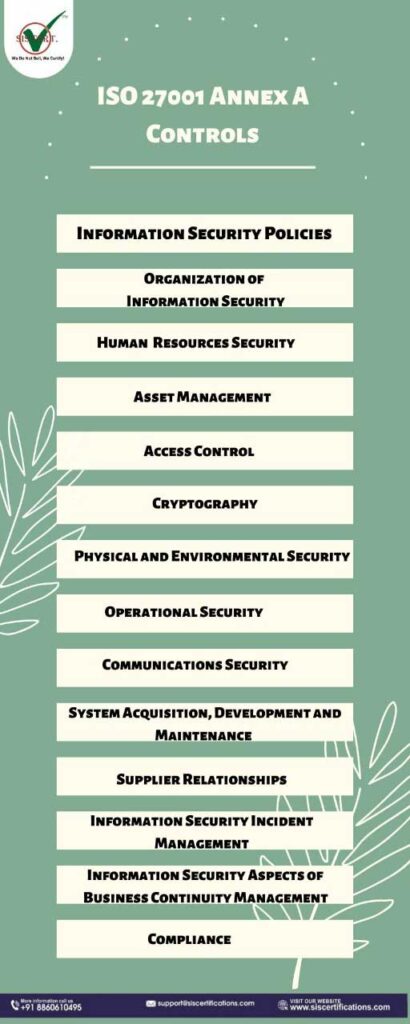
The ISO/IEC 27001:2013 Certification is an international ISO 27001 standard for Information Security Management System. It defines Security controls that aim to address the risks related to cyber security and implement an effective information security system. Annex A Controls of ISO 27001 consists of 114 security controls. Annex A Controls Annex A of ISO 27001 contains 114 security controls grouped into 14 control categories, and not all controls are mandatory. The selection of controls depends on the organization’s risk assessment. ISO 27001 Certification follows a risk-based approach and focuses on identifying the risk to its information security and selecting the appropriate controls to eliminate them. ISO/IEC 27001:2013 Certification outlines ISO 27001 Annex A controls, also known as ISO 27002. What is the difference between ISO 27001 and ISO 27002 Certification?⮯ Annex A controls of ISO 27001 Certification is one of the most well-known annex of ISO standards. It is a list of controls that aim to protect and strengthen the information security assets of the organization. ISO 27001 gives a general idea about these controls in one sentence. The International organization for standardization published ISO 27002 certification to provide an extensive description on implementing these controls. It works on the same lines as ISO 27001 but has more details on controls. List of ISO 27001 Annex A controls ⮯ Annex controls of ISO 27001 are grouped into 14 domains. These are: Information Security Policies Organization of Information Security Human Resources Security Asset Management Access Control Cryptography Physical and Environmental Security Operational Security Communications Security System Acquisitions, Development and Maintenance Supplier Relationships Information Security Incident Management Information Security Aspects of Business Continuity Management Compliance A Guide to ISO 27001 Annex A controls ⮯ The Security controls allow an organization to manage its information security assets and prepare against cyber threats. It enables an organization to avoid regulatory fines due to cyber-attacks, such as data breaches and malware. These controls cover specific topics and the purpose of these 14 controls is: Information Security Policies (2 controls) – It aims to provide direction and support to the management to implement information security. It helps organizations to formulate their information security policy based on the needs and requirements of the organization. Organization of Information Security (7 Controls) – This annex has seven controls divided into two sections which are Internal Organization and Mobile Device and Teleworking. Internal organization: It assigns roles and responsibilities to initiate and control the implementation of the Security management system. It aims to establish an efficient management framework to implement and maintain Information security practices. Mobile Device and Teleworking: It addresses the issues associated with remote working and the risk related to the use of mobile devices. It provides training and complies with regulations to access, process and store information remotely. Human Resources Security (6 controls) – These controls are divided into three sections. These are: Pre-employment requirements– A contractor needs to do appropriate background verification and state responsibilities in the employment contract to ensure information safety. Responsibilities during employment– It requires an organization to provide training to implement a disciplinary process to protect information security. Candidates need to be aware of their job responsibilities and update themselves. Termination and change of employment– It ensures to protect organization’s interest when candidates change or leave the organization. Asset Management (10 Controls) – These ten controls are grouped into three domains. Identification of Information Assets– It requires implementing an asset inventory, including its designated asset owners. The organization must implement and document controls associated with acceptable use. Information Classification– An organization must classify its information and assets accordingly and ensure adequate security measures. Media Handling– It prevents the unauthorized access, disclosure or destruction of information. Access Control (14 controls) – Access control is divided into four sections. Requirements of access control– It requires limiting access to information and information processing by implementing an access control policy. User access management– It aims to provide physical and virtual authorization to access the system and prevent unauthorized access to the employees. System and application access control– It prevents unauthorized access to the system and application. User Responsibility– It makes users responsible for safeguarding their information, such as PINs, passwords and other confidential information. Cryptography (2 controls) – It enables an organization to use cryptographic controls for proper data encryption to protect the confidentiality, authenticity and integrity of data. Physical and Environmental Security (15 controls) – The 15 controls under this control are divided into two domains. Prevents unauthorized access- It aims to protect against any disruption and interference that might occur to physical facilities. It protects against unauthorized access to an organization’s information and facilities. Prevent loss- It prevents loss, damage and theft of information and asset. Operational Security (14 controls) – Operational security control is divided into seven sections. It aims to establish adequate information processing facilities to ensure correct business operations. It monitors requirements for data backup and integrity of operational software and protects from malware and vulnerabilities to address them accordingly. Communications Security (7 controls) – It is divided into two sections. Network security management– It protects the three main principles of Information Security Management, such as Confidentiality, Availability and Integrity. Information transfer– It requires an organization to adopt transfer policy, procedures and controls while transferring data to third-party, organizations and customers. System Acquisitions, Development and Maintenance (13 controls) – It ensures that security remains an integral part of the information system and requires updating the existing information system to improve business operations. Supplier Relationships (5 controls) – It contains five controls divided into two groups and aims to improve the interaction between an organization and a third party. Information security in supplier relationships– It aims to protect the valuable assets and information that can be accessed by suppliers to mitigate risks. Supplier service development management– It requires maintaining the level of information security and service delivery mentioned in the agreement. Information Security Incident Management (7 controls) – It ensures information security events and weaknesses related to information security are communicated in a way that
How Does ISO 13485 Certification Help Medical Device Manufacturers?
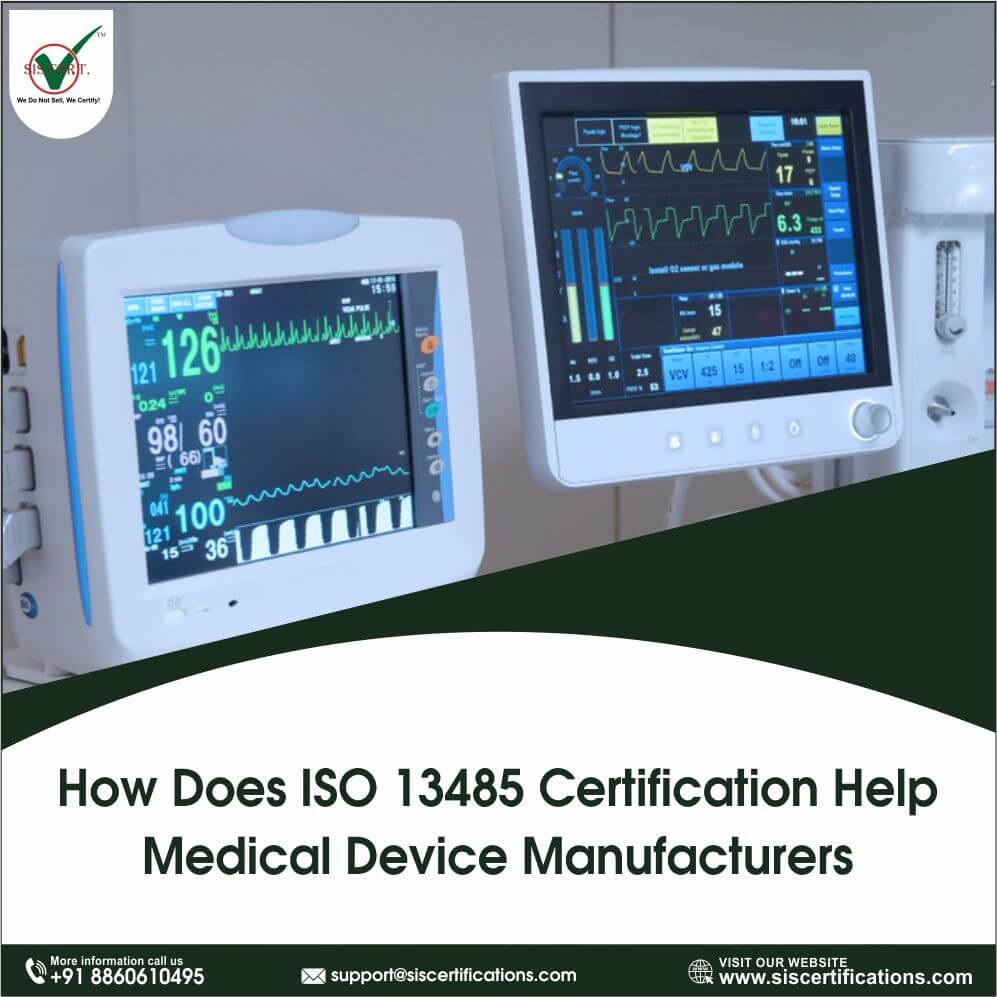
W.H.O. says- “The medical device can be any instrument, apparatus, implement, machine, appliance, implant, reagent for in vitro use, software, material or another similar or related article intended by the manufacturer to be, used alone or in combination for a medical purpose.” Medical devices are used in many diverse situations, and without medical devices, ordinary medical procedures would also become challenging. These devices can be simple or complex medical devices that facilitate human needs. A thermometer is a simple medical device, and an X-ray machine is a complex medical device. Machines are human-made, and they cannot be entrusted blindly. How can we decide which device is better than the other? Is there any way to discover the quality of medical devices? Yes, we have ISO 13485 on medical devices. What is ISO 13485 Certification? ISO 13485, also known as Quality Management System for Medical Devices, is an internationally accredited standard that signifies the quality of medical devices. ISO 13485 is a standard derived from ISO 9001 Quality Management System QMS. The organisation must demonstrate its capacity to supply quality medical products to meet customer requirements. It ensures the quality of products and services related to medical devices. Every organisation must follow the regulatory requirements of ISO 13485, whether it deals with design and development, production, storage and distribution or any other organisation trading medical devices. Any organisation manufacturing medical devices or associated with them, such as a supplier, has to follow the requirements of ISO 13485 Quality Management System for Medical Devices. It requires the industry to monitor, maintain and control the processes to establish a quality management system. It ensures effectiveness, control and maintenance of a quality management system, which is critical for delivering quality services and meeting customer requirements. Ways in which ISO 13485 Certification Help Medical Device Manufacturers ⮯ Product expertise: ISO 13485 ensures a quality management system that includes professionals and well-qualified technical specialists, which assures good quality products and services. Access to the Global market: ISO 13485 emphasises quality and reduces risks, which makes it easier for companies to trust each other and acquire new customers. It is a sign of quality, and medical devices directly impact human lives, it guarantees the quality of product and services. Service-oriented: It requires conducting internal audits to examine the operations and oversee the quality of products and services. Patient safety: It ensures patient safety. It strives to deliver high-quality products and meet customer requirements while complying with all the regulations. Cost reduction: It reduces the cost and aims at improving the processes and operations consistently to save time and money. It follows corrective and preventive techniques to build a quality management system. Increase efficiency: It increases the efficiency and secures effectiveness, maintenance and control of the quality management system of the organisation. Helps in expanding customer base: It helps in expanding the customer base of the organisation. It is a hallmark of trust and credibility and helps in acquiring potential customers. Some other ISO 13485 Certification benefits⮯ It is a transparent system, as it offers a clear insight to the end user regarding the usage and quality of the device. It follows a risk analysis approach to avoid discrepancy and promotes an effective quality management system. It strives to meet customer requirements and prioritises end-user safety and needs. It offers a better risk management mechanism as it consistently traces products and services, which makes it easier to find errors and rectify them. It provides a regulated framework, which helps the organisation to gain customers and business. It requires the organisation to consistently conduct internal audits to examine the operations, which ensures the quality of the products and services. Requirements of ISO 13845 Certification⮯ There are Eight requirements for ISO 13845 Certification, and the first three requirements are general and introductory. The last five sections define the necessary requirements. These five sections are: Section 4: Quality Management SystemIt requires establishing a Quality Management System for medical devices and following all the national and international regulations. Section 5: Management responsibilityThe organisation has to design a complaint redressal for the customers and effectively communicate all the objectives and policies within the management. Section 6: Resource management It deals with resource management. It includes human resources as well as raw materials. An organisation must ensure that all the employees are well qualified and trained. Section 7: Product realizationIt deals with the expansion of products and services and the formulation of strategies to carry out distinct business operations. Section 8: Measurement, analysis and improvementIt requires monitoring and taking remedial actions to improve current business operations to meet customer requirements. ISO 13485 helps in expanding the business and assures high-quality products and services as it is derived from ISO 9001, also known as Quality Management System. Tags
Guide for Food Safety Certifications
Food safety is crucial to protect customers from health risks. Access to safe and healthy food is a key to good health and happy living. It is necessary to know about the quality of the product before consuming it. We have Food Safety Certification ISO 22000 that validates the quality of the food products and ensures the safety and good health. Any industry associated with food either directly or indirectly needs this certification. What is ISO 22000? ISO 22000, also known as Food Safety Management System, provides a framework to implement and operate a food safety management system to provide safe and healthy food products to meet customer requirements. ISO 22000 certification applies to all food industries regardless of size and location. The Food Safety Management System standard complies with the HACCP principles. It concentrates on strategic decision-making for an organisation to enhance its food safety performance. It helps the organization to monitor, identify, prevent and improve food safety hazards. It strives to deliver safe and healthy products to meet customer requirements. Benefits of ISO 22000 Certification ⮯ It makes the organisation reliable and credible. ISO 22000 strives to meet customer requirements and deliver safe and healthy products, which expands the customer base. It helps an organisation to reduce its cost as it ensures food safety and quality products. ISO 22000 offers global recognition to the organisation because it is an internationally accredited certification that promotes transparency and accountability, strengthening the confidence of the customers. It requires strict compliance with food safety regulations. It helps the organisation to monitor, identify, prevent and improve any shortcomings and helps to optimize and update the system. ISO 22000 Food Safety Management System works on detecting and preventing approaches as it aims to identify potential risks and opportunities. It formulates strategies to mitigate the risk and reap the opportunities. Food Safety and Factory Audits⮯ Food safety audits help in ensuring transparency and assure that standards are being maintained. It focuses on the organisation’s operation, such as the food safety management system, food storage, sanitation, and hygiene. A food safety audit evaluates and documents the organisation’s food safety management and ensures that all the practices comply with the food safety laws and regulations. Importance of Food safety audit⮯ A food safety audit is crucial due to the following reasons: It is a transparent report. It is conducted to evaluate and verify the food safety system of an organisation. It aims at improving the food safety standards of an organisation. Focuses on strengthening the food control system An external or internal can conduct the audit. International food safety certifications ⮯ There is more than one food safety certification based on different food industries and ensuring the safety and quality of the products. These are: Good Manufacturing Practices (GMP) GMP is also known as Good Manufacturing Practices. It requires an organisation to manufacture quality products to eliminate contamination and the risk of errors. GMP standards require strict compliance with the laws and regulations, and failure to comply can lead to severe consequences. GMP requirements are flexible. The organisation can determine the best practices based on its needs. It is the minimum standard that medicine manufacturers meet in their production process. The European Medicine Agency (EMA) conducts frequent inspections to verify compliance with these standards. Hazard Analyses Critical Control Point (HACCP) HACCP, also known as Hazard Analyses Critical Control Point, is an internationally accredited certification. It prevents any physical, chemical, and microbiological contamination of food products at all levels of the food supply chain. It follows an evidence-based approach to demonstrate the organisation’s commitment to delivering safe and healthy food products. HACCP Certification is given to food processors and manufacturers to ensure that they have implemented the standards effectively. Halal Certification Halal Certification is a document that ensures the food products meet the requirements of the Muslim population. Halal word is taken from Quran, which means lawful, legal, or permissible. It guarantees the quality of food products based on the rules established by Islamic laws. It considers food safety and storage practices and provides access to the global market, where the halal certificate is mandatory. Food Safety System Certifications (FSSC 22000) FSSC 22000 is a Global Food Safety Initiative (GFSI), which provides a framework for food safety standards. It proposes a complete Certification for audit and food safety management system (FSMS). It also offers combined certification for Food Safety Management System (FSMS) and Quality Management System (QMS)- FSSC 22000-Quality. Tags
7 Benefits of ISO 27001 Certification
Digital transformation has provided new alternatives for organizations to manage records and information of the customers. It has also increased the chances of data breaches, data theft, and other cybercrimes. Data security is essential for public and private sector organisations as it is the responsibility of the company to protect their users and customer information and privacy. ISO 27001 provides a framework for organisations to safeguard data systematically and cost-effectively. ISO/IEC 27001:2013, also known as ISO 27001. ISO 27001 Certification is an internationally accredited certification for Information Security Management system. It helps organizations to address their information security and uses the best approach. It includes: Managing people Managing processes Managing technology It is published by the International Organisation for Standardisation (ISO), in association with the International Electrotechnical Commission (IEC). It focuses on risk mitigation associated with data security and privacy. It is designed to handle data security and provides a framework for an effective and efficient information security management system. It requires an effective ISMS. The ISO 27001 standard is not obligatory but makes the organisation more credible and trustworthy. It is not a legal requirement for any organisation as companies have to define their controls based on their needs. If the organisation is contractually obliged to safeguard customer data in that case, it is a legal requirement to have an ISO 27001 Certification. ISO framework integrated all the policies and procedures for an organisation to use. 7 Benefits of ISO 27001 Certification 7 key benefits of ISO 27001 implementation are as follows: Consumer satisfaction: Customers today are more aware and interested to learn how companies protect their valuable information. ISO 27001 exhibits the organisation’s commitment to upholding confidential information and privacy. It encourages annual internal audits to examine the performance and compliance with standards. It promotes robust security controls and enhances client relationships. Compliance with legal regulations: It shows the company’s obligation towards information safety and enforces information security regulations. It works to detect and prevent an approach to identify potential risks and reduces the risk of fraud, information loss, and disclosure of confidential data. It promotes compliance with legal, contractual and commercial regulations and makes the organisation reliable and credible. Increases business resilience: It concentrates on detecting potential risks and opportunities and enables the industry to deliver quality products and services consistently. It formulates strategies to mitigate the risk and reap the opportunities. Protects the reputation: It requires strict compliance with the legal regulations and shows the company’s obligation toward customer data and privacy. It enhances an organisation’s reputation and helps businesses win new partners and customers. Cost-effective: There is a provision for internal audits and management reviews to achieve desired outcomes. It suggests all the potential risks and provides time for the organisation to mitigate those thus, saves money. In countries like Europe and the United Kingdom, where GDPR is a legal requirement government can fine regarding non-compliance with data protection requirements. Improves the organisation’s structure: It promotes monitoring, maintaining, reviewing, and improving the security management system. It exhibits the company’s effectiveness in implementing an information security management system and reducing the need for regular customer audits. Provides a competitive edge: Every organisation has to define its security controls that depend on two factors. Needs of the organisation, and The requirements of the customers. Aligning your security controls with ISO 27001 controls provides the industry with a competitive edge in the market. It helps the organisation in many ways as ISO 27001 Certification related to Information Security Management System applies to most industries irrespective of their size, nature, and geographical locations. ISO 27001 is a versatile certification that can help the organization in many domains, such as Information Technology, Cybersecurity, Safety strategy, Data protection, GDPR, and many more. Implementation of ISO 27001 Implementing an ISO 27001- complaint ISMS can be a challenging task. ISO 27001 Information Security Management System implementation requires nine steps to follow. These are: Step 1: Assembling an implementation team Step 2: Developing an implementation plan Step 3: Initiating the Information Security Management System Step 4: Defining the scope of ISMS Step5: Identifying the organisation’s security baseline Step 6: Establishment of a risk management process Step 7: Implementation of a risk management strategy Step 8: Measuring, monitoring, and reviewing the working of ISMS Step 9: Certify Information Security Management System Advantages and Disadvantages of ISO 27001⮯ Advantages of ISO 27001:Following are the advantages of ISO 27001: It lowers the cost as it reduces the incidents of cybercrime and cyberattack. It improves business operations as it requires strict compliance with regulations. It makes the organisation reliable and credible. Disadvantages of ISO 27001:Following are the disadvantages of ISO 27001: Initially, the process can be a little expensive. It is less flexible as it requires strict compliance with the standard. Some organisations may resist it, considering the wastage of time and money during the implementation phase. ISO 27001 Benefits of lead auditor certification ⮯ ISO 27001 lead auditor certification offers training and expertise to conduct an ISMS audit. It provides guidance and knowledge of ISMS and its implementation techniques. It can help an individual to get hired smoothly and learn ISMS improvement techniques. Enjoy Reading – A Step by Step Guide to ISO 27001 Annex A Controls ISO 27001 प्रमाणन की तैयारी Why is ISO 27001 Important These Days Tags
Which QMS ISO Certification is for the Facility Management System ?
The QMS ISO Certification is 41001 for the Facility Management System ⮯ Quality management demands delivering and overseeing all the activities that must be performed to maintain a desired level of excellence. Every that surrounds us and makes things easy for us comes under the facility, such as safety, infrastructure and real estate. How can we decide which business is more reliable and effective in delivering the needed facilities? There is one ISO Certification that can give you all the necessary information regarding the facility management of an industry, which is ISO 41001 Facility Management System. Before understanding, what is ISO 41001 Facility Management System, we need to understand what is facility management ? Facility management is an organisational function which concentrates on delivering and integrating people, places and processes within the industry to improve the quality, productivity and efficiency of the organization. What is ISO 410001 Certification?:⮯ ISO 41001 Facility Management System, also known as FMS. ISO 41001 is an international standard published by the International Organisation for Standardisation for effectively executing facility management system in an organisation.The Framework of this certification is the same as the ISO 9001. ISO 14001 and ISO 45001. It integrates different entities within the business to make the management system easier.It exhibits efficient and adequate delivery of facility management that satisfies the needs of the demanding industry. It applies to organisations of any size and sector regardless of their nature and geographical location, that want leverage in the industry.It is a hallmark of trust that ensures the quality and efficiency of the organisation. It aims to meet customer requirements and the necessities of the interested entities. Benefits of ISO 41001 Certification? ⮯ It helps in improving workers’ safety, well-being and security. Getting ISO 41001 certified ensures that the organisation complies with all the legal requirements. We all know that the better the working environment higher the productivity. Providing a safe and quality working environment is one of the top priority. It improves the productivity and efficiency of the organisation, and it gives priority to the working conditions of the employees. ISO 41001 Certification enhances the strategic planning to meet customer requirements and promotes tactical operations. It provides you with an edge over your competitors as it is a piece of evidence that your organisation has effective facility management. It guarantees the quality of services that your industry offers. It focuses on customer satisfaction and aims to deliver quality services to fulfil the needs and requirements of the demanding entities. It is a hallmark of trust and quality that your services are top-notch and exhibit services consistencies. ISO 41001 is a legal requirement that encourages sustainability and environmental considerations. It is a hallmark of trust and quality that your services are top-notch and exhibit services consistencies. It offers you cost benefits and focuses on increasing productivity and reducing the cost of production. It promotes better use of the organisation’s resources and assets. It helps to increase profits and believes in providing high-quality services to meet customer requirements. ISO 41001 helps your organisation to focus more on revenue-generating practices, in turn, increases the profit margins. ISO 9001 vs ISO 41001, Which one is the best? ⮯ ISO 9001 promotes a quality Management System that ensures high-quality products and services to meet customer requirements, whereas ISO 41001 encourages a Facility Management System and provides a framework to deliver and maintain adequate facilities. ISO 41001 includes ISO 9001 as ISO 9001 makes ISO 41001 more credible and reliable. Requirements of ISO 41001 ⮯ It is an internationally accredited standard that shows the adequate application of the facility management system within the organisation by fulfilling specific requirements. It is not a sector-specific certification and applies to all organisations regardless of their size, type and nature. Get ISO 41001 Certification Process⮯ The ISO 41001 Certification process involves some technical process that needs to be followed. An industry has to develop its Facility Management system and needs to conduct a gap analysis. The organisation needs to provide training and guidance regarding the objectives of the FMS to the employees. An internal audit is done by the consultant while an external audit is done by the certifying body. Then they disclose their observation, and if everything goes rig SIS Certifications ISO 41001 certificate will be valid for three years. ht, they issue a Certificate. SIS Certifications is the ISO 41001 certification provider, and the SIS Certifications ISO 41001 certificate will be valid for three years. The last step is the Conduction of the annual supervision audit. What is the Cost of ISO 41001 Certification?⮯ ISO 41001 is globally known to provide a framework for a facility management system, and ISO 41001 Certification cost depends on your service provider as well as your business. It depends on the size of your organisation and includes two types of costs. Consultancy Costing Certification Costing How can you check the Validity of your 41001 Certification? ⮯ You can check the Validity of the ISO 41001 Certification using these options: You can go to the IAF website and review there, You can inspect on Regional register online, You can also check through the website of the ISO Certification body. Tags
What are the Legal Requirements for ISO 14001 Certification?
The legal requirements for ISO 14001 certification are as ⮯ ISO 14001, also known as (EMS) Environmental Management System. It sets the criteria and framework for an effective environmental management system. ISO 14001 Environmental Management System. It is an internationally recognised standard that helps to improve environmental performance through using resources efficiently and reducing wastage. ISO 14001 offers a lead auditor training program that aims to deliver the required expertise to conduct an Environment Management System (EMS) audit. It provides you with all the major auditing principles, techniques, and procedures. The latest version of ISO 14001, also known as ISO 14001:2015, was released in September 2015. ISO 14001 latest version has brought significant changes in the structure of the Environment Management system (EMS). It focuses more on standards and facilitates integration with other ISO standards. It provides a competitive advantage and helps to gain the trust of the entities. ISO 14001 Certifications requirements checklist – Suitable environment policy Specifying environmental objectives and targets Determining an organisation’s environmental effects Transmission of policies and objectives within the organisation and management Designation of stakeholders for environment management system Provision of environmental adherence Strategy to observe and estimate the progress Environment management system performance audit Ceaseless improvement The organisation should maintain and follow the procedures that are part of the organisation’s environmental objectives. Legal requirements are regulations related to local, national and international laws. ISO 14001 a legal requirement, as well as an own voluntary environmental obligation. Let’s have a look at all the legal requirements for ISO 14001. Legal requirements of ISO 14001 Certification ⮯ ISO 14001 Environmental Management System designs the critical requirements to enforce an effective Environmental Management System. These requirements are divided into ten different sections (Section 1 to Section 10) and work on Plan-Do-Check-Act (PDCA) approach. It is necessary to understand all the sections. Section 1 to Section 6 is in the Plan stage.Section 7 and Section 8 are in the Do stage.Section 9 is in the Check stage.Section 10 is in the Act stage. Section 1: Scope ⮯ It marks the Scope of the Environmental management system. It should meet the organisation’s environmental policies and strives to improve the industry’s environmental performance. Section 2: Normative references ⮯ In ISO 14001, there is no normative clause. Section 3: Terms and Definitions ⮯ This clause explains all the terms and definitions related to these four categories: Organisation and leadership Planning Support and Operation Performance evaluation and Improvement Section 4: Context of the organisation ⮯ It deals with identifying all the factors that affect the industry and understanding the requirements of the business. These aspects broadly depend on the size and nature of the organisation. This clause aims to find internal and external factors that affect the industry and enforce best practices for an effective environmental management system. Section 5: Leadership ⮯ It deals with allocating the roles and responsibilities within the organisation for an adequate environmental management system. It illustrates the importance of top-level management in executing and improving EMS. Section 6: Planning ⮯ It focuses on examining any risk and opportunity that can impact the industry and formulates strategies to mitigate the risk and reap opportunities. It also analyses the industry’s interaction with the environment and compliance with legal obligations to establish an effective Environmental management system. Section 7: Support ⮯ It addresses the needs and requirements of the management for an effective Environmental system. It promotes the flow of information, documentation and policies to ensure all the employees are well aware of the organisation’s objectives. Section 8: Operation ⮯ This Section is related to Section 6 (Planning), which states that the organisation should evaluate all the activities hindering the organisation’s manufacturing and services. The organisation must formulate policies to meet the operational requirement for environmental control and deal with a potential emergency. Section 9: Performance evaluation⮯ It is crucial to ensure that the organisation’s environmental management system is adequate and efficient. It involves monitoring and measuring the organisation’s current practices and identifying the areas for advancement. Section 10: improvement⮯ It ensures the effectiveness of the environmental management system and commits to enhancing required process areas to establish an environmental management system. Benefits of ISO 14001⮯ Getting ISO 14001 certified ensures that the organisation complies with all the legal regulations. It demonstrates that the organisation is concerned about the environment and builds trust in the customers. ISO environmental certification helps to provide a competitive advantage to the organisation as it displays that you have an active commitment to the environment. It reduces the amount of waste generated by the industries as one of the requirements of ISO 14001 is that the organisation needs to demonstrate that it complies and works to achieve the environmental objectives. How to check the validity of ISO 14001 ⮯ To check the validity of your certificate you can go to the IAF website and search using your business name. You can also check the validity from the local Accreditation authority website You can also use the Certification body website to check the validity of your ISO Certificate. Tags
What is ISO 9001 Certification?
The legal requirements for ISO 14001 certification are as ⮯ An ISO Certification is documentation that the industry runs on the international standards defined by ISO (International organisation for standardisation). There are more than 22000 types of ISO Certifications covering almost every industry. However, some are pertinent to most trades, such as ISO 9001. What is ISO 9001? ISO 9001, also known as the Quality Management System (QMS), is one of the most generic ISO standards. It promotes the manufacture of good quality products and services, as it strives to deliver the same to its customers. It concentrates on creating the same quality products to meet customers’ expectations. Any industry can apply for ISO 9001 Certification regardless of its size, as it applies to most industries. It follows PDCA (Plan-Do-Check-Act) technique and process approach to demonstrate the ability to fulfil customers’ expectations. It operates on seven pillars to offer the same level of satisfaction to the customer. These pillars are: Customer focus Leadership Engagement of people Process approach Improvement Evidence-based decision making Relationship management How much does ISO 9001 Certification Cost ? ⮯ The cost of ISO 9001 Certification varies from one organisation to another, which depends on the agency. The prices are determined only after auditing the business, as it depends on the number of branches an organisation has and the number of employees in the firm. The ISO 9001 Certification keeps on revising, and the current version of ISO 9001 was released in September 2015, also known as ISO 9001:2015. How is ISO 9001:2015 different from ISO 9001?⮯ ISO 9001:2015 is not a new standard. It is a revised form of ISO 9001. ISO frequently reviews all the standards to remain up to date. The main objective of the revision is to improve the quality, efficiency and process. ISO 9001:2015 standard, also known as Quality Management System (QMS), aims at delivering good quality products and services to meet customer requirements. It is an integrated standard, which encompasses all the processes, resources and values. The revision includes instigating new techniques and information and restructuring the principles to cater to the demand of the customers’. It is more flexible, as it provides leverage to companies to define their objectives. What are ISO 9001:2015 requirements? ⮯ It specifies the requirement for the Quality Management System in the enterprise. The changes in ISO 9001:2015 are generic, as they are functional to any industry irrespective of the size. It requires industries to have: – Context of the organization: An organisation has to determine the internal and external factors that affect the quality of the services. Leadership: Establish all the objectives and the qualities for an effective and efficient management system. Planning: Do proper planning to reduce undesirable results and achieve your targets. Support: Provide an effective environment for your employees to increase their efficiency. Operation: It requires effective monitoring, inspection or testing to ensure the quality of goods and services. Performance Evaluation: Find out the areas which are causing undesired results. Improvement: Focus on all the aspects which need improvement and work on them, such as meeting customer needs. Is ISO Certification for individuals? ⮯ No! an individual cannot become ISO Certified. But, one can become a Lead Auditor after completing ISO 9001:2015 QMS Lead Auditor training program. Tags
Why is ISO 9001 Certification beneficial for IT companies?
ISO 9001 characterizes the necessitate the quality management system in an organization, which design, manufacture, and deliver the product and services to attain the customer legislative and regulatory essentials. The standard also reassures to specify a framework that accesses the customer perception and his improvements. ISO 9001 certification consequences a satisfactory management practice. The certification influences a global standard that spells out quality and belief. To contact ISO certification, an organization illustrate its capability to consistently contribute products that absolutely matches with customers’ statuary & regulatory requirement and pursue the expectations of customers. The advantage beyond ISO 9001 certification eases international trade by providing standards that are recognized and respected globally. There is a general standard that is applied to all sectors. Some of the sectors are processing, serving, printing, electronics, manufacturing, computing, legal services, banking, and so on. The quality management system develops products and services enhances efficiency and helps in reducing costs. Benefits of ISO 9001:2015 Certification Services A proficiently designed and implemented quality management system, based on ISO 9001:2015 certification services that furnish the numerous benefits in an IT company. The advantage the IT companies becoming ISO certified will help the organization’s staff to improve their services and customer loyalty. ISO 9001 is remarkable in nourishment fabricating because of its hazard-based control measure from the QMS. having a QMS permits you to food safety norms and holds a greater level of value in the industry. ISO 9001 certifications imply that you have a functional administrative process to set the screening strategy. Addressing threats and opportunities associated with its context and objectives. strong involvement and commitment from top management. Accelerate opportunities to enhance customer satisfaction. Help in establishing a framework for performance improvement. A stronger understanding of customer expectations. Enhanced level of employee awareness. Advances the service’s reliability. It will help the organization in record keeping. Enhanced customer morale. Serves factual approach for taking decisions. Upgrade continuously ISO 9001:2015 certification services provide technology companies the guidance for the required system and the practices to achieve the process efficiently, and effectively. Quality management standards look ahead to improving the standards for customers. Small-scale technology businesses can struggle to attain a high-level effective process, however, adopting the ISO 9001 certification can make it achievable to be on the top of the competitive organizations. The instantly growing business in technologies and communication providers noticed a significant rise in customer satisfaction levels by adopting ISO 9001 to help them to enhance their order completion rates. ISO 9001:2015 certification services can issue much supremacy to organizations with a well-implemented quality management system. ISO 9001:2015 brought some changes and requires to aware some changes from this version. This certificate may provide constant services with enhanced customer contentment and address the risk with the awareness of customer changing expectations. The new form acts for increasing complexity and the organization should focus on the needs of services providers. The current structure of an organization creates better management regarding ISO 9001 and other standards. This quality standard certification maintains customer satisfaction and reliable services on higher preferable. It focused on the inspiration of the senior manager and the overall process they accept to implement continual improvement policies. By applying ISO 9001:2015 certification services, the organization provides high-quality products and services. This process ensures the organization may become more efficient, reducing threats and maintaining a high level of standards. And this will help you to observe numerous regulatory requirements and be beneficial for your brand that will serve your customer’s satisfaction that they will expect and desire from the product. Tags